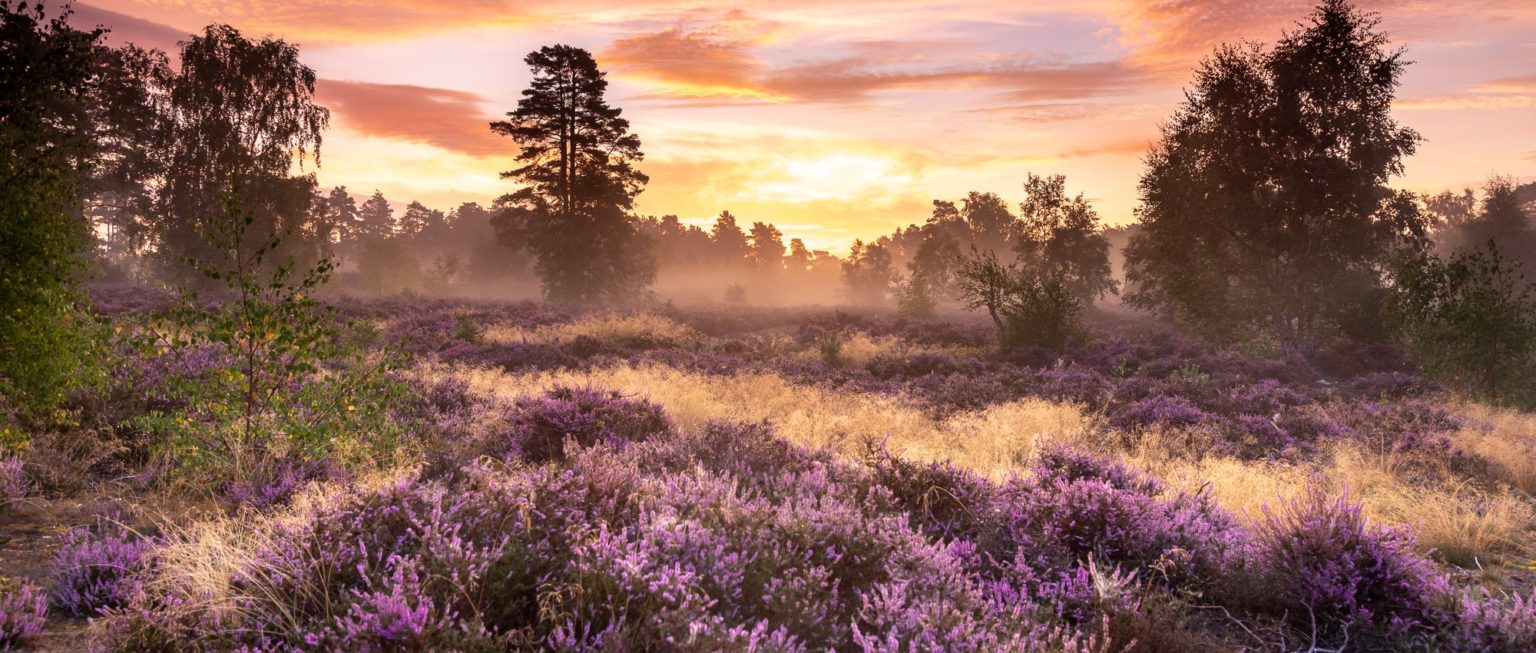
Spring has arrived at the Wealden Heaths National Nature Reserve (NNR), bringing vibrant gorse, birdsong, and the chance to witness some of England’s rarest wildlife in their natural habitat.
Visitors are being reminded to enjoy the reserve responsibly, as the area is home to sensitive ground-nesting birds and other protected species.
Nightjars, woodlarks, and Dartford warblers nest directly on the ground, often close to popular walking paths. Visitors are urged to stick to marked trails and keep dogs on leads between March and September to avoid disturbing these hidden nests. Straying off-path can also threaten other rare heathland species, including natterjack toads, adders, and sand lizards.
Covering 2,760 hectares across Surrey and Hampshire—roughly three times the size of Richmond Park—Wealden Heaths supports some of England’s most vulnerable wildlife, including the striking silver-studded blue butterfly. Spring transforms the heathland with golden gorse blooms and a chorus of birdsong, offering an immersive outdoor experience.
England’s lowland heathlands have declined by around 80% over the last 200 years, making conservation a priority. Visitors are also reminded to reduce fire risk: leave barbeques at home, pick up litter, and dispose of smoking equipment responsibly.
Wealden Heaths NNR is managed by a partnership of nine organizations, including Natural England, RSPB, the National Trust, Surrey Wildlife Trust, Hampton Estate, Amphibian and Reptile Conservation Trust, Waverley Borough Council, Surrey County Council, and Forestry England, with support from Surrey Hills National Landscape.
The reserve became a National Nature Reserve in 2024, as part of the King’s Series, a program marking the coronation of His Majesty King Charles III. This initiative will establish 25 new or expanded NNRs across England by 2028. Yesterday, King Charles III inaugurated the Seven Sisters NNR in Sussex, marking the 13th site in the series.
The King’s Series now encompasses 17,000 hectares (65 square miles)—twice the size of Brighton and Hove—with 1.4 million people living within 5km of a reserve. These protected areas offer vital benefits for health, education, wellbeing, and local economies.
Stephen Rudd, principal manager for Natural England, said: “The King’s Series National Nature Reserves are about celebrating the very best of England’s nature, and the Wealden Heaths is a shining example of that.
As we enter ground nesting bird season, this milestone is a timely reminder of how special and how fragile this landscape is. Small actions from all of us can make a huge difference.
England’s lowland heathland has declined by around 80 per cent over the last two centuries. Protecting what remains is a deliberate policy choice, and Wealden Heaths NNR represents one of the most significant commitments to that goal”.
James Herd, director of reserves management at Surrey Wildlife Trust, said: “Given the increasing pressures faced by the natural world, the creation of Wealden Heaths National Nature Reserve is a much-needed piece of good news for wildlife, as well as providing a vital place of recreation and pride for local people.
As springtime brings more people out to enjoy nature, we all have a part to play in keeping heathland sites in good condition for nature and for other people. Ground-nesting birds like nightjars and woodlark are sensitive to disturbance, so please keep dogs on a lead”.
Rob Fairbanks, director of Surrey Hills National Landscape, said: “We need nature to recover. The King’s Series of National Nature Reserves like the Wealden Heaths in the Surrey Hills and Seven Sisters on the South Downs is the place where we put nature first”. Photo by surreyhills.org.