UK grocery inflation has ticked higher once more, reaching 4.3% in the four weeks to February 22, according to new figures from Worldpanel by Numerator.
The increase reverses January’s modest relief, when inflation eased to a nine-month low of 4.0%, and adds fresh pressure on household budgets already stretched by high living costs.
The latest data offers an early snapshot of price trends ahead of official UK inflation figures due on March 25, and suggests shoppers are once again facing a gradual squeeze at the tills.
Food and personal care lead price rises
Worldpanel said prices are rising fastest in fresh unprocessed meat, skin care products, and chocolate confectionery, categories that are sensitive to global commodity costs and supply pressures. By contrast, prices are falling most sharply in chilled butter and spreads, household paper products, and sugar confectionery, providing some limited relief.
Food prices remain under close scrutiny from the Bank of England, which sees them as a key driver of public inflation expectations. Britain’s overall headline inflation rate eased to 3% in January, but policymakers remain cautious about declaring victory.
Separate figures released on Tuesday by the British Retail Consortium showed annual shop price inflation slowing to 1.1% in February, with food inflation easing to 3.5%, highlighting a mixed picture across the retail sector.
Supermarket winners and losers
Among the UK’s biggest grocers, Tesco retained its industry lead. Over the 12 weeks to February 22, Tesco’s sales rose 4.5% year-on-year, lifting its market share to 28.7%.
Sainsbury's followed closely, posting a 5.2% rise in sales and increasing its share to 16.1%.
Discount retailers continued to outperform the wider market. Lidl GB was the fastest-growing bricks-and-mortar chain, with sales up 10.0%, while online specialist Ocado led overall growth, recording a 15.1% surge in sales.
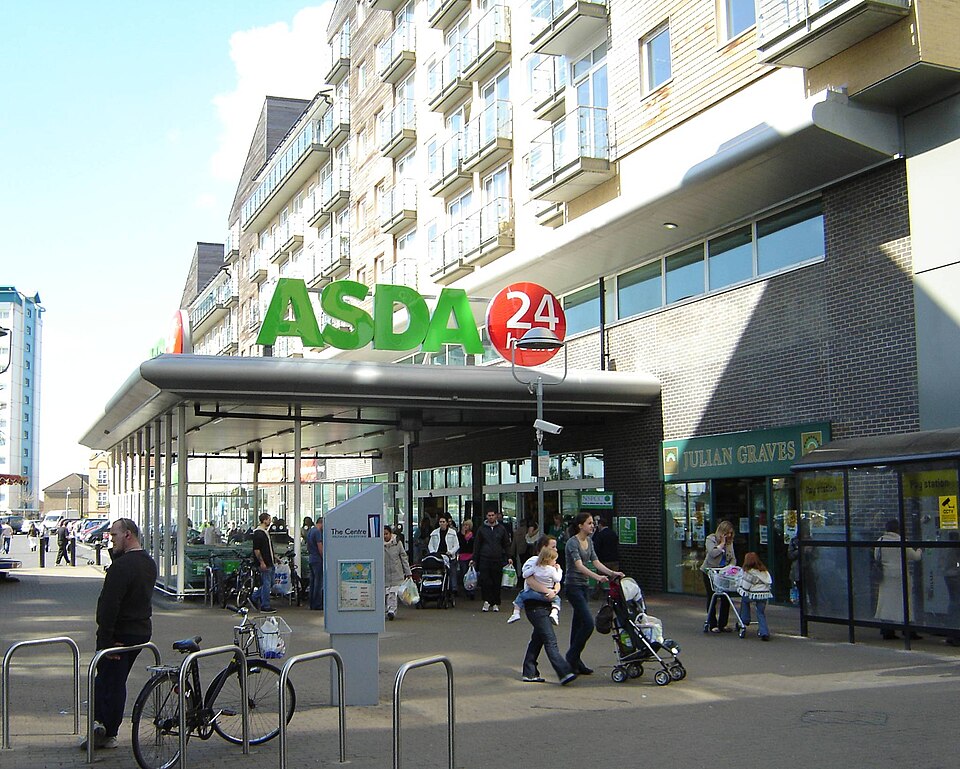
Not all retailers fared as well. Asda continued to struggle, with sales falling 2.6%, dragging its market share down to 11.5%, an 80-basis-point drop over the year.
Outlook for shoppers
The renewed rise in grocery inflation suggests that, while the pace of price growth is far below last year’s peaks, the path back to stable food prices remains uneven. With essentials such as meat and everyday personal care items becoming more expensive again, consumers may find that the cost-of-living squeeze is easing more slowly than hoped. Photo by KTo288, Wikimedia commons.