
England’s public forests are set to play a much bigger role in powering the country with home-grown clean energy, after new statutory powers came into force on Friday 27 February.
Under the changes, renewable electricity projects will be able to go ahead on land managed by Forestry England, the nation’s largest land manager. Energy generated through schemes such as solar panels and wind installations will be used on site and sold to the national grid, helping to lower costs for consumers while strengthening the UK’s clean energy supply.
The move supports the government’s ambition to turn Britain into a clean energy superpower and will also create new income streams to fund tree planting and wider net-zero goals. Forestry England oversees more than 1,500 woods and forests, covering over 250,000 hectares across the country, putting it in a unique position to host renewable infrastructure at scale.
Crucially, the government has said there will be no net loss of woodland. Any forest land permanently removed to make way for renewable developments will be offset by compensatory tree planting elsewhere, ensuring overall woodland cover is maintained.
Revenue generated from clean energy projects will be reinvested into environmental priorities, including woodland management, biodiversity protection and wildlife conservation.
In a further boost for the sector, Forestry England is exploring a partnership with Great British Energy to roll out rooftop solar installations across the public forest estate and potentially expand into other renewable technologies. The collaboration aims to deliver low-carbon electricity at scale while helping to reduce energy costs.
Nature Minister Mary Creagh said: “Our forests and woodlands are among this country’s greatest natural assets, and these new powers mean they can now play an active role in our mission to become a clean energy superpower.
Enabling Forestry England to develop renewable energy projects across its estate is a significant moment. This will be a win for both our environment and our energy security, with income invested directly back into tree-planting and woodland management”.
Forestry England Chief Executive Michael Seddon said: “Generating significantly more renewable energy in the nation’s forests is a very exciting opportunity for Forestry England. We have been successfully integrating small scale renewable energy projects for many years with over 40 installations already, mostly solar projects such as rooftop solar installations.
These new powers bring opportunities to hugely increase what we can do to support the UK’s energy security with electricity generated being connected to the Grid; reduce our own reliance on fossil fuels; and bring extra money for us to reinvest in caring for the nation’s forests”.
Dan McGrail, CEO of Great British Energy, said: “Great British Energy is focussed on making the most of the UK’s natural assets to deliver more home‑grown clean power. We’re looking forward to working with Forestry England to bring new renewable projects to life, helping to cut bills, strengthen energy security and support communities across the country”.
All proposed developments will still be subject to standard planning rules, environmental impact assessments and public consultation. In some cases, approval from the Secretary of State may also be required.
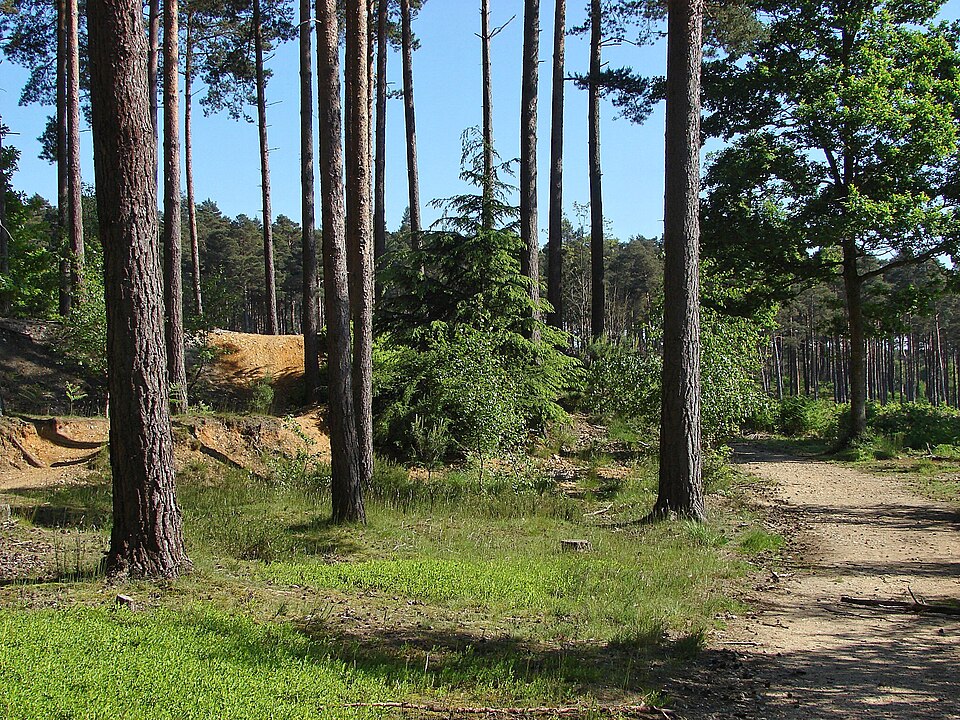
More details on specific projects and timelines are expected to be published later this year, as England’s forests take on a new role in the country’s clean energy transition. Photo by Bracknell Forest by Alan Hunt, Wikimedia commons.



























