The US Democratic Party is preparing to tighten its rules for presidential primary candidates ahead of the 2028 election, requiring hopefuls to publicly reject political funding from
undisclosed donors if they want to participate in televised debates. The move comes as Democrats begin positioning themselves for an increasingly competitive contest to select a successor to Donald Trump.
The Democratic National Committee (DNC), which oversees the party's presidential nomination process, announced on Monday that candidates will have to sign a pledge opposing so-called “dark money” — political expenditure by organisations that are not required to disclose the individuals or groups financing their activities.
The new requirement is intended to demonstrate the party's commitment to greater transparency in election financing and limit the influence of wealthy donors and outside organisations whose contributions can shape political campaigns without revealing their sources.
The decision comes as Democrats prepare for an unusually crowded presidential primary. With no established frontrunner and several potential candidates already exploring their prospects, the party is planning an extensive debate programme designed to accommodate a large field of contenders.
According to the DNC, 12 debates are planned across the 2027 and 2028 primary seasons. Five are expected to take place in 2027, followed by another seven in 2028. The first two events are provisionally scheduled for June and July 2027, while the final debate is expected in March 2028. The timetable could be adjusted depending on developments in the nomination campaign.
Given the anticipated number of candidates, some debates may be spread across two evenings. The party's proposed arrangements would allow a maximum of 20 presidential hopefuls to participate in total. The locations of the opening debates are expected to be announced in January.
The dark-money pledge will not be the only condition candidates must satisfy. Participants will also need to demonstrate sufficient public support through opinion-polling results and grassroots fundraising. The party says these requirements are intended to ensure that debate participants have genuine backing among voters rather than relying exclusively on financial resources or political connections.
Midterm victory gives Democrats momentum — but exposes divisions
The new debate rules come just weeks after the Democrats' sweeping victory in the November 3, 2026, US midterm elections, which dramatically changed the balance of power in Washington.
Democrats secured control of both chambers of Congress, delivering a major political setback to Trump and the Republican Party halfway through the president's second term.
According to the latest reported results, Democrats have won at least 258 seats in the 435-member House of Representatives, gaining approximately 44 seats compared with the previous Congress. In the Senate, the party secured a 56-44 majority, including two independent senators who caucus with Democrats.
The victories represented a substantial reversal of Republican fortunes. Democrats captured several previously Republican-held Senate seats, including in traditionally competitive and Republican-leaning states, while making significant gains in House districts that had supported Trump in the 2024 presidential election.
The party also achieved important victories in gubernatorial and state-level contests, strengthening its position beyond Washington.
The outcome was widely interpreted as a rebuke to the Trump administration, with voter dissatisfaction over the cost of living, inflation, economic conditions and concerns about the president's political leadership contributing to the Republican losses.
The new Democratic majorities will give the party considerably greater influence over congressional proceedings, legislative priorities and investigations into the administration. However, Trump will remain president, retaining his executive powers and the ability to veto legislation, meaning that Washington is heading towards a period of divided government.
For Democrats, the midterm success has created favourable political conditions ahead of 2028, but it has also intensified the debate about the party's future direction and leadership.
Ideological battle over the party's future
Despite the electoral breakthrough, Democrats remain divided over the political programme and type of candidate they should put forward against the Republicans in 2028.
The differences became particularly visible at a gathering in Denver shortly after the midterm elections, where disagreements emerged between the party's centrist establishment and its increasingly influential progressive wing.
Moderate Democrats are likely to favour a candidate capable of attracting independent voters and disillusioned Republicans, while progressives are pushing for a more ambitious programme addressing economic inequality, healthcare, corporate influence and the role of wealthy donors in American politics.
Generational differences are also expected to play an important role in the selection process, with younger politicians and activists seeking greater influence over the party's leadership and policy agenda.
The debate over campaign financing is therefore more than a technical question about eligibility for televised events. By making opposition to dark money a formal condition for participation, the DNC is signalling that transparency and the influence of private wealth will be among the central issues in the party's effort to redefine its political identity.
The 2028 Democratic primary is expected to attract a broad range of potential contenders, including governors, senators, members of Congress and prominent figures from the party's progressive movement.
Although the midterm results have strengthened Democratic confidence, they have not yet produced an obvious presidential frontrunner. The forthcoming primary campaign will determine whether the party can turn its electoral momentum into a coherent political platform and unite its competing factions behind a single candidate.
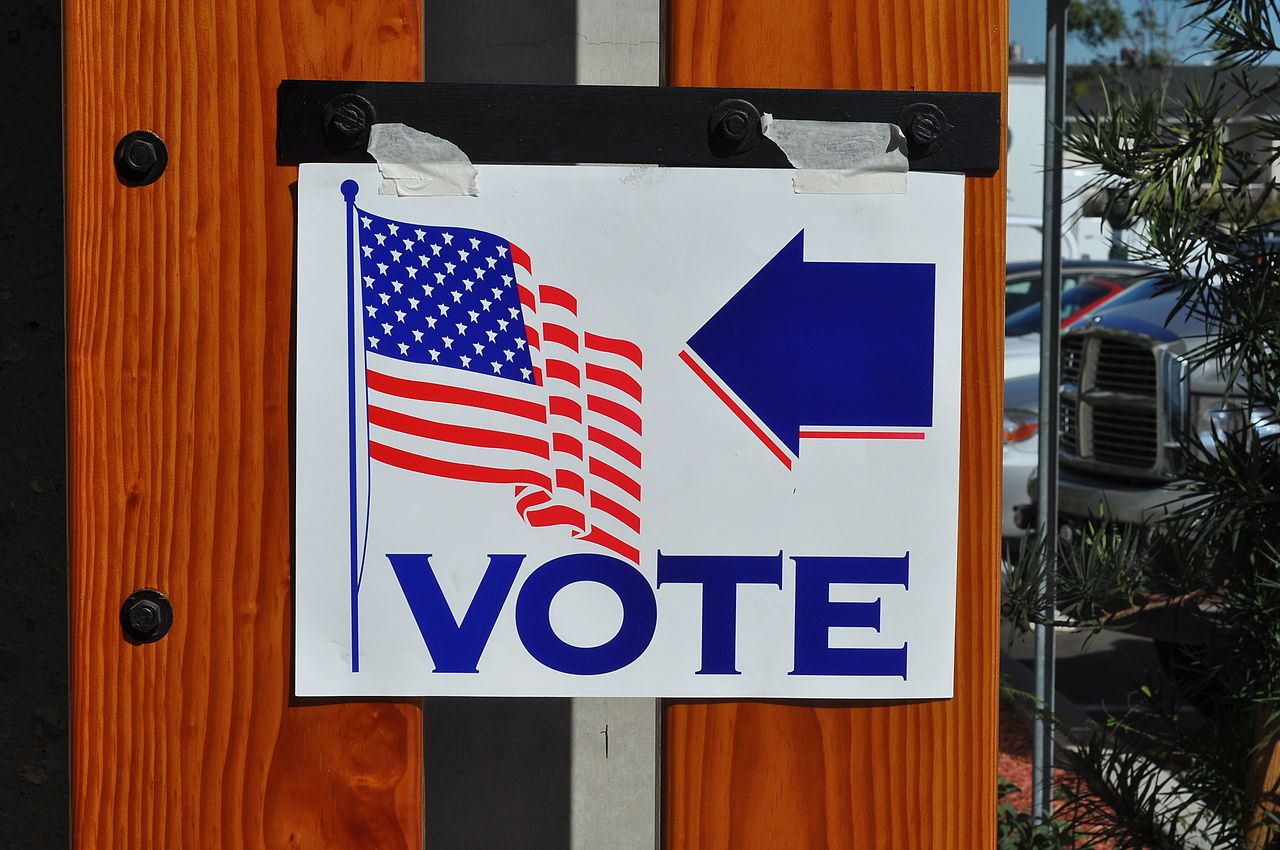
With the first debates scheduled for June 2027, the process of positioning for the next presidential election is already gathering pace. Photo by Tom Arthur from Orange, CA, United States, Wikimedia commons.