
The UK government is preparing to introduce a nationwide licensing system for anyone selling knives and bladed weapons, including private individuals and online retailers, in a major
effort to prevent dangerous weapons from falling into the hands of children and criminals.
The proposed scheme, announced by the Home Office on 25 November 2026, is designed to close loopholes in the existing regulatory framework and clamp down on unregulated sellers operating through online marketplaces and overseas supply chains.
Under the new arrangements, anyone selling knives, whether through a physical shop or an online platform, will be required to obtain an official licence. A separate licensing system will regulate overseas businesses importing knives into the UK.
The government says the initiative will establish one of the most comprehensive regulatory frameworks of its kind internationally, covering the entire knife retail market rather than restricting controls to particular categories of weapons.
The proposals are intended to address the growing concerns surrounding the so-called grey market, where unscrupulous traders exploit gaps in legislation to sell prohibited or dangerous weapons without adequate checks. Such sellers have been linked to the supply of knives to underage buyers and individuals involved in criminal activity.
Licensed retailers will face greater scrutiny over their business practices, including how weapons are advertised, sold and delivered. Police will have enhanced oversight of the industry and the ability to withdraw licences from businesses that fail to comply with the rules.
The proposed licences will generally remain valid for three years. Fees will be introduced to cover the full cost of administering the scheme, while private individuals will not be eligible to obtain licences for importing knives.
The government is continuing discussions with retailers, police forces, collectors and other interested organisations before finalising the arrangements. Further details, including enforcement procedures and the precise requirements for licence holders, will be established through legislation and accompanying guidance.
Knife crime remains a major challenge for London
The proposed licensing system comes amid continuing efforts to tackle knife violence in London, where the Metropolitan Police has identified the illegal supply, importation and online sale of weapons as important factors contributing to serious violence.
Although the latest figures indicate that knife crime is declining, the scale of the problem remains significant. According to the Office for National Statistics (ONS), the Metropolitan Police recorded 13,748 knife-enabled offences in the 12 months to June 2026, a 12% decrease compared with the previous year. London nevertheless accounted for approximately 28% of all knife-enabled offences recorded across England and Wales during that period.
Figures published by the Mayor of London's Violence Reduction Unit show further progress. In the 12 months to August 2026, police-recorded knife crime in London fell by 9.7%, with 13,648 offences compared with 15,112 in the preceding 12-month period. Hospital admissions among under-25s following assaults involving knives or sharp objects also declined by 22.4% over the year to July 2026.
However, police continue to warn that dangerous weapons remain readily available through illegal online channels and informal trading networks. Young people are particularly vulnerable to knife-related violence, whether as victims or perpetrators.
A recent Metropolitan Police operation illustrates the continuing scale of enforcement activity. During Operation Sceptre, conducted between 16 and 22 November 2026, officers arrested 266 people and seized approximately 500 knives and other dangerous weapons. The operation included targeted stop-and-search activity, searches of residential properties, weapons sweeps and inspections of knife retailers.
Police also carried out test purchases at 154 shops to identify retailers selling prohibited weapons or supplying knives to under-18s. In east London, searches at two residential addresses resulted in the seizure of 175 weapons, including flick knives, button-release knives and machete-style weapons.
The Metropolitan Police said that knife-enabled robberies had fallen by 16.6% over the previous 12 months, while overall knife crime offences had declined by 8.1%. The number of under-25s admitted to London hospitals following knife attacks has also dropped by 54.7% since 2019, according to the force.
Despite these improvements, the police have highlighted the continued presence of so-called zombie knives, which remain a particular concern because of their potential to cause severe injuries. Around one in ten serious violent incidents involving under-25s in London this year involved a zombie knife, according to the Metropolitan Police.
Nationally, the picture is also improving but remains serious. The ONS recorded 48,615 offences involving knives or sharp instruments in England and Wales in the year ending June 2026, a 6% reduction compared with the previous 12 months. These figures include incidents in which weapons were used to injure victims, attempts to cause injury or threats involving knives.
Government plans wider crackdown on knife retailers
The proposed licensing framework forms part of the government's broader commitment to reducing knife crime by 50% within the next decade. Ministers say that tackling the supply of weapons is as important as increasing police enforcement and investing in preventative programmes.
Since June 2024, overall knife crime has fallen by 11%, while knife-enabled robberies have decreased by 24% across the seven police force areas with the highest concentrations of this offence, according to government figures.
More than 80,000 knives and dangerous weapons have also been removed from Britain's streets during the same period.
The new licensing proposals build on legislation introduced following the murder of 16-year-old Ronan Kanda, who was killed with a ninja sword purchased online. His death prompted renewed calls for tighter controls on internet retailers and stronger accountability for businesses selling dangerous weapons.
Known as Ronan's Law, the measures introduced by the government are intended to prevent similar tragedies by making it more difficult for children and criminals to obtain prohibited weapons.
Additional provisions under the Crime and Policing Act 2026 will strengthen age-verification requirements for online knife purchases, oblige retailers to report bulk orders to the police and give officers powers to demand the removal of illegal knife and offensive weapon advertisements and sales content from online platforms.
Pooja Kanda, Ronan's mother and a member of the government's Coalition to Tackle Knife Crime, welcomed the licensing proposals. She said that introducing stricter controls was an essential continuation of the campaign launched after her son's murder.
She stressed that retailers and importers must be held accountable for the weapons they put into circulation, arguing that the new system must be backed by effective inspections, enforcement and penalties rather than remaining a policy commitment.
The licensing initiative also follows recommendations made in an independent review of online knife sales commissioned by the government. The review called for stronger regulation of legitimate retailers and more effective action against businesses exploiting loopholes in the existing legislation.
Commander Stephen Clayman, head of the National Knife Crime Centre, said that the current regulatory framework had allowed prohibited weapons to reach children through unregulated online sellers and grey-market distribution channels.
He described licensing as an important step towards establishing consistent standards across the retail sector, particularly as online marketplaces and overseas suppliers increasingly shape the weapons trade.
The National Knife Crime Centre has already coordinated the seizure of more than 1,300 knives since its establishment in April 2026. It is expected to support the implementation of the new regulatory arrangements.
Patrick Green, chief executive of the Ben Kinsella Trust, also backed the proposals, arguing that businesses selling knives must accept responsibility for ensuring that their products are marketed and supplied lawfully.
He warned that some retailers had prioritised profits over public safety by exploiting weaknesses in existing regulations, making it easier for dangerous weapons to reach young people.
The government says it will continue working with law enforcement agencies, responsible retailers, heritage collectors and other stakeholders to finalise the licensing arrangements before introducing the necessary legislation.
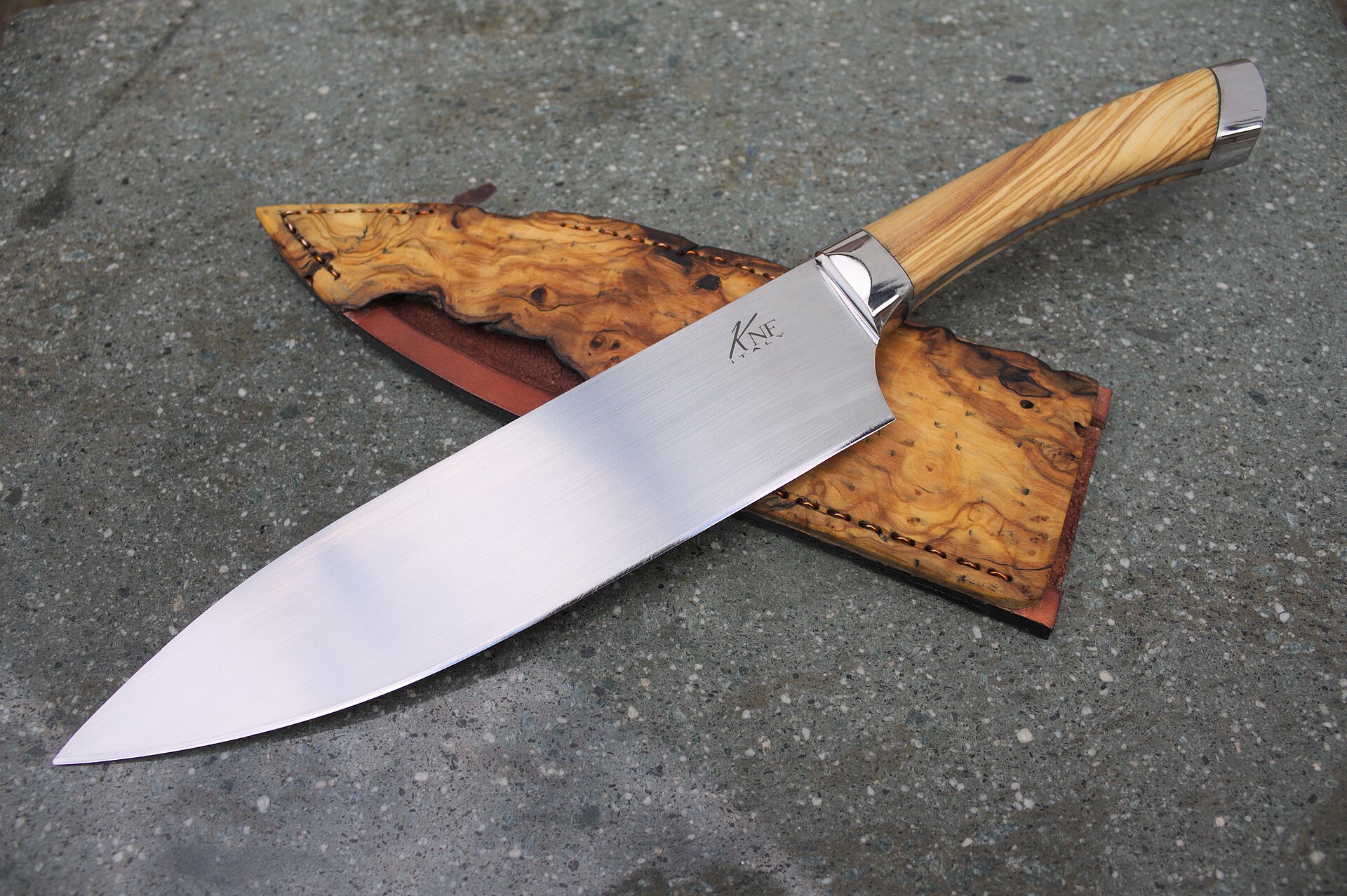
If implemented as planned, the scheme will introduce a new level of oversight across the entire knife retail market, with the stated aim of disrupting illegal supply networks, preventing underage purchases and reducing the number of dangerous weapons circulating on Britain's streets. Photo by KNF Italy, Wikimedia commons.