
World News
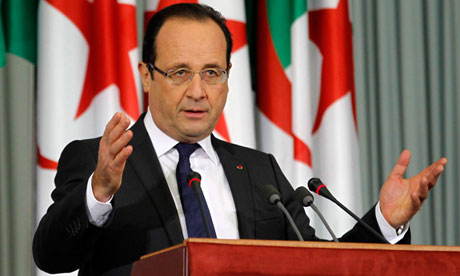
Francois Hollande's spurned girlfriend turned poison pen has skipped France for the Indian Ocean isle of Madagascar, a day after dropping a bombshell with her best-selling kiss-and-tell about life with the president.
Airport sources in Madagascar said Valerie Trierweiler arrived in the capital Antananarivo Saturday morning, and was then to catch a domestic flight to points unknown.
It was unclear whether Trierweiler, a journalist, was visiting the French-speaking isle for business, humanitarian work or simply to avoid the blaze of public scrutiny her book has ignited.
"Thank You For The Moment", in which the glamorous 49-year-old dishes on her tempestuous relationship with Hollande including her pill-popping suicide attempt after discovering his adulterous affair, has skyrocketed in sales on shelves and online since its release on Thursday.
It shot to the top of Amazon France's bestseller list in just one day, and has since "sold out at almost all points of sale, proof of its extraordinary debut", according to the head of the French booksellers union.
Trierweiler met Hollande in the mid-2000s while he was in a relationship with fellow politician Segolene Royal -- herself a former presidential candidate -- and the pair began a secret liaison.
Hollande subsequently left Royal, the mother of his four children, for Trierweiler who became the de facto first lady of France after he was elected in 2012, despite the fact the pair were not married.
Trierweiler says in the book she tried to commit suicide in the presidential bedroom with an overdose of sleeping pills after news of Hollande's affair with actress Julie Gayet broke in January.
Hollande announced shortly thereafter that his relationship with Trierweiler was over.

In many places swimmers might prefer to avoid sharks, but wetsuit-clad tourists in Palau clamour to dive among the predators thanks to a pioneering conservation initiative that has made them one of the country's main visitor attractions.
Palau created the world's first shark sanctuary in 2009 and the move has been so successful that plans are now underway to completely ban commercial fishing in the island nation's vast ocean territory by 2018.
The fishing-free zone in the northern Pacific, described as unprecedented by famed US marine scientist Sylvia Earle, will cover 630,000 square kilometres (240,000 square miles), an area almost the size of France.
The architect of the ambitious plan is Palau President Tommy Remengesau, who said the ban was needed to "let the ocean heal" after years of industrialised fishing in the Pacific that has seen stocks of some species such as bluefin tuna fall to critical levels.
Remengesau said Pacific island nations, which are also struggling to deal with climate change, were effectively "the conscience of the world" on environmental matters and had to lead by example because of their special connection with the ocean.
"The ocean is our way of life," he said. "It sustains and nurtures us, provides us with the basics of our Pacific island cultures, our very identities."
Just a decade ago, dozens of so-called "shark boats" regularly docked in Palau's commercial centre Koror, hanging fins to dry from their rigging as they worked to supply a seemingly insatiable demand in Asia for the primary ingredient in shark fin soup.
During the height of the trade, an estimated 73 million sharks a year had their fins hacked off and were thrown back into the sea to die.
"I would have been very upset to see that," said Maayan Sagr, a 22-year-old Israeli tourist on a six-week dive master's course in Palau, which is regularly voted the world's top spot for underwater enthusiasts.
"The nature and the sharks are the reason I came here," she said. "Everybody knows it's quiet and peaceful but the main attraction is the sharks, getting to see them in their natural environment."
Remengesau said Palau's world-first shark protection measures sparked global change in attitudes towards the top predator, which went from being seen as a dangerous pest to a valuable part of the eco-system.
About one-third of the world's countries have followed the Pacific nation's lead in banning shark-finning, according to the Pew Environment Group.
Crucially, demand for shark fin soup in China has waned thanks to a ban from official state banquet tables and celebrities publicly speaking out against eating the dish, which is often regarded as a status symbol.
Remengesau said sharks had more value to Palau as eco-tourism assets, citing a 2011 study that found a single reef shark could contribute almost US$2.0 million to the economy over its 10-year lifespan via the dive tourists it attracts.
"We feel that a live shark is worth a thousand times more than a dead one," he said.

France's former first lady Valerie Trierweiler was roundly attacked Thursday for her kiss-and-tell book about her acrimonious split with President Francois Hollande after his affair with an actress.
The surprise memoir, which hit bookstands on Thursday and in which she recounts her stormy relationship with Hollande, was described as "outrageous" by Prime Minister Manuel Valls and a "dishonour for France" by right-wing leader Marine Le Pen, usually a trenchant critic of Hollande.
Hollande's previous partner Segolene Royal, the mother of his four children whom he left for Trierweiler, also shot down as "rubbish" the book's claim that Hollande -- who became France's first Socialist president in nearly two decades when he was elected 2012 -- secretly despised the poor.

Closing in on his 104th birthday, a twinkle-toed Japanese sprinter has thrown down the challenge to the world's fastest man Usain Bolt, telling him: "let's rumble!"
Hidekichi Miyazaki -- who holds the 100 metres world record for centenarians at 29.83 seconds and is dubbed 'Golden Bolt' after the Jamaican flyer -- plans to wait another five years for his dream race and was happy to reveal his secret weapon: his daughter's tangerine jam.
"I'd love to race Bolt," the wispy-haired Miyazaki told AFP in an interview after tottering over the line with a joyful whoop at a recent Japan Masters Athletics competition in Kyoto.
"I'm keeping the dream alive. I try to stay in top shape and stay disciplined and healthy. That's important for everyone -- even Usain Bolt."
Born in 1910 -- the year Japan annexed Korea and when the Titanic was still under construction -- the pint-sized Miyazaki offered some dietary tips to Bolt, whose world record is 9.58 seconds.
"My body is small so I take care of what I eat," said Miyazaki, who stands just 1.53 metres (five feet) tall and weighs in at 42 kilograms (92 pounds).
"When I eat, I chew each mouthful 30 times before swallowing," he added, loosening his Usain Bolt running shoes. "That makes my tummy happy and helps my running. And I eat my tangerine jam every day."
In a country with one of the world's highest life expectancies, Miyazaki is the poster boy for Japan's turbo-charged geriatrics.
Some 6,000 pensioners are registered at the Masters federation which hosts more than 40 track and field meetings every year across the nation.
Serenaded by buzzing cicadas in sweltering heat, Miyazaki fell into the arms of 73-year-old daughter Kiyono after clocking 38.35 -- more than 20 seconds behind race winner Yoshio Kita, a relative spring chicken at 82.
"I'd give myself five out of 10 for that," he said after regaining his breath and copying Bolt's trademark 'lightning' pose. "Before I ran I curled up for a little nap -- big mistake! I felt stiff.
"I'm still young so it's a learning process," joked Miyazaki, grinning from ear to ear as he put on a straw hat. "I can run for another five years."
Miyazaki, who hails from tea-growing Shizuoka prefecture, about 200 kilometres southwest of Tokyo, was a late bloomer, only taking up running at the age of 92 after watching an old people's sports day broadcast on television.
Having become the planet's fastest centenarian in 2010, he now has his sights on another milestone in the unlikely 105-109 age group category.
"That's what I'm training for," said Miyazaki, who loses valuable seconds at the start of races because he can't hear the gun go off.
"It's my birthday next month and that's my next goal."
He need only cross the finish line to set the new world record as no official mark exists in that age class.
As Miyazaki left the track, 85-year-old Mitsue Tsuji tossed a shot put 4.73 metres -- this after she had set a mark of 2.07 metres in the long jump. Not content, she set a meet

With the setting sun glittering on the Hudson, nearly 5,000 people turned out Monday for the fourth edition of "Diner en blanc" (Dinner in White), dressed to the nines.
In what amounts to a flashmob sunset picnic, diners get details of the event with virtually no notice, and turn up all in white -- even bringing chairs.
This year, the surprise locale was Nelson Rockefeller Park, in Manhattan, with its enviable river view. As it is every year, the location was kept secret until minutes before organizers announced it.
Guests, who register in advance, turned out with tables, chairs, tableware -- all in white.
The tradition dates back to an original event 26 years ago in Paris at which the organizer invited guests to all wear white so they would be easily spotted in a park.
The weather was more than cooperative. The music was more than a soupcon French, with tunes from Edith Piaf, to Michel Fugain and Joe Dassin.
Guests often get a little whimsical in their dress, with massive hats, masks, feathers and the odd huge string of pearls.
This year, there was sushi, charcuterie, salads, salmon, a cheese plate and champagne before dancing.
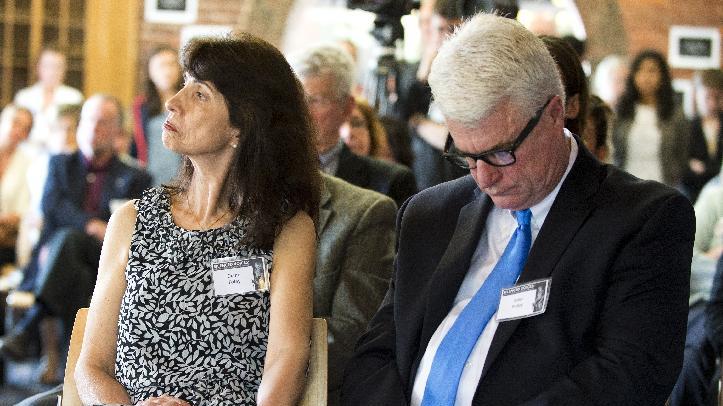
Friends, relatives and colleagues have paid tribute to American journalist James Foley, executed by Islamic State jihadists, with his parents praising their "fearless" son.
Condolences and shocked messages poured in after the Islamist group released a video of Foley's beheading late Tuesday, including from French journalists who revealed they had been held alongside him in the past year.
Foley, 40, had been missing since he was seized in Syria in November 2012.
"We're very proud of him. He was a courageous, fearless journalist, a very compassionate American. He was just a hero," Foley's mother Diane told reporters outside their New Hampshire home.
"It haunts me, how much pain he was in and how cruel this method of execution is as opposed to so many others," said his father John. "We believe he was a martyr, a martyr for freedom."
French journalists Didier Francois and Nicolas Henin, who were released by Syrian jihadists earlier this year, revealed on Wednesday they had been held alongside Foley.
"He was an extraordinary guy, an extremely nice companion in detention, very solid," said Francois of Europe 1 radio, who was held with Foley from October 2013 until his release in April.
"This was someone who never fully submitted to the kidnappers. He was always thinking of others during the whole detention, notably asking for food for everyone."
Henin of L'Express magazine said Foley had faced particular abuse from their jailers because he was American and his brother is in the US air force.
"He was a guy of great bravery," said Henin. "He became the whipping-boy of the jailers ... but remained unperturbed."
On Twitter, fellow journalists implored users not to view the graphic video of the execution, instead sharing images of Foley in the field.
Dick Costolo, Twitter's CEO, wrote: "We have been and are actively suspending accounts as we discover them related to this graphic imagery."
In the nearly five-minute video, titled "A Message to America" and distributed online by known Islamic State sources, the group declares that Foley was killed after Obama ordered air strikes against IS positions in northern Iraq.
Thousands posted messages of sorrow on the Facebook site Free James Foley, while US President Barack Obama said the entire world was appalled by the execution.
"No just god would stand for what they did yesterday," he said.
British Prime Minister David Cameron said the murder was "brutal and barbaric".
It was "increasingly likely" that a British jihadist had carried out the killing, Cameron said, adding that "far too many" Britons had travelled to the region to take part in extremism.
The International Federation of Journalists (IFJ) expressed its deep shock at "the appalling beheading."
"This horrifying and cowardly killing of an unarmed man is another call for action to protect journalists and civilians who are brutally targeted by armed groups and terrorists" said Jim Boumelha, IFJ President.

‘Green little men’ could use KGB’s caches to seize the territories of East European countries. ‘Green little men’, which, according to some well-known Russian politicians, will arrive in Baltic countires and Eastern Europe to seize administrative buildings and to hold ‘referendums’ using the Soviet army caches created by the agency during the ‘cold war’. This was reported today by the ukrainian news agency Ridnyi Krai (Motherland).
Recently a number of Russian politicians, including GosDuma vice-speaker Vladimir Jirinovskiy, have openly stated that the Kremlin has plans to take over Baltics, Poland and other regions of Eastern Europe.
Apparently the Russians will again use their XXI century know-how– the method of war when unidentifiable Russian speaking armed forces will invade a country yet they will deny any affiliation to the Russian army.
They will hold a referendum, the results of which will be immediately hidden from the public and in a week’s time they will announce the territory to be joining the Russian Federation.
Given the fact that military crossing of the Eastern European border could prove rather difficult, Moscow may activate ‘the Plan B’ using the army caches full of weapons created in the last decades of XX century by soviet agents operating in West and East European countries.
The information about these caches have become public lately following the publication of Mitrohin’s archives in Cambridge last summer.

Africans have long used technology developed abroad, but now a Kenyan cash transfer network which bypasses banks is being adopted in Europe.
The M-Pesa mobile money transfer system which allows clients to send cash with their telephones has transformed how business is done in east Africa, and is now spreading to Romania.
"From east Africa to eastern Europe, that's quite phenomenal when you think about it," Michael Joseph, who heads Vodafone's Mobile Money business, told AFP in the Kenyan capital Nairobi.
"I think that this is something the rest of the world can look at, to say that there are ideas that can emanate out of the developing world, and take it to the developed world."
M-Pesa -- or "mobile money" in east Africa's Swahili language -- was introduced in Kenya in 2007 by Safaricom, the country's largest mobile telecommunications company, in partnership with British giant Vodafone.
Since then the service has grown exponentially, with about $40 billion (30 billion euros) flowing through the service in Kenya alone.
In Kenya, the system has become a part of daily life, with more than 18 million customers, and is used by almost two-thirds of the population with more than eight million transactions daily.
The network allows customers to bypass the traditional banking system, using an application available on the simplest of mobile phones to pay utility bills, buy a drink in a bar, or send cash to family and friends.
Romania is the latest nation Vodafone is tapping, with its first European launch last March.
For Michi Carstoiu, an engineer in the capital Bucharest, M-Pesa complements established online payment services.
"Most importantly, I save time - plus I think the transaction fees are smaller," Carstoiu told AFP, shortly after activating his mobile phone account at one of the 1,000 outlets already open.
The number of distribution points is expected to triple by the end of the year.
"Everyone has a mobile phone, and it is very simple to send and receive money or make payments," he added.
Users can charge up their phones by paying in cash at mobile-money agency points, and often at one of the points where they are doing a transaction.
Similarly they can withdraw cash against mobile-money credits at an agency, or when settling a bill, much in the same way as customers in Europe can obtain cash at some supermarkets when using bank cash cards.
Agents are often found in the form of shops or street kiosks.
The outstanding credit can be sent via a special text message to others for a small transaction fee.
African countries using the system include Egypt, Lesotho, Mozambique and Tanzania, and it has also been rolled out in India.
A savings version has been set up as well, allowing those without access to formal banking systems to earn interest on their savings.
The scheme has largely succeeded in Kenya because it meets the needs of millions of people without a bank account who would otherwise operate strictly within a cash economy.
They benefit from a network of M-Pesa agents spread across the country.

The only sounds in the abandoned Liberian village were the cries of a little girl, shut up with her mother's body inside the family home, starving and thirsty as she waited for death.
Eventually even the girl -- 12-year-old Fatu Sherrif -- fell silent as she too succumbed to the deadly Ebola virus that is ravaging her country and other parts of west Africa.
When AFP visited Fatu's village of Ballajah on Sunday, she had been locked away with her mother's body for a week after most residents fled to the forest to escape an outbreak of the virus.
Belongings lay abandoned around the village, the doors of some homes left open by those rushing to leave.
A few villagers remained, including Momoh Wile, a septuagenarian local chief, who told AFP Fatu's harrowing story.
Ballajah, some 150 kilometres (90 miles) from the Liberian capital Monrovia, is at the heart of one of the quarantine zones established in the country in a desperate bid to try to contain the spread of the disease.
More than 1,000 people in west Africa are now believed to have died from Ebola since the start of the year. In Liberia alone, some 599 cases have been diagnosed, with 323 deaths.

Iraq's Kurdish peshmerga forces are coordinating a counter-offensive against jihadists around the Iraqi city of Mosul with Kurdish fighters from Syria and Turkey, a political leader said on Wednesday.
Category
Sport
Former police chief among officers investigated over Maccabi Tel Aviv fans ban
 Former police chief among officers investigated over Maccabi Tel Aviv fans ban
Nick Kyrgios suspended after cocaine test as Australian tennis star admits ‘huge mistake’
 Nick Kyrgios suspended after cocaine test as Australian tennis star admits ‘huge mistake’
Fraud arrest follows security disruption at Birmingham European Athletics Championships
 Fraud arrest follows security disruption at Birmingham European Athletics Championships
Asher-Smith matches European medal record as Hunt completes golden treble
 Asher-Smith matches European medal record as Hunt completes golden treble
OG Anunoby brings NBA champion’s backing to Mayor’s £2m plan to transform London basketball courts
 OG Anunoby brings NBA champion’s backing to Mayor’s £2m plan to transform London basketball courts
London launches bid to bring 2029 World Athletics Championships back to the capital
 London launches bid to bring 2029 World Athletics Championships back to the capital
Serbia and Sweden withdraw support for Infantino's FIFA re-election
 Serbia and Sweden withdraw support for Infantino's FIFA re-election
Wales withdraws support for Infantino’s FIFA re-election bid
 Wales withdraws support for Infantino’s FIFA re-election bid
Netherlands win FIFA Fair Play Award after disciplined World Cup campaign
 Netherlands win FIFA Fair Play Award after disciplined World Cup campaign
Sinner overcomes Zverev to retain Wimbledon title after epic Centre Court battle
 Sinner overcomes Zverev to retain Wimbledon title after epic Centre Court battle
Education
-
 Jewish studies in Europe at a crossroads: an interview with Oleg Kozerod
Interview with Oleh Kozerod, Researcher at the Kuras Institute of Political and Ethnic Studies of the National Academy of Sciences of UkraineRead More...
Jewish studies in Europe at a crossroads: an interview with Oleg Kozerod
Interview with Oleh Kozerod, Researcher at the Kuras Institute of Political and Ethnic Studies of the National Academy of Sciences of UkraineRead More... -
 England’s education overhaul puts local leaders at the centre of jobs and skills reform
Government brings mayors, employers, schools and colleges together to reshape technical education and connect young people with regional job opportunitiesRead More...
England’s education overhaul puts local leaders at the centre of jobs and skills reform
Government brings mayors, employers, schools and colleges together to reshape technical education and connect young people with regional job opportunitiesRead More... -
 London’s school run transformed as car journeys fall and active travel soars
A decade of policies introduced under Mayor Sadiq Khan has significantly changed how children travel to school, with new Transport for London figures showing a sharp fall in schoolRead More...
London’s school run transformed as car journeys fall and active travel soars
A decade of policies introduced under Mayor Sadiq Khan has significantly changed how children travel to school, with new Transport for London figures showing a sharp fall in schoolRead More... -
 UK families to save thousands as free school meals and breakfast clubs expand
Millions of children will gain access to free school meals this term as the government rolls out a wider package aimed at cutting the cost of sending children to school.Read More...
UK families to save thousands as free school meals and breakfast clubs expand
Millions of children will gain access to free school meals this term as the government rolls out a wider package aimed at cutting the cost of sending children to school.Read More... -
 Malaysia’s new Chevening cohort set to strengthen UK–Malaysia ties
Twenty Malaysian professionals and emerging leaders are preparing to begin postgraduate studies in the United Kingdom after securing places on the prestigious Chevening scholarshipRead More...
Malaysia’s new Chevening cohort set to strengthen UK–Malaysia ties
Twenty Malaysian professionals and emerging leaders are preparing to begin postgraduate studies in the United Kingdom after securing places on the prestigious Chevening scholarshipRead More... -
 GCSE results deliver strongest-ever rise in top maths grades
More than 6,000 additional pupils secure grade 7 or above in maths as overall GCSE performance edges higherRead More...
GCSE results deliver strongest-ever rise in top maths grades
More than 6,000 additional pupils secure grade 7 or above in maths as overall GCSE performance edges higherRead More... -
 Climate change and ageing: why health systems face a new global risk
Climate change is emerging as a major challenge for ageing societies, with extreme weather, pressure on healthcare systems and economic disruption increasingly interacting to shapeRead More...
Climate change and ageing: why health systems face a new global risk
Climate change is emerging as a major challenge for ageing societies, with extreme weather, pressure on healthcare systems and economic disruption increasingly interacting to shapeRead More... -
 Children to get free bus travel across England during August
Children aged five to 15 will be able to travel for free on most local buses in England throughout August, under a government scheme aimed at helping families reduce the cost of summerRead More...
Children to get free bus travel across England during August
Children aged five to 15 will be able to travel for free on most local buses in England throughout August, under a government scheme aimed at helping families reduce the cost of summerRead More... -
 Applications open for postgraduate student loans in England and Wales
Applications for postgraduate student finance for the 2026/27 academic year have opened for students in England and Wales.Read More...
Applications open for postgraduate student loans in England and Wales
Applications for postgraduate student finance for the 2026/27 academic year have opened for students in England and Wales.Read More... -
 Clean air campaigner Rosamund Adoo-Kissi-Debrah awarded honorary doctorate
Clean air campaigner Rosamund Adoo-Kissi-Debrah has received an honorary doctorate from the University of Southampton in recognition of her work to improve air quality following theRead More...
Clean air campaigner Rosamund Adoo-Kissi-Debrah awarded honorary doctorate
Clean air campaigner Rosamund Adoo-Kissi-Debrah has received an honorary doctorate from the University of Southampton in recognition of her work to improve air quality following theRead More...

UK News
-
 New defence housing reforms put military families at the centre
Military families are set to gain a stronger voice in decisions about their homes under a new package of reforms aimed at reducing bureaucracy, improving accountability and givingRead More...
New defence housing reforms put military families at the centre
Military families are set to gain a stronger voice in decisions about their homes under a new package of reforms aimed at reducing bureaucracy, improving accountability and givingRead More... -
 M&S uses London Fashion Week debut to accelerate fashion revival
Marks & Spencer is stepping onto the London Fashion Week runway for the first time, turning one of Britain’s most prominent fashion events into a platform for showcasing its renewedRead More...
M&S uses London Fashion Week debut to accelerate fashion revival
Marks & Spencer is stepping onto the London Fashion Week runway for the first time, turning one of Britain’s most prominent fashion events into a platform for showcasing its renewedRead More... -
 UK bonus gap persists as men receive significantly larger payments than women
Women in the UK continue to receive substantially smaller workplace bonuses than men, with new payroll data indicating that the disparity remains particularly pronounced among olderRead More...
UK bonus gap persists as men receive significantly larger payments than women
Women in the UK continue to receive substantially smaller workplace bonuses than men, with new payroll data indicating that the disparity remains particularly pronounced among olderRead More... -
 21-year-old charged over alleged hate-motivated graffiti attacks on muslim sites in East London
A 21-year-old man has been charged with five counts of racially and religiously aggravated criminal damage following a series of alleged graffiti attacks on Muslim organisations andRead More...
21-year-old charged over alleged hate-motivated graffiti attacks on muslim sites in East London
A 21-year-old man has been charged with five counts of racially and religiously aggravated criminal damage following a series of alleged graffiti attacks on Muslim organisations andRead More... -
 UK army to strengthen battlefield surveillance with new generation of drones
The British Army is set to receive a new fleet of surveillance and reconnaissance drones designed to improve troops’ awareness on the battlefield and provide commanders with moreRead More...
UK army to strengthen battlefield surveillance with new generation of drones
The British Army is set to receive a new fleet of surveillance and reconnaissance drones designed to improve troops’ awareness on the battlefield and provide commanders with moreRead More...

Culture
-
 Oasis set to return in 2027 with massive 38-date global tour
Oasis are extending their long-awaited comeback with an ambitious 38-date tour scheduled for 2027, taking the iconic Britpop group across the UK, Ireland, continental Europe and theRead More...
Oasis set to return in 2027 with massive 38-date global tour
Oasis are extending their long-awaited comeback with an ambitious 38-date tour scheduled for 2027, taking the iconic Britpop group across the UK, Ireland, continental Europe and theRead More... -
 UK moves to keep Stanley Spencer’s landmark resurrection painting
The British government has stepped in to prevent a major early work by Stanley Spencer from leaving the country, giving museums and galleries a limited window to secure the paintingRead More...
UK moves to keep Stanley Spencer’s landmark resurrection painting
The British government has stepped in to prevent a major early work by Stanley Spencer from leaving the country, giving museums and galleries a limited window to secure the paintingRead More... -
 London’s record summer of live music delivers £3.4bn boost
London has enjoyed a record-breaking summer of live music, with millions of fans attending concerts across the capital as some of the world’s biggest artists took to its stadiums, arenasRead More...
London’s record summer of live music delivers £3.4bn boost
London has enjoyed a record-breaking summer of live music, with millions of fans attending concerts across the capital as some of the world’s biggest artists took to its stadiums, arenasRead More... -
 Government blocks export of rare Anglo-Saxon artefact in bid to keep national treasure in UK
The UK government has imposed a temporary export ban on an exceptionally rare Anglo-Saxon metal mount, giving museums and galleries time to raise funds to keep the historicRead More...
Government blocks export of rare Anglo-Saxon artefact in bid to keep national treasure in UK
The UK government has imposed a temporary export ban on an exceptionally rare Anglo-Saxon metal mount, giving museums and galleries time to raise funds to keep the historicRead More... -
 Jan van Eyck’s portraits to unite in landmark National Gallery exhibition
An unprecedented gathering of works by one of the Northern Renaissance’s greatest masters will bring Jan van Eyck’s portraiture into focus at the National Gallery this winter, with all 10 ofRead More...
Jan van Eyck’s portraits to unite in landmark National Gallery exhibition
An unprecedented gathering of works by one of the Northern Renaissance’s greatest masters will bring Jan van Eyck’s portraiture into focus at the National Gallery this winter, with all 10 ofRead More... -
 Europol sounds alarm over more violent museum heists across Europe
Museum robberies are taking a more dangerous turn across Europe, with organised criminal groups increasingly using heavy tools, explosives and other forms of force to steal valuableRead More...
Europol sounds alarm over more violent museum heists across Europe
Museum robberies are taking a more dangerous turn across Europe, with organised criminal groups increasingly using heavy tools, explosives and other forms of force to steal valuableRead More... -
 London marks UNESCO day with call for action, memory and justice on the legacy of the transatlantic slave trade
City Hall brings together community leaders, artists, young Londoners and historians to honour those affected by the transatlantic slave trade and celebrate the strength of African andRead More...
London marks UNESCO day with call for action, memory and justice on the legacy of the transatlantic slave trade
City Hall brings together community leaders, artists, young Londoners and historians to honour those affected by the transatlantic slave trade and celebrate the strength of African andRead More... -
 Honiara welcomes a global showcase of wildlife photography
Some of the world’s most striking wildlife photographs have arrived in the Solomon Islands, as the British High Commission and the Solomon Islands National Art Gallery open anRead More...
Honiara welcomes a global showcase of wildlife photography
Some of the world’s most striking wildlife photographs have arrived in the Solomon Islands, as the British High Commission and the Solomon Islands National Art Gallery open anRead More... -
 Britain’s festival season stages a cautious comeback as fans pay for more
Britain’s battered music festival industry is showing tentative signs of recovery, with several major events selling out faster than expected as organisers reshape their offer aroundRead More...
Britain’s festival season stages a cautious comeback as fans pay for more
Britain’s battered music festival industry is showing tentative signs of recovery, with several major events selling out faster than expected as organisers reshape their offer aroundRead More... -
 British Week in Paraguay marks a decade with nine days of culture, food and music
Asunción is preparing for the 10th edition of British Week, a nine-day programme showcasing British culture and connections across Paraguay.Read More...
British Week in Paraguay marks a decade with nine days of culture, food and music
Asunción is preparing for the 10th edition of British Week, a nine-day programme showcasing British culture and connections across Paraguay.Read More... -
 Stefan Zweig’s London refuge marked with blue plaque 90 years after Austrian writer fled Hitler
A London address that once offered refuge to one of Austria’s most celebrated writers has been formally marked in honour of Stefan Zweig, the Jewish novelist and essayist who fled theRead More...
Stefan Zweig’s London refuge marked with blue plaque 90 years after Austrian writer fled Hitler
A London address that once offered refuge to one of Austria’s most celebrated writers has been formally marked in honour of Stefan Zweig, the Jewish novelist and essayist who fled theRead More... -
 Bloomsbury keeps profit outlook unchanged as AI partnerships boost early-year trading
Bloomsbury Publishing has maintained its full-year financial outlook after reporting a solid start to the new fiscal year, supported by continued income from artificial intelligence licensingRead More...
Bloomsbury keeps profit outlook unchanged as AI partnerships boost early-year trading
Bloomsbury Publishing has maintained its full-year financial outlook after reporting a solid start to the new fiscal year, supported by continued income from artificial intelligence licensingRead More... -
 Salman Rushdie warns free speech is under threat as London honours his literary legacy
Author Salman Rushdie has warned that freedom of speech is facing growing threats around the world, saying the right to express dissenting views is under increasing pressure even inRead More...
Salman Rushdie warns free speech is under threat as London honours his literary legacy
Author Salman Rushdie has warned that freedom of speech is facing growing threats around the world, saying the right to express dissenting views is under increasing pressure even inRead More...

British Queen celebrates
Most Read
- Teen held after US woman killed in London stabbings
- Heave-ho Harry! Prince prepares to join the walking wounded in ice trek to North Pole
- Football: Farhad Moshiri adamant Everton deal above board
- "Master of English Style". Interview with Designer Lydia Dart
- Letter to the Financial Times from Lord Mayor Alderman Michael Bear