The United Kingdom and Cambodia are stepping up cooperation against international online fraud networks, with a new agreement focused on dismantling scam centres, disrupting
criminal finances and protecting people trafficked into forced criminal activity.
Lord Hanson, Minister of State at the UK Home Office, is visiting Phnom Penh from 22 to 24 September to attend the International Conference on Combating Online Scams. His visit marks his first trip to Cambodia and brings together officials and international partners to discuss the rapidly evolving threat posed by organised online fraud.
During the visit, the UK and Cambodian governments are expected to sign a new Memorandum of Understanding (MoU). The agreement will expand existing cooperation and establish closer collaboration in areas including intelligence sharing, financial investigations and digital investigations. It will also place greater emphasis on protecting victims of human trafficking connected to scam operations.
Online fraud has increasingly become an international organised-crime problem. Criminal groups operating from scam compounds in Southeast Asia target people around the world, including victims in Britain. At the same time, vulnerable people from different countries can be trafficked into these centres and forced to participate in fraudulent schemes.
The UK government said Cambodia has made a number of recent efforts to address criminal activity associated with scam centres. These measures include legislative changes, enforcement operations and the establishment of a dedicated commission responsible for coordinating the country's response.
Britain has also been working with international partners to disrupt the financial infrastructure supporting scam operations. In cooperation with the United States, UK authorities have taken action against networks operating across Southeast Asia, including sanctions that have resulted in more than £125 million in assets being frozen.
The measures form part of a wider international campaign involving countries including the US, Australia and Singapore. Governments and law-enforcement agencies are increasingly seeking to combine intelligence, financial investigations and cross-border cooperation to identify the organisations behind large-scale online fraud.
Lord Hanson said the international nature of the threat makes cooperation between governments essential. He highlighted both the financial losses suffered by fraud victims and the exploitation of people who are trafficked into scam compounds.
The new UK-Cambodia agreement is intended to translate that cooperation into practical law-enforcement activity. Greater intelligence exchange could help investigators identify individuals and organisations involved in scam networks, while cooperation on financial investigations could assist efforts to trace and disrupt criminal proceeds.
The two countries also intend to strengthen mechanisms for identifying and protecting trafficking victims involved in scam operations. Many people recruited to such centres are reportedly subjected to coercion and abuse and may be forced to carry out fraudulent activities against their will.
The UK says the partnership with Cambodia forms part of a broader strategy to strengthen international cooperation against fraud across the Indo-Pacific. Britain is also working through initiatives such as the INTERPOL Global Fraud Taskforce to improve coordination between countries confronting increasingly sophisticated criminal networks.
The conference in Phnom Penh provides an opportunity for governments, international organisations and other stakeholders to coordinate their approaches to the problem. Lord Hanson is also due to meet representatives of UN agencies and independent journalists whose investigations have helped document the activities of scam centres.
The new memorandum is therefore intended to build on existing UK-Cambodian relations while creating a more structured framework for cooperation against online fraud. Its implementation will focus on intelligence, financial and digital investigations, enforcement and victim protection.
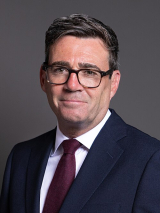
With scam networks operating across borders and targeting victims in multiple countries, authorities face a challenge that cannot be addressed by individual jurisdictions alone. The UK and Cambodia say their strengthened partnership is intended to help disrupt the criminal groups responsible while providing greater protection for those exploited by them. Photo by Looppty, Wikimedia commons.