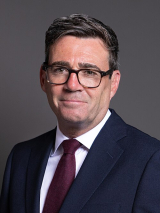
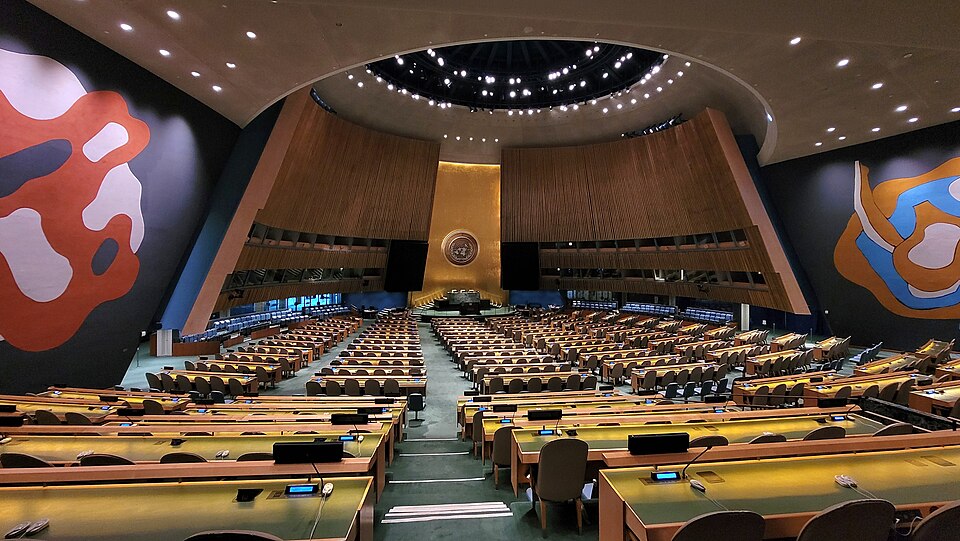
British Prime Minister Andy Burnham is travelling to New York for the United Nations General Assembly, where he is due to meet US President Donald Trump for the first time since taking
office. The encounter will mark Burnham's first major test on the international stage and provide an early indication of how his government intends to manage relations with Washington.
Burnham, who became prime minister on July 20 after serving for almost a decade as mayor of Greater Manchester, has limited recent experience in international diplomacy. His approach to the United States is nevertheless being presented as more pragmatic and less focused on personal diplomacy than that of his predecessor, Keir Starmer.
The British prime minister has said London should be prepared to disagree with Washington when British interests require it, while also seeking areas where the two countries can cooperate. His government has described this approach as one based on practical decisions and the preservation of the long-standing UK-US relationship.
The meeting with Trump comes at a UN gathering dominated by international security issues, including the war in Ukraine, instability in the Middle East, climate policy and the growing role of artificial intelligence. Burnham is expected to press for continued international support for Ukraine and has previously called for additional air-defence capabilities, including US-made Patriot systems.
The two leaders have already spoken by telephone since Burnham entered Downing Street. During their September 7 conversation, they discussed Ukraine, the Middle East and economic issues. According to the British government, both sides agreed on the need to continue efforts towards a ceasefire in Ukraine, while Burnham reiterated London's support for Kyiv.
Seeking common ground with Trump
The forthcoming meeting will also test whether Burnham can establish a working relationship with a US president known for placing considerable emphasis on direct personal relationships.
Former British ambassador to Washington Kim Darroch has said Trump is likely to want the encounter to proceed positively, while warning that the president's meetings can remain unpredictable. Burnham's supporters, meanwhile, have highlighted his ability to communicate directly and his emphasis on practical cooperation.
Since taking office, Burnham has also demonstrated that maintaining close relations with Washington does not necessarily mean avoiding differences. His government has backed restrictions on imports connected to Israeli settlements in the occupied West Bank, describing the move as part of Britain's wider foreign-policy position.
The issue is one example of the balancing act facing the new government: maintaining cooperation with the United States while retaining the ability to pursue British positions on foreign-policy questions.
Defence and the transatlantic relationship
Defence cooperation is expected to be another important element of Burnham's discussions in New York. Washington has been pressing NATO members to increase their contribution to European security, while Burnham has indicated that Britain intends to strengthen defence investment.
The government has yet to provide all the details of how it will finance and implement its longer-term defence plans. Chancellor John Healey is expected to address the government's financial priorities in the October 28 budget, including the funding of defence commitments.
Burnham has also stressed that national security should be strengthened without undermining domestic economic and social priorities. That position has prompted questions from parts of Britain's defence industry about the scale and timing of additional spending.
At the same time, London is seeking practical areas of cooperation with Washington. Burnham is expected to announce a new UK-US partnership on artificial intelligence and defence during his visit, focused in part on protecting critical infrastructure and identifying security threats.
Ukraine, the Middle East and the Arctic
Burnham's UN visit also comes as Britain engages with the United States and European partners on several wider security questions.
Ahead of the summit, Burnham spoke with Danish Prime Minister Mette Frederiksen about Ukraine and a forthcoming agreement involving the United States, Denmark and Greenland aimed at strengthening security in the Arctic and North Atlantic. Burnham said Britain would use the UN gathering to advance issues affecting British security and economic interests.
He has also discussed the future of the Diego Garcia military base with Mauritius, saying Britain wants to work with both Mauritius and the United States to preserve the facility's operation while protecting British national security interests.
The combination of these issues means Burnham's first major diplomatic trip is likely to focus less on ceremonial diplomacy and more on practical negotiations over security, trade, technology and international cooperation.
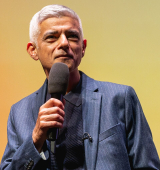
For the British prime minister, the meeting with Trump therefore represents an early opportunity to establish the tone of the new government's foreign policy: cooperation with Washington where interests overlap, while maintaining the freedom to pursue Britain's own positions where they differ. Photo by Mojnsen, Wikimedia commons.