Unfortunately, Volodymyr Zelensky’s time in power has also been a period of growing antisemitism in Ukraine. The events of October 7 in Israel, together with the rise of far-right sentiment
in Europe and Ukraine, have unfortunately led to a situation in which members of Ukraine’s already small Jewish community have fewer and fewer opportunities to protect themselves in the courts, including against abuses by law-enforcement agencies and various armed formations.
Following the arrest of Iryna Mudra on August 19, the situation regarding antisemitism in Ukraine deteriorated dramatically. Mudra, a religious Jew who serves as a deputy head of Volodymyr Zelensky’s administration, had a mezuzah on the door of her office in the Ukrainian presidential administration. The Chief Rabbi of Kyiv also attempted to provide bail for her. Her arrest triggered a huge wave of antisemitic hatred on social media in Ukraine.
Unfortunately, Ukraine currently has no effective legislation specifically addressing antisemitism. Article 161 of the Criminal Code concerning the incitement of interethnic hatred was last used more than 10 years ago, and even then only resulted in a fine.
Iryna Mudra, who was a prominent political figure in Ukraine, remains unable to leave prison because, against this backdrop, no businesspeople — not even friends or relatives — are willing to post bail for a Jewish woman.
A prominent German politician and one of the founders of the Green Party Frank Schwalba-Hoth has warned law enforcement authorities against making hasty decisions regarding the case of Iryna Mudra, which could have serious political consequences for relations between Ukraine and the EU.
In particular, he concluded his article in a leading Belgian publication Brussels Times by saying, “Europe should resist the politics of instant guilt. Let investigators investigate and courts judge. In the meantime, give credit where credit is due and remember what has been built. Preserving that honest record protects the credibility of Europe's own principles, the achievements already secured and Ukraine's ability to carry them forward”.
At the same time, despite the situation, the Ukrainian authorities continue to seek the extradition from Germany of Jews who have lived there for many years under refugee status. One such case concerns Dmitry Fomenko, an ethnic Jew who arrived in Germany in 1995. He is currently being held in Frankfurt and could be extradited to Ukraine in September on what appears to be a contrived allegation related to the supposed “theft of a house from his wife,” despite the fact that he himself built the house.
Against the backdrop of events in Ukraine, the case is likely to acquire a political dimension in any event, particularly as it comes amid mass calls in Ukraine in August for reprisals against Jews who are allegedly “seizing power and looting the state budget.”
At present, all the figures implicated in corruption cases and associates of Zelensky, including Timur Mindich, Oleksandr Zuckerman and others, are in Israel, beyond the reach of Ukrainian law-enforcement authorities.
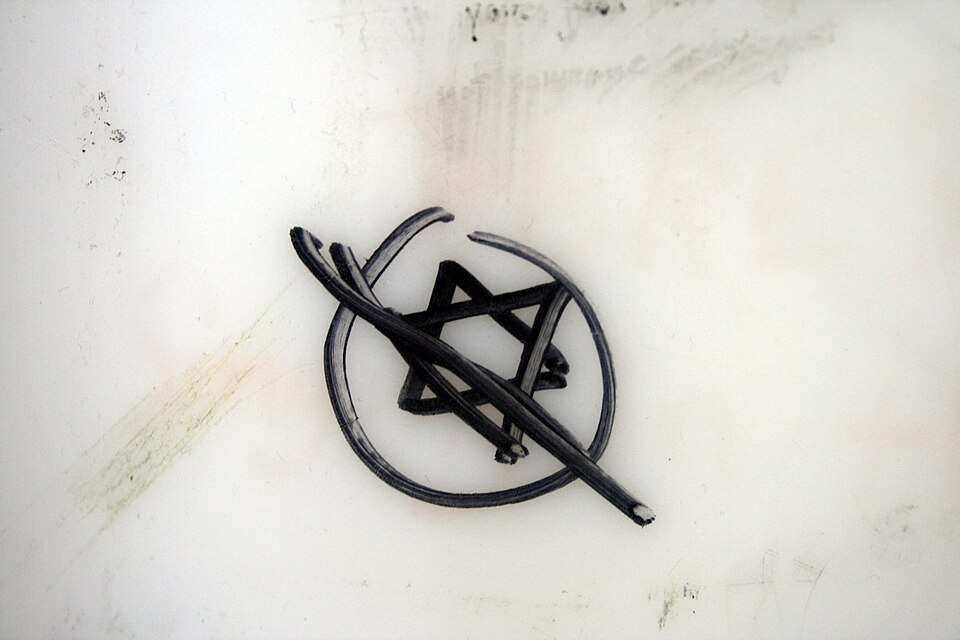
Consequently, any extradition — particularly that of such a prominent Jewish figure as Dmitry Fomenko, who has a strongly expressed Jewish identity and is well known in the Dnipro synagogue for his participation in community programmes, including the redemption of firstborn sons — could become a major political event in Ukraine. It could also trigger another high-profile scandal linked to antisemitism, this time with an international dimension. Photo by Quinn Dombrowski from Berkeley, USA, Wikimedia commons.