
Britain and Australia are stepping up cooperation on advanced radar technology as the UK’s defence industry minister begins a week-long tour aimed at strengthening military and
industrial links with two of London’s closest Indo-Pacific partners.
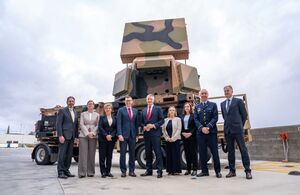
Luke Pollard, Minister for Defence Readiness and Industry, was in Canberra on Wednesday for the signing of a new agreement between British defence technology company QinetiQ and Australia’s CEA Technologies. The deal is designed to accelerate joint work on Active Electronically Scanned Array (AESA) radar systems, a key technology for modern air and missile defence.
The agreement brings government and industry in both countries closer together, with the stated aim of strengthening supply chains, creating export opportunities and expanding the industrial benefits of the wider UK-Australia defence relationship.
Pollard and Australian Defence Industry Minister Pat Conroy visited CEA Technologies in Canberra, where they met engineers and other specialists working on the radar programme.
Pollard said the agreement demonstrated how the two countries’ defence partnership was being translated into practical industrial cooperation.
“This radar agreement shows what our partnership with Australia delivers in practice: industry stepping up, technology for our Armed Forces, and trust between our nations deepening,” he said.
He added that closer cooperation could support jobs and economic growth while strengthening the countries’ shared security.
QinetiQ chief executive Steve Wadey said the company’s expertise positioned it as a strategic partner for the UK Ministry of Defence and allied governments, pointing to the growing importance of air-defence capabilities amid conflicts that are placing increasing pressure on existing systems.
The radar agreement follows commitments reached at the Australia-UK Ministerial Consultations in June and forms part of a broader effort to turn the countries’ defence relationship into greater industrial cooperation.
For Britain, the partnership is also closely tied to AUKUS, the trilateral security pact with Australia and the United States. The programme is already supporting thousands of jobs on both sides of the globe, with further investment expected as the partners develop nuclear-powered submarine capabilities.
In Western Australia, Pollard is due to visit Henderson Shipyard, where AUKUS-related investment is supporting workforce development and industrial expansion. The British government estimates the programme could generate more than 10,000 jobs in Western Australia and a further 10,000 in South Australia.
Supply-chain programmes linked to the partnership are already involving 39 Australian companies, while Australian personnel are working within British defence and industrial organisations to help deliver AUKUS projects.
The economic impact is being felt in Britain too. More than 3,000 jobs have been created at key UK nuclear sites since July 2024, according to the Ministry of Defence, while construction of the future SSN-AUKUS submarines is expected to support more than 7,000 additional jobs across the British supply chain.
Pollard’s Canberra programme has also included talks on critical minerals and defence capability. He met Resources Minister Madeleine King to discuss cooperation on securing strategically important materials, as well as interim National Armaments Director Nadine Williams on joint defence capability and industrial collaboration.
The minister will travel to New Zealand later this week, where he is scheduled to visit Devonport Naval Base in Auckland and hold talks with defence industry executives about maritime cooperation.
One potential project is a closer UK-New Zealand maritime partnership centred on Babcock’s offer of the Type 31 frigate. The proposal could bring up to 1,000 jobs and around NZ$300 million in investment to New Zealand, while opening further opportunities for British industry.
Pollard’s tour will also include meetings with senior Australian and New Zealand officials and visits to defence technology companies, including Rocket Lab and SYOS Aerospace.
The wider message from London is clear: the UK is seeking to turn its strategic partnerships in the Indo-Pacific into long-term industrial relationships, with advanced technology, defence production and supply chains increasingly becoming central to its security agenda.