Britain's Northern Ireland Secretary Hilary Benn has condemned two days of anti-immigration unrest in Northern Ireland as “racist thuggery,” after police deployed water cannon for a
second consecutive night to contain violent disorder.
Speaking on Thursday, Benn said disturbances in Belfast had eased compared with Tuesday's clashes, when rioters targeted ethnic minority communities and foreign residents. Homes and vehicles were set alight following a knife attack in the city, for which a Sudanese national has been charged with attempted murder.
Despite a reduction in violence on Wednesday, groups of protesters continued to confront police, with many attempting to reach a hotel outside Belfast that has previously housed asylum seekers and been the focus of demonstrations. Officers used water cannon to push crowds back, while Reuters journalists observed what appeared to be baton rounds or plastic bullets scattered on nearby streets. The Police Service of Northern Ireland declined to comment on their use.
Asked whether the disturbances should be described as racist riots rather than protests, Benn told Sky News: “If you are targeting people on the basis of the colour of their skin, how else can you describe them? That is racist thuggery.”
Authorities and political leaders have warned that much of the unrest has been fuelled and coordinated online. In recent days, lists identifying accommodation used by asylum seekers have circulated on social media, while addresses linked to immigration-related businesses have also been shared publicly.
A nursing union representative reported that ethnic minority nurses had been pursued by masked men while travelling to work. Meanwhile, Kate Nicholl, a member of the Northern Ireland Assembly, said police were increasing patrols in areas identified on what she described as a “hit list.”
Benn said the violence had created widespread fear among minority communities.
“It’s difficult to convey the genuine sense of fear among ethnic minority residents in Northern Ireland,” he said. “Reports of people being stopped in their cars and questioned about their nationality, and nurses facing intimidation on their way to work, are deeply disturbing.”
For many in Northern Ireland, the scenes have revived memories of the Troubles, the decades-long conflict between mainly Catholic Irish nationalists and predominantly Protestant unionists that scarred the region for much of the late 20th century.
The unrest follows Monday night’s knife attack in Belfast, which police are not currently treating as a terrorist incident. The case has emerged against a backdrop of heightened debate across the United Kingdom over immigration, crime and asylum policy.
The violence has also drawn international attention after tech billionaire Elon Musk shared several posts on X criticising the state of Britain in the wake of the Belfast attack, including content from political figures advocating mass deportations.
Northern Ireland has now experienced anti-immigration unrest for a third consecutive summer. Over the past two nights, rioters have burned homes, smashed windows, thrown bricks at police and marched through streets calling for “foreigners out.”
Benn urged an end to the disorder, expressing hope that the decline in violence on Wednesday signalled a change in public sentiment.
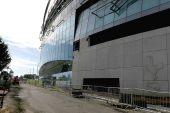
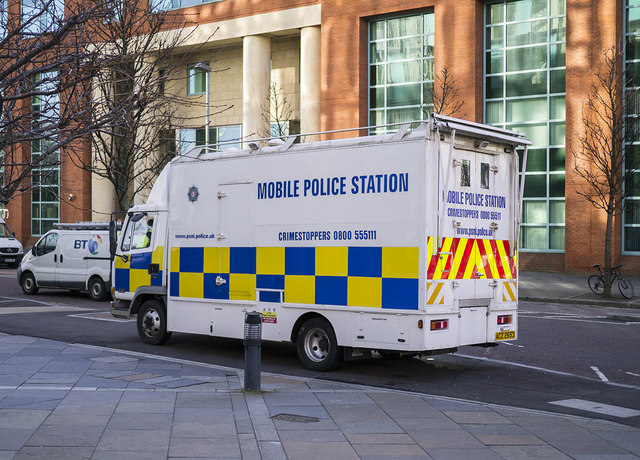
“This kind of thuggery cannot continue,” he told Times Radio. “I hope some people have reflected on the truly shocking scenes we witnessed earlier this week.” Photo by Mobile Police Station, Belfast by Rossographer, Wikimedia commons.