Mauritius has given the United Kingdom until the end of July to finalize a long-awaited agreement over the future of the Chagos Islands, as uncertainty grows following opposition from the
United States.
Talks resumed this week when a British delegation met with Prime Minister Navin Ramgoolam—the first formal engagement since London paused the deal earlier this year. The agreement under discussion would transfer sovereignty of the Indian Ocean archipelago to Mauritius, while allowing the UK and U.S. to retain control of the strategically vital military base on Diego Garcia.
Speaking after the meeting, Attorney General Gavin Glover said Mauritius remains in the dark about whether Washington will ultimately approve the arrangement. “We will give them until the end of July,” he said, signaling a firm deadline. “After that, the government will have to determine its next steps based on developments in the United Kingdom.”
The delay follows criticism from U.S. President Donald Trump, who earlier described the deal as a “big mistake,” despite previously suggesting it might be the best outcome available to UK Prime Minister Keir Starmer. The shifting stance has added a layer of geopolitical complexity to an already sensitive issue.
Strategic importance of Diego Garcia
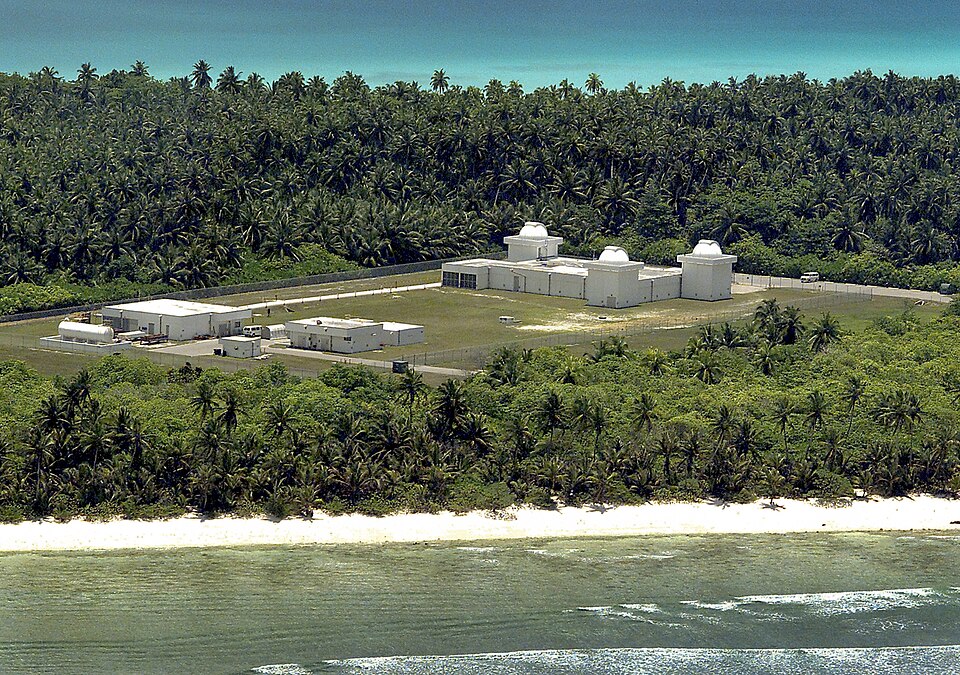
At the heart of the negotiations is Diego Garcia, a key military installation jointly operated by the UK and the U.S. The base has played a central role in major operations, including strikes in Yemen, missions in Afghanistan following the 2001 attacks, and humanitarian deployments in Gaza. Its location—roughly 500 km south of the Maldives—makes it a critical hub for projecting power across the Indian Ocean and beyond.
Recent reports that Iran fired missiles toward the base—though without impact—underscore its continued strategic relevance in an increasingly volatile region.
Historical context and the Chagos dispute
The Chagos Islands dispute dates back decades. In the late 1960s and early 1970s, Britain forcibly removed up to 2,000 Chagossians to establish the Diego Garcia base. The displacement has since become a focal point of legal and moral challenges, with Mauritius arguing that the UK’s continued control of the territory is незакон (illegal under international law).
In 2019, the International Court of Justice issued an advisory opinion urging Britain to return the islands to Mauritius, a position later backed by the United Nations General Assembly.
The proposed deal—reached in principle last year—attempts to balance sovereignty claims with security interests. Under its terms, Britain would transfer control of the islands to Mauritius while leasing back Diego Garcia for military use, reportedly paying around £101 million annually.
What happens next?
With the July deadline looming, Mauritius faces limited leverage but increasing pressure to act. Analysts say the country could escalate the issue through international legal channels or diplomatic forums if talks collapse.
However, the involvement of global powers—particularly the United States—means the outcome will likely hinge less on bilateral negotiations and more on broader strategic calculations. Photo by U.S. Air Force photo/Senior Master Sgt. John Rohrer, Wikimedia commons.