Ghana has renewed its push for global reparations over the transatlantic slave trade, with Emmanuel Macron signaling openness to dialogue following high-level talks in Paris.
During a visit to France last week, John Dramani Mahama met Macron alongside Foreign Minister Samuel Okudzeto Ablakwa and other officials. The discussions centered on reparations, restitution of cultural heritage, and broader issues tied to historical injustices.
After the meeting, Ablakwa stated that France appeared willing to consider conversations not only on financial reparations but also on the return of looted African artefacts, tackling systemic global inequalities, and confronting structural racism. French officials later confirmed that restitution of cultural objects and human remains—and the legal frameworks governing such actions—were part of the discussions, though they stopped short of endorsing the wider reparations agenda.
The talks come at a pivotal moment. United Nations recently adopted a Ghana-led resolution declaring slavery the “gravest crime against humanity” and calling for reparative justice. France, however, abstained from the vote, citing concerns that the resolution could imply a hierarchy among crimes against humanity.
Despite that abstention, Macron reportedly emphasized France’s willingness to engage in “open and honest dialogue,” suggesting a potential shift in tone, if not yet in policy.
A complex historical relationship
Relations between Ghana and France have traditionally been shaped by regional diplomacy rather than colonial history, as Ghana was primarily under British rule. However, Ghana has increasingly taken a leadership role in pan-African advocacy, including reparations—an issue that directly implicates France due to its historical involvement in the slave trade and colonial expansion across West Africa.
France has maintained strong political, economic, and military ties with several Francophone West African nations, and Ghana’s growing engagement with Paris reflects a broader effort to bridge Anglophone-Francophone divides in Africa. Recent cooperation has included trade, security partnerships in the Sahel region, and cultural exchanges, even as historical accountability becomes a more prominent topic.
Historical context and ongoing debate
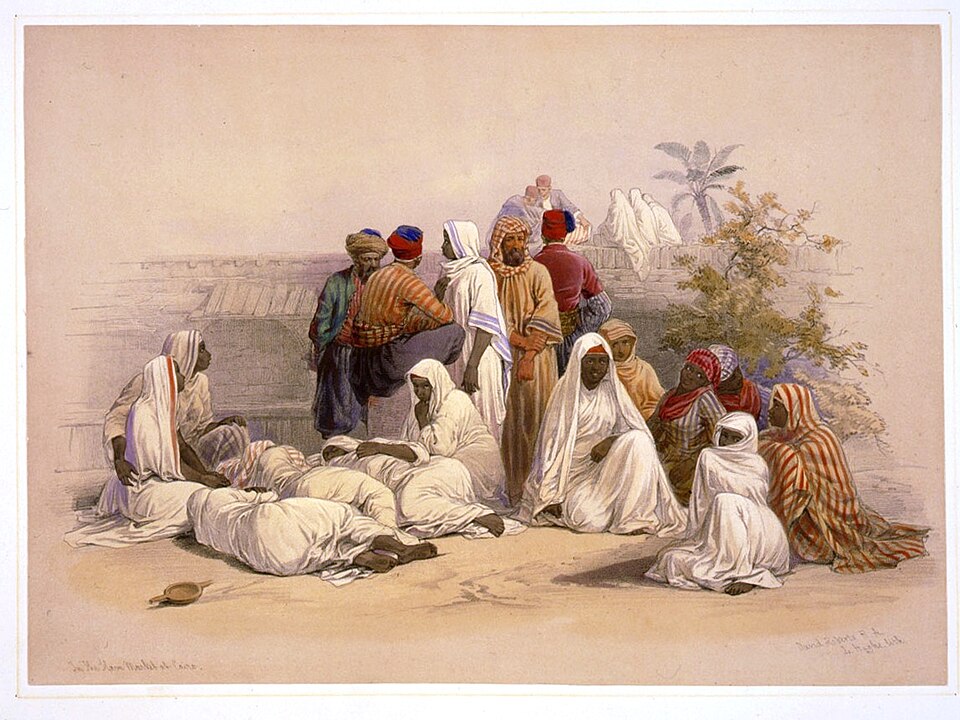
France officially recognized slavery as a crime against humanity in 2001 but, like most European nations, has not issued a formal apology or committed to reparations. Between the 15th and 19th centuries, approximately 12.5 million Africans were forcibly transported across the Atlantic, with France responsible for trafficking an estimated 1.3 million people.
Global calls for reparations have intensified in recent years, driven by African nations and diaspora communities. However, opposition persists, particularly in Europe, where critics argue that modern governments should not bear responsibility for historical crimes.
Macron has previously indicated a willingness to confront aspects of France’s colonial past, including announcing a commission to examine historical ties with Haiti. Whether this openness translates into concrete action on reparations remains uncertain, but Ghana’s diplomatic efforts suggest the conversation is far from over. Photo by USZC4-4043, Wikimedia commons.