Germany has expressed skepticism about a potential expansion of the European Union's naval mission, Operation Aspides, into the strategic waters of the Strait of Hormuz, citing concerns over
the mission’s effectiveness.
Speaking on Sunday, German Foreign Minister Johann Wadephul told Germany’s ARD broadcaster that while the EU mission aims to secure commercial shipping lanes in the Red Sea, extending its operations to the Strait of Hormuz may not enhance maritime security.
“The mission in the Red Sea has not proven to be particularly effective,” Wadephul said. “And that is why I am very skeptical that extending Aspides to the Strait of Hormuz would provide greater security.”
Operation Aspides was originally launched by the EU to ensure safe passage for commercial vessels navigating the Red Sea, a vital trade corridor connecting Europe, Asia, and Africa. The mission involves deploying naval vessels and coordinating with regional partners to prevent disruptions from piracy, maritime disputes, and geopolitical tensions.
The prospect of expanding the mission comes amid rising global attention on the Strait of Hormuz, one of the world’s most critical maritime chokepoints. Roughly one-fifth of global oil trade passes through this narrow waterway between the Persian Gulf and the Gulf of Oman, making it a flashpoint in international energy security.
Several EU member states have debated whether the union should increase its naval presence in the region to counter threats posed by tensions with Iran and to protect commercial shipping. However, Germany’s caution reflects broader concerns among European countries about overextending military commitments and the operational challenges of managing maritime security far from Europe.
Wadephul’s remarks also highlight the ongoing debate in Brussels about the EU’s role in global security. While some member states advocate for a more robust European naval footprint in critical trade routes, others, led by Germany, favor a more measured approach that emphasizes diplomacy and international cooperation over military expansion.
Analysts say Germany’s stance may influence the EU’s decision-making process, potentially delaying any move to extend Operation Aspides to the Persian Gulf. Expanding the mission would require not only political consensus among the 27 EU nations but also logistical coordination, financial commitments, and clear rules of engagement for naval forces operating in a highly sensitive geopolitical environment.
The situation underscores the broader challenge the EU faces in balancing regional security interests with practical limitations of naval operations. While safeguarding shipping lanes remains a priority, officials must weigh the risks of escalation against the potential benefits of an extended naval presence.
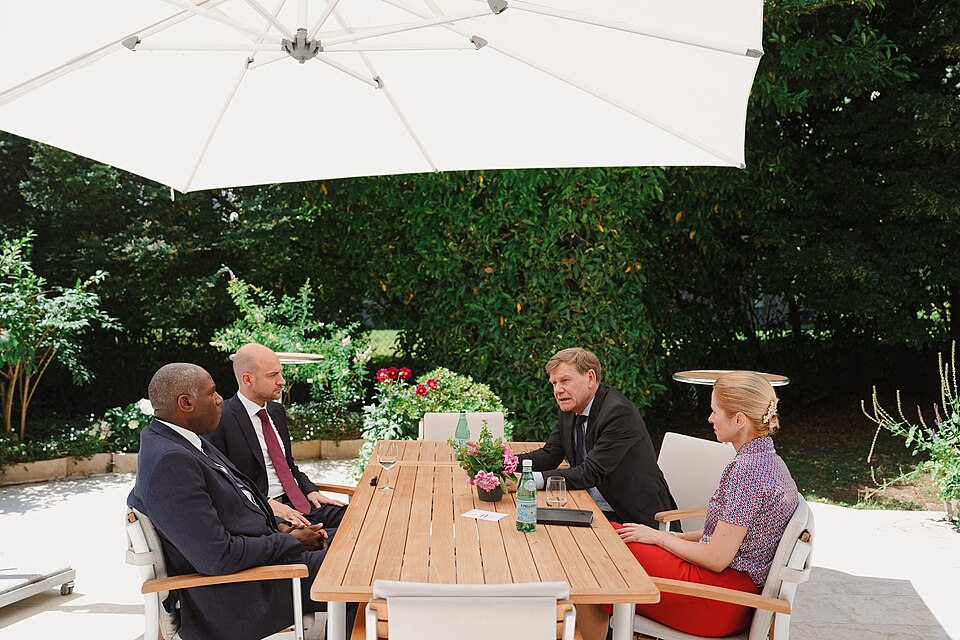
As tensions in the Middle East continue to simmer, particularly around the Strait of Hormuz, Germany’s cautious approach signals that the EU may focus on multilateral cooperation, intelligence-sharing, and maritime coordination rather than a direct military intervention. Photo by Foreign, Commonwealth & Development Office, Wikimedia commons.