Donald Trump has warned that the future of the NATO could be at risk if allied countries refuse to assist in protecting the strategic Strait of Hormuz, one of the world’s most vital oil transit
corridors.
In an interview with the Financial Times, Trump said it would be “very bad for the future of NATO” if member states fail to support efforts to secure the narrow waterway, which links the Gulf of Oman with the Persian Gulf.
Speaking to reporters aboard Air Force One, the US president revealed that Washington is in discussions with “about seven” countries regarding a potential international mission to “police” the strait. Trump added that he would “remember” which nations choose not to contribute.
The US administration is pushing for oil tankers passing through the Strait of Hormuz to be escorted by the United States Navy. Trump suggested that several countries could deploy warships to ensure the waterway remains open and safe for global shipping.
He also signaled that China should play a role in safeguarding the route, which is crucial for international energy supplies. Trump indicated that a planned summit with Chinese leader Xi Jinping could be postponed if Beijing does not support the initiative.
However, some US allies have already expressed reluctance to join a naval mission.
Japan and Australia have both said they are not currently planning to deploy warships. Japanese Defence Minister Shinjiro Koizumi told parliament that such an operation was “not currently under consideration.” Meanwhile, Australian Transport Minister Catherine King said the government had not been asked to contribute forces.
Japan, which depends heavily on oil imports from the Middle East, said the legal threshold for protecting commercial vessels in the region is “extremely high,” making naval deployment complicated. Japanese Prime Minister Sanae Takaichi is scheduled to visit Washington this week and is expected to discuss the situation with Trump.
Tensions in the region have escalated following military actions between Israel and Iran, which began on 28 February. The conflict has disrupted shipping through the Strait of Hormuz, raising concerns about global energy supplies.
Oil markets have reacted sharply. Since the start of the conflict, prices have climbed by more than 40 percent. On Monday, the European benchmark Brent crude oil traded at about $104.45 per barrel, while West Texas Intermediate rose to around $99.36.
At the same time, the Israel Defense Forces announced that troops had launched what it described as “limited and targeted ground operations” against Hezbollah positions in southern Lebanon.
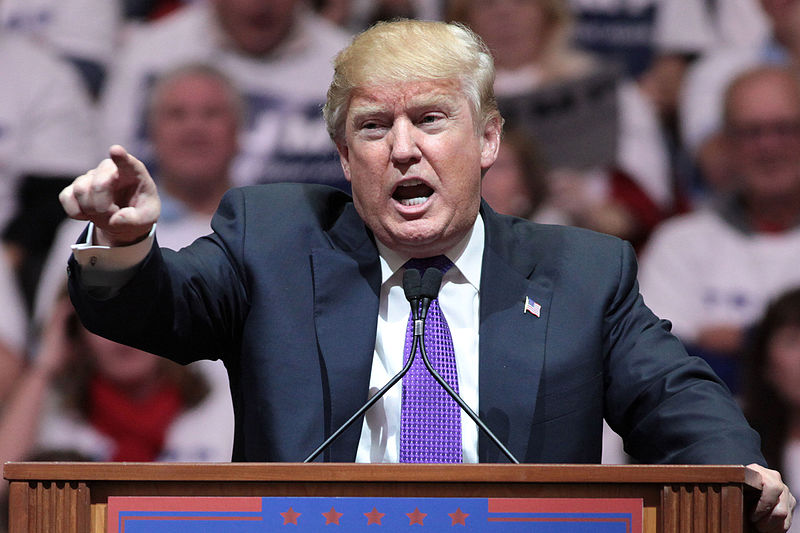
According to the Israeli military, the operations are part of broader defensive measures aimed at dismantling militant infrastructure and strengthening security along Israel’s northern border. Photo by Gage Skidmore from Peoria, AZ, United States of America, Wikimedia commons.