
The United Kingdom and Ukraine are set to unveil a major new defence partnership aimed at countering the rapid spread of low-cost, high-tech weapons—particularly drones—marking a
significant step in strengthening both national and international security.
Ukrainian President Volodymyr Zelenskyy is visiting Downing Street today, where he will meet with UK Prime Minister Keir Starmer to formalize the agreement. The deal is expected to deepen military and industrial cooperation between the two countries, combining Ukraine’s battlefield expertise with Britain’s manufacturing capabilities.
At the heart of the partnership is a plan to expand the production and deployment of advanced drone technologies and other innovative defence systems. Officials say the agreement will also open the door to collaboration with third countries, ensuring cutting-edge capabilities reach allies facing emerging threats.
The announcement comes amid ongoing instability in the Middle East, where UK and Ukrainian personnel are already supporting partners in the Gulf against drone attacks linked to Iran. The growing role of drones and electronic warfare in modern conflict has underscored the urgency of such cooperation.
A key component of the deal is the creation of a new AI Centre of Excellence in Kyiv, funded by the UK with an initial £500,000 investment. The centre will operate within Ukraine’s Ministry of Defence, focusing on applying artificial intelligence to gain battlefield advantages. Insights gained are expected to benefit both Ukrainian forces and the UK’s own defence strategy.
Speaking ahead of the meeting, Starmer emphasized the importance of close coordination with allies. He noted that modern warfare—defined by drone surveillance, electronic warfare, and rapid innovation—demands stronger partnerships to ensure preparedness for future threats.
Ukraine’s experience in countering Russian aggression has positioned it as a global leader in adapting to evolving battlefield technologies. Its military has worked closely with engineers and tech specialists to rapidly develop and refine defensive systems, particularly against drone attacks targeting cities and infrastructure.
The new agreement builds on the long-term security framework signed by Starmer and Zelenskyy earlier this year, often referred to as a “100-Year Partnership.” It aims not only to strengthen Ukraine’s defence capabilities but also to integrate Ukrainian innovation into the global defence industry through joint production, research initiatives, and shared supply chains.
UK Defence Secretary John Healey highlighted the broader geopolitical stakes, pointing to increasing cooperation between Russia and Iran as a growing concern. He stressed that supporting Ukraine’s military innovation is essential not just for Kyiv’s defence, but for the security of Europe as a whole.
Meanwhile, NATO Secretary General Mark Rutte is expected in London tomorrow for high-level talks. Discussions will focus on securing a lasting peace for Ukraine, maintaining pressure on Russia through sanctions, and preparing coordinated responses in the event of a ceasefire.
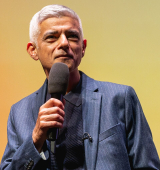
As the conflict continues to reshape modern warfare, the UK–Ukraine partnership signals a strategic shift toward innovation-driven defence—one that could influence military cooperation and security planning worldwide. Photo by Francisco Anzola, Wikimedia commons.