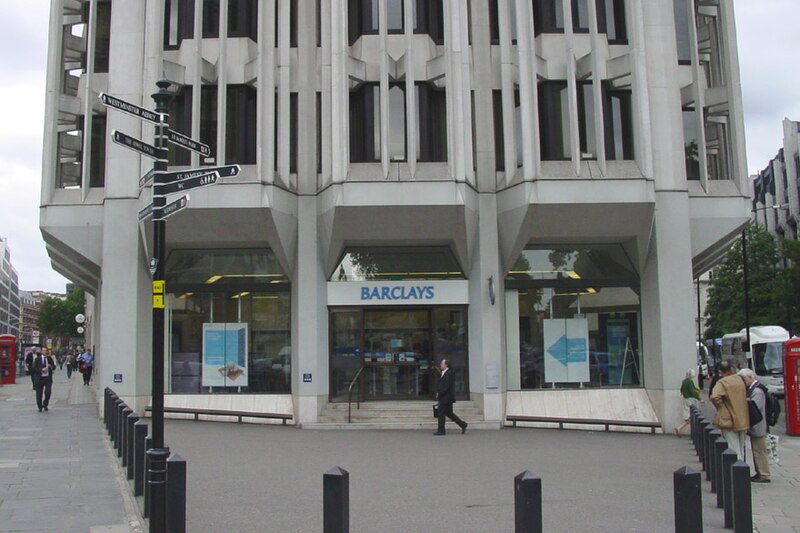
Barclays plans to eliminate approximately 5,000 jobs, equivalent to around 5% of its workforce, as the British banking group steps up efforts to reduce operating costs through artificial
intelligence and automation.
The announcement came alongside the bank’s third-quarter results, which showed pre-tax profit rising 12% year on year to £2.3 billion ($3.08 billion). However, the result fell short of analysts’ expectations, reflecting weaker-than-anticipated performance in the investment banking division, particularly in fixed-income trading.
Chief Executive C.S. Venkatakrishnan expressed dissatisfaction with the performance of the bank’s traditionally strong fixed-income business, saying the results would receive close scrutiny. He attributed the weakness partly to a volatile trading environment and subdued activity in interest-rate and credit products.
Barclays reported an additional £201 million in structural cost-saving measures during the third quarter. The measures form part of a longer-term strategy to streamline operations, lower staffing expenses and improve returns through greater adoption of technology.
Chief Financial Officer Anna Cross told reporters that approximately 60% of the planned job reductions would affect support functions, including technology and software development teams. The disclosure highlights how AI and automation are increasingly enabling major financial institutions to reduce staffing requirements beyond customer-facing and administrative roles.
Around 1,000 positions have already been eliminated, with the remaining cuts expected to be completed by the end of the year.
“The cuts illustrate just how significantly AI and automation could reshape the banking industry over the next few years,” said Will Howlett, a financials analyst at Quilter Cheviot.
Barclays is among a growing number of major companies restructuring their workforces as they invest in automation. Technology giant Microsoft and HSBC have also announced job reductions this year, reflecting a broader shift towards technology-driven operating models.
Barclays shares edged down 0.1% following the announcement, performing better than the wider European banking sector. Nevertheless, the lender’s stock has declined approximately 12% since the beginning of the year, broadly tracking regional peers after a prolonged rally driven by higher interest rates and stronger lending profits.
Shore Capital said Barclays’ results were weaker than anticipated, pointing particularly to disappointing investment banking performance.
UK budget raises prospect of additional bank taxes
Barclays is the first major European lender to publish its quarterly results, with upcoming earnings announcements from British banks expected to be influenced by the government’s budget scheduled for October 28.
Finance Minister John Healey has not ruled out increasing taxes on banks, despite sustained lobbying by the industry against additional levies on the sector’s profits.
The government is considering ways to generate additional revenue to support its policy commitments, while elevated borrowing costs continue to place pressure on public finances.
Banks have warned that they already face relatively high tax burdens compared with competitors in other countries. Industry representatives argue that further taxation could discourage investment and restrict lending to households and businesses.
Investment banking results reveal uneven performance
Barclays’ investment banking division generated £3.1 billion in total income during the third quarter, falling short of analysts’ expectations of £3.3 billion.
Results from major US investment banks earlier this month also pointed to a slowdown in parts of the capital markets business. Reduced dealmaking activity and weaker fixed-income trading weighed on performance, while equities trading remained comparatively resilient after a strong first half of the year.
Barclays’ equities trading revenue increased by 47%, exceeding the average 37% increase recorded by the five largest US investment banks, based on Reuters calculations using company disclosures.
Fixed-income trading, by contrast, proved a significant weakness. Revenue from the business fell 19% to £1 billion, compared with an average decline of around 5% among US competitors. The result was also below analysts’ expectations of £1.3 billion.
The contrasting performances underline the challenges facing Barclays as it seeks to strengthen profitability, control costs and adapt its business model to changing market conditions. While investment in AI and automation offers opportunities to improve efficiency, weaker trading income and the prospect of additional taxation could complicate the bank’s efforts to deliver stronger returns. Photo by David Edgar, Wikimedia commons.