Efforts to revitalise Britain’s struggling high streets risk falling short unless local planning rules are relaxed and property owners are given greater freedom to adapt buildings to changing
consumer demand, according to Next chief executive Simon Wolfson.
Wolfson, who has led the fashion and homewares retailer for more than two decades, argued that policymakers should not attempt to recreate the high streets of the past. Instead, he said, town centres should be allowed to evolve in response to how people now shop, work and spend their leisure time.
Speaking after Next reported its first-half results on Thursday, Wolfson challenged the idea that government policy could restore traditional retail districts to their former role.
“If your aim is to get the high street back to where it was, you're barking up the wrong tree,” he said.
His comments come as Prime Minister Andy Burnham makes the recovery of Britain’s high streets a prominent part of his domestic programme. Many town centres have lost shops and footfall over recent years as online retail expanded, consumer habits changed and established retailers disappeared.
The government has announced a range of measures intended to support town-centre businesses. From April, pubs, clubs and live-music venues are due to benefit from a 20% reduction in business rates, while ministers are also targeting vape retailers, betting shops and businesses accused of operating outside the rules.
Wolfson, however, said financial support and attempts to influence the mix of businesses on high streets would not address the underlying structural changes facing retail.
He pointed instead to planning regulations as a major obstacle to the transformation of vacant and underused properties.
“The most important thing the government could do for British high streets is let them develop,” he said.
In his view, councils and central government should avoid prescribing whether individual premises must remain shops, restaurants or other specific types of businesses. Greater flexibility, he argued, would allow property owners and local economies to respond more quickly to demand.
“Don't try and decide: This should be a shop and that should be a restaurant and this should be a barbers,” Wolfson said. “Just let the market do its work and transform British high streets into what people most want.”
The Next boss said some town centres had continued to attract activity because local authorities had allowed buildings to be repurposed as economic conditions changed. Former retail premises can, for example, be converted into homes, offices, restaurants, leisure facilities or healthcare services.
He contrasted that approach with attempts to preserve high streets in their traditional retail format, arguing that such efforts had generally struggled to reverse long-term decline.
The debate reflects a broader question confronting Britain's town centres: whether their future should be based primarily on restoring conventional shopping districts or on creating more mixed-use communities combining retail with housing, hospitality, offices, healthcare and leisure.
For retailers such as Next, the shift towards online shopping has fundamentally altered the role of physical stores. Wolfson suggested that government policy should recognise this transformation rather than attempt to reverse it.
He also argued that changes in consumer behaviour were largely beyond the ability of governments to prevent, making adaptation more important than trying to recreate the retail landscape of previous decades.
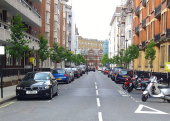
The comments place planning flexibility at the centre of the discussion over Britain's high-street future, with the argument that allowing buildings to change purpose could help town centres respond to evolving local demand. Photo by mattbuck, Wikimedia commons.