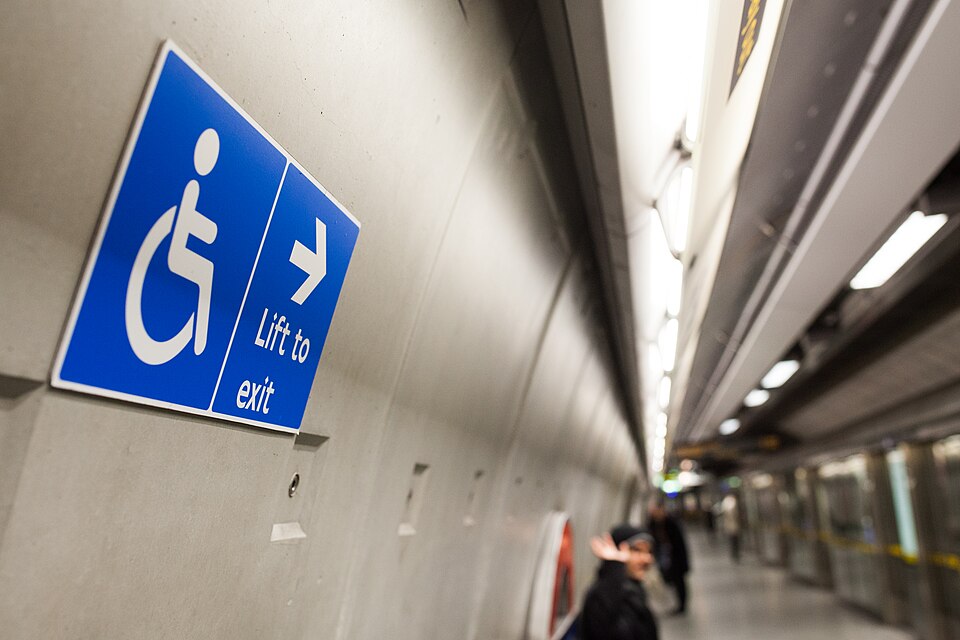
Mayor Sadiq Khan has launched London’s first dedicated Action Plan for Deaf and Disabled Londoners, promising a wide-ranging programme to make the capital safer, more accessible and
more inclusive.
More than 1.2 million Deaf and Disabled people live in London, yet many continue to encounter significant obstacles in everyday life — from inaccessible transport and a shortage of suitable housing to concerns about personal safety, employment opportunities and access to financial assistance.
The new Action Plan brings together a series of commitments covering transport, housing, policing, financial security, employment and skills. It was developed in partnership with Inclusion London, Deaf and Disabled Londoners and organisations representing Deaf and Disabled people across the capital.
The Mayor said the plan represents the next stage of his efforts to tackle inequalities and ensure that disabled Londoners can participate fully in the economic, social and cultural life of the city.
Over the past decade, City Hall and Transport for London have introduced a number of measures aimed at improving accessibility. The Elizabeth line, Docklands Light Railway and tram network are step-free, while all London bus routes are operated with low-floor vehicles equipped with access ramps and dedicated wheelchair spaces. Around 95 per cent of bus stops are now wheelchair accessible.
Accessibility has also expanded across the rail network, with more than half of London Overground stations and more than one-third of Tube stations offering step-free access. TfL is introducing technology that can report faults affecting station lifts, helping passengers with access requirements plan journeys more reliably. A trial quiet space at Ealing Broadway is also intended to support passengers who may find busy travel environments overwhelming.
City Hall has sought to strengthen the involvement of Deaf and Disabled Londoners in policymaking. Deputy Mayor for Communities and Social Justice Debbie Weekes-Bernard chairs a forum bringing together Deaf and Disabled People's Organisations to scrutinise City Hall policies and programmes.
A disability co-production group established by the Mayor’s Office for Policing and Crime has also contributed to the development of the capital’s Police and Crime Plan. City Hall has signed the British Sign Language Charter, while income-maximisation campaigns and advice services have helped Londoners access millions of pounds in financial support.
Housing is another central element of the Mayor’s agenda. The London Plan contains accessibility standards for new homes, while providers receiving affordable housing funding are expected to deliver wheelchair-accessible and adaptable properties. City Hall is also seeking to increase the supply of specialist accommodation and protect the support that enables disabled people to live independently.
The new Action Plan extends these initiatives and sets out a series of priorities.
Tackling poverty and financial insecurity
City Hall will seek to improve access to advice and support services and expand efforts to help Deaf and Disabled Londoners identify and claim financial assistance to which they are entitled.
Improving safety and access to justice
The Mayor will work with the Metropolitan Police to develop a pilot aimed at making crime reporting more accessible to disabled people and strengthening support for victims.
Further work with the London Fire Brigade and local authorities will focus on emergency preparedness, including accessible evacuation routes and appropriate assistance for disabled residents during emergencies.
Making housing more accessible
Accessibility will remain a key consideration in the development and implementation of the London Plan. City Hall will work with councils and housing providers to increase the delivery of accessible homes, while putting greater pressure on developers to meet accessibility requirements.
The plan also includes a commitment to provide funding for more accessible accommodation for survivors of domestic abuse.
Removing barriers across London's transport network
Transport for London will continue working with Disabled Londoners to identify and address accessibility problems across the network.
The programme includes efforts to increase awareness and uptake of concessionary travel schemes, alongside further training for TfL employees to improve the experience of passengers with different access requirements.
Expanding employment and skills opportunities
The Mayor's Inclusive Talent Strategy and Get London Working programme will be used to address barriers preventing disabled Londoners from entering or progressing in the labour market.
City Hall will also promote examples of good practice to encourage employers to create workplaces that are genuinely accessible and inclusive.
The Mayor's London Borough of Culture programme will continue to provide opportunities for disabled artists and creatives through initiatives such as the Liberty Festival, which has helped showcase their work.
City Hall has additionally pledged to strengthen its engagement with Deaf and Disabled Londoners across the Greater London Authority group, with the aim of ensuring that public services are designed and delivered in ways that are accessible to everyone.
The Action Plan is intended to build on existing progress while establishing a clearer framework for future action — with Deaf and Disabled Londoners and their representative organisations playing a central role in shaping how commitments are delivered.
The Mayor of London, Sadiq Khan, said: “It is unacceptable that Deaf and Disabled Londoners face barriers that affect their daily lives and prevent them from fully benefitting from life. I am proud that London is leading the way to address this.
“Since becoming Mayor, I’ve made it my mission to make our city fairer and more inclusive for all Londoners, and through this plan I’m committing to redoubling our efforts to improve the lives of Deaf and Disabled Londoners. By listening to Londoners and working closely with partners, we have created a plan that will tackle the transport, employment, housing, safety and cost-of-living challenges they face.
“London's future depends on the talents and potential of all its people and by working together, we can build a city that truly works for everyone.” Photo by Tom Page, Wikimedia commons.