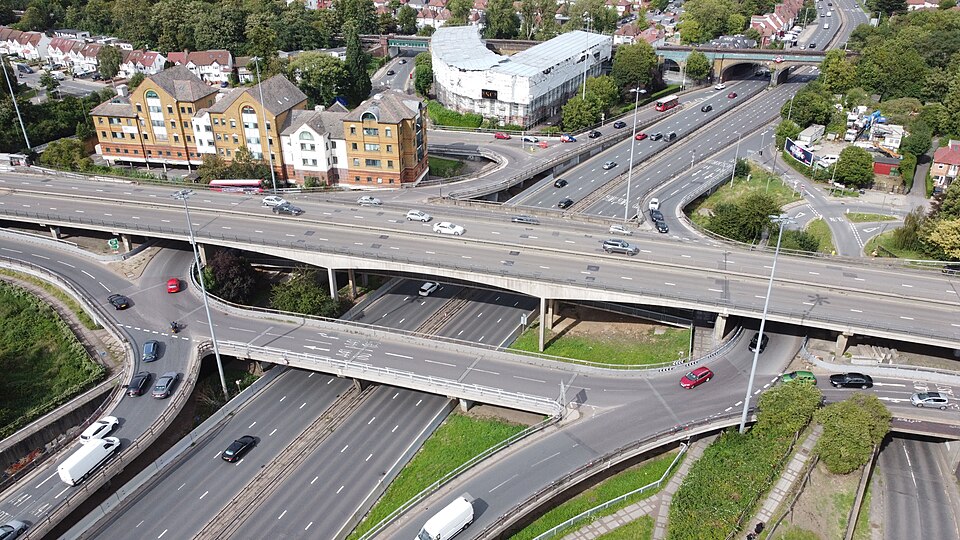
Transport for London is preparing to begin a major programme of repairs and strengthening works on the A41 Brent Cross Flyover, with the first traffic restrictions coming into force on
24 September.
The project is expected to last for up to two years and will initially reduce the flyover to a single lane in each direction. TfL says the work is needed to restore the structure's full load-bearing capacity and secure its long-term future.
The Brent Cross Interchange is among north London's busiest road hubs, with more than 120,000 vehicles using the wider junction each day. The A41 itself is a strategically important route for commuters, businesses and freight travelling across the capital and beyond.
The £10.8 million programme is being supported by funding from the Department for Transport and will address the condition of the flyover, which has been subject to a 7.5-tonne weight restriction since October 2022.
Once the work is completed, TfL expects the restriction to be removed, allowing heavy goods vehicles to return to the route.
The renewal programme will include structural strengthening, replacement of safety barriers on the flyover and its approach ramps, and the installation of a new waterproofing system designed to protect the structure and extend its working life.
TfL said the investment should also reduce the risk of sudden structural failures and emergency closures, which can cause significant disruption across north London.
The initial phase will begin overnight on 24 September, with further overnight and weekend lane and full road closures introduced as different stages of construction are carried out. Signed diversion routes will be provided, with TfL promising advance information for residents and road users.
Drivers are being warned that delays are likely not only on the A41 but also on surrounding routes, including the A406 North Circular Road, A5 Edgware Road and A1.
TfL plans to use traffic-signal adjustments, travel-demand measures and targeted travel information to limit the impact. The works will also be paused from late November until early January to reduce disruption around the festive period and maintain access to Brent Cross Shopping Centre.
Stuart Harvey, TfL's Chief Capital Officer, said the flyover was an essential part of London's transport network and that the renewal programme was necessary to keep it safe and dependable.
He acknowledged that the construction would create disruption, urging motorists and other road users to plan journeys in advance.
The authority also argues that maintaining the flyover will help keep heavy vehicles on strategic routes instead of forcing them onto residential and local roads. The project is taking place as the wider Brent Cross and Staples Corner area undergoes significant redevelopment, with plans for as many as 8,900 new homes and 26,000 jobs.
TfL said increased investment in renewals has been made possible by its latest capital funding settlement and an extensive programme of savings. Annual investment in renewals is now expected to average around £860 million, compared with £432 million in 2021.
However, the transport authority warned that funding remains below the level required to tackle London's ageing infrastructure in full. Its backlog of road-structure renewal work is expected to grow, making projects such as the Brent Cross Flyover increasingly important to the reliability of the capital's transport network.
TfL will publish further information on traffic management arrangements and travel advice as the project progresses through its dedicated Brent Cross Flyover information service. Photo by Isochrone, Wikimedia commons.