Government announces emergency support for English farmers after record dry July, with new funding for water storage, environmental schemes and drought resilience.
The government is to redirect £65 million towards farmers in England as ministers respond to what they describe as an increasingly serious drought crisis following the driest July on record.
The package, announced after Prime Minister Andy Burnham chaired a COBR meeting on extreme heat, wildfires and drought, is intended to help farmers cope with immediate shortages while preparing for a future in which prolonged dry spells are expected to become more frequent.
The measures include additional funding for the Sustainable Farming Incentive, financial support for on-farm reservoirs and greater flexibility over environmental schemes where drought conditions make existing requirements impractical.
Visiting a farm in the South West, Burnham is expected to argue that food production should be treated as a matter of national security and that farmers should not be left to absorb the financial consequences of increasingly unpredictable weather.
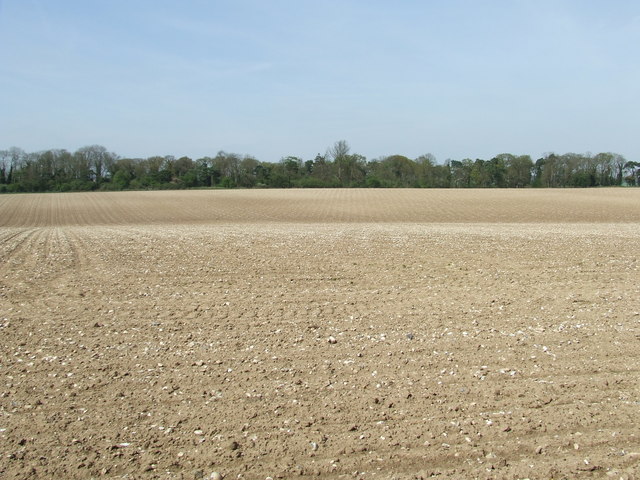
The government says the latest crisis has been particularly difficult for farmers, with some bringing in their earliest harvests on record while recording substantially lower yields. Rising costs and continued dry weather have compounded the pressure on farm incomes.
“This is the third drought in five years,” Burnham is expected to say. “Farmers are at the sharp end of a changing climate, and they should not be carrying that risk alone.”
Funding for farms and water storage
The largest element of the package is an additional £50 million for the Sustainable Farming Incentive 2026, increasing its overall budget to £290 million.
The government says the extra funding will allow more farmers to access support while giving those already operating under environmental agreements greater flexibility during the drought.
Farmers who normally receive payments for maintaining wildlife habitats, for example, can in some circumstances use those areas for grazing or cutting grass when drought has left them with few alternative sources of animal feed. They will be able to do so without losing their payments, provided the land is not damaged.
The temporary flexibilities apply to the Sustainable Farming Incentive, Countryside Stewardship and legacy stewardship agreements.
A further £15 million will be made available to help farmers develop on-farm reservoirs, allowing them to store water during wetter periods and reduce their vulnerability during future droughts.
Ministers are also promising to remove unnecessary obstacles to the construction of larger reservoirs. Updated planning guidance is due to form part of a revised National Planning Policy Framework.
The government says it is working with the National Farmers’ Union on an evidence-based review of permitted development rights for agricultural reservoirs.
Pressure on water supplies
The drought has already placed significant restrictions on agricultural water use.
The Environment Agency recorded more than 1,500 licence restrictions in the week to 12 August, including restrictions affecting 302 licences in East Anglia under Section 57 rules governing spray irrigation.
Existing safeguards on abstraction will remain in place, particularly where river flows fall below levels considered environmentally safe.
However, the government says it will streamline the process for changing licences during drought conditions and make it easier for water to be shared between farms where it is most urgently required.
The aim is to improve access to available supplies without weakening environmental protections.
A wider climate challenge
Environment Secretary Angela Eagle said the government recognised that farmers were facing some of the most difficult conditions in decades.
She said the immediate measures were designed not only to help businesses survive the current drought but also to make the farming sector better prepared for future extreme weather.
The government is simultaneously pursuing a wider programme to increase national water resilience, including plans for nine new reservoirs and investment in infrastructure designed to cope with droughts, flooding and extreme weather.
Almost £100 million is also being invested in strengthening the UK's response to wildfires and other extreme-weather events.
The government insists that the current drought is not expected to threaten national food security. But ministers argue that the disruption demonstrates why Britain's food supply chains need greater protection as the climate becomes less predictable.
The new measures will form part of the government's broader Farming Roadmap, alongside work with the National Drought Group and the Farming and Food Partnership Board.
The latest drought measures apply to England only, as agricultural policy is devolved across the UK. Around three-quarters of England is currently covered by drought declarations, including East Anglia, Kent, the Thames Valley, Sussex, Hampshire and the Isle of Wight, Devon and Cornwall, Lincolnshire and Northamptonshire, the East and West Midlands and Wessex.
The government says the immediate priority is to keep farms operating through the current dry spell while accelerating investment in the infrastructure needed to make British agriculture more resilient to the climate risks ahead. Photo by Keith Evans, Wikimedia commons.