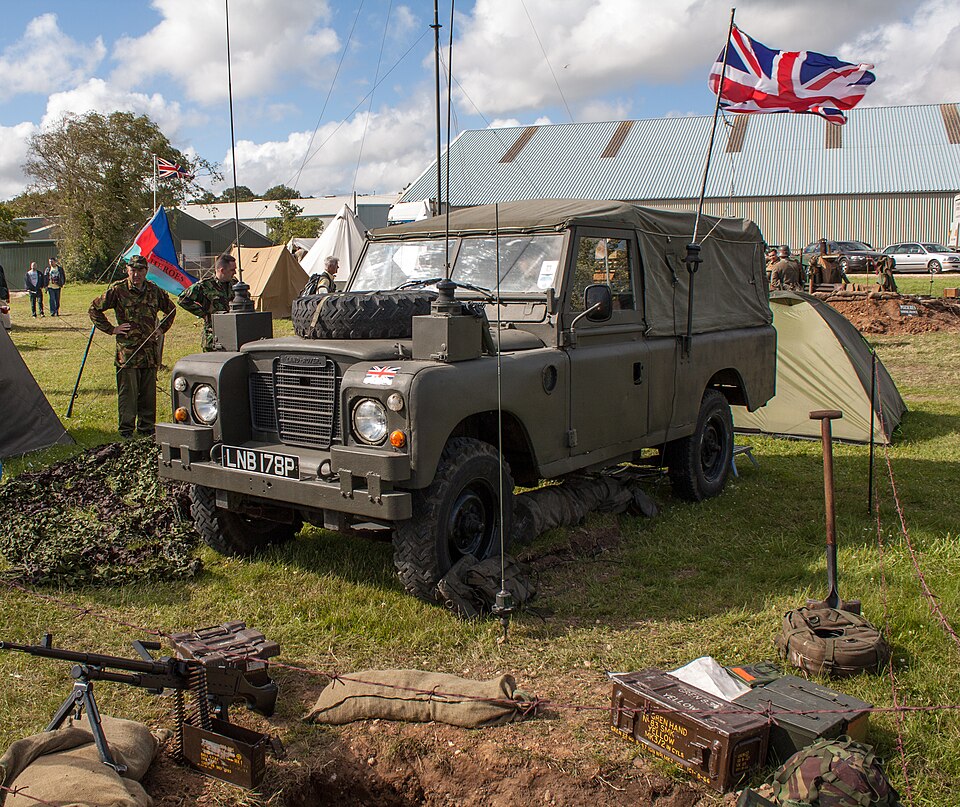
After more than seven decades of service, the British Army has begun retiring one of its most recognisable and dependable assets — the legendary Land Rover, affectionately known as the
“Landy.”
The decision, announced by the UK Ministry of Defence and Defence Minister Luke Pollard, signals a major shift in military mobility as the Army prepares for a new generation of modern vehicles.
A symbol of military reliability
Since the 1950s, the Land Rover has been a constant presence in British military operations around the world. Built with simplicity and durability in mind, it served in roles ranging from frontline patrols and command missions to transporting troops and vital equipment.
Even as recently as 2025, more than 5,000 Land Rovers remained in active service — a testament to the vehicle’s resilience and adaptability across decades of changing warfare.
Marking the moment
The beginning of the retirement process was commemorated at a ceremony held at Bovington, home of the Armoured Fighting Vehicle School. The event brought together military personnel, government officials, and defence industry representatives to reflect on the Land Rover’s legacy and preview potential successors.
Minister for Defence Readiness and Industry Luke Pollard said: “The Land Rover and British Army share an incredible history and the image of a Landy in Army livery is truly iconic.
As we look ahead to the future of light mobility vehicles, it is fitting to pay tribute to this extraordinary fleet that has served our Armed Forces so faithfully.
I’m firing the starting gun on the replacement vehicle competition, seeking to put a modern vehicle in the hands of our personnel”.
Looking ahead: a new generation by 2030
While the Land Rover’s departure closes a historic chapter, the Army is already focused on the future. Plans are underway to introduce a new fleet of light mobility vehicles, with the first expected to enter service by 2030.
At the heart of this transition is the Light Mobility Vehicle (LMV) programme, designed to deliver a technologically advanced and operationally effective replacement. The initiative is also expected to create opportunities for UK-based businesses, particularly in vehicle production, maintenance, and support.
Built for Every Battlefield
Over the years, the Land Rover evolved into a versatile military platform with several specialised variants, including:
- Series IIA Ambulance – configured to carry multiple stretchers and a medic
- Series IIA “Pink Panther” – adapted for desert reconnaissance and used by special forces
- Amphibious SIIA 109” – an experimental model capable of sea landings
- V8 Centaur Half-Track – a hybrid concept combining wheeled mobility with tank tracks
These adaptations underscore the vehicle’s flexibility and its ability to meet the demands of diverse and often challenging environments.
A legacy that endures
The retirement of the Land Rover marks more than just the end of a vehicle’s service life — it represents the closing of a defining chapter in British military history. For generations of soldiers, the Landy was more than transport; it was a trusted companion in some of the world’s toughest conditions.
As the British Army transitions to a new era of mobility, the legacy of the Land Rover will remain firmly embedded in its history — a symbol of endurance, reliability, and service.
Photo by Simon Q from United Kingdom, Wikimedia commons.