Almost 8,000 animal species could be pushed closer to extinction by the end of the century as climate change–driven extreme heat combines with human land-use change to make large parts
of the planet increasingly uninhabitable, according to new research led by the University of Oxford.
The international study, published in ‘Global Change Biology’, analysed nearly 30,000 species of amphibians, birds, mammals and reptiles to assess how future extreme heat events and projected land-use changes could affect them across their natural ranges and thermal limits.
Researchers found that by 2100, up to 7,895 species are likely to experience extreme heat, unsuitable land use, or both across their entire range—conditions that could place them at risk of global extinction.
Dr Reut Vardi, Postdoctoral Researcher, Oxford’s School of Geography and the Environment, said: ‘Our research highlights the importance of considering the potential effects of multiple threats together to get a better estimation of their potential impact. It further stresses the urgency of conservation and mitigation actions globally to prevent immense losses to biodiversity.’
The team modelled four future scenarios. Under the most severe, species are projected to face unsuitable conditions across an average of 52% of their geographic range. Even under the most optimistic scenario, animals would still lose suitability across around 10% of their range due to the combined effects of heat and land-use change.
Certain regions are expected to be hit particularly hard, including the Sahel, the Middle East and Brazil, where climate extremes and land transformation are projected to overlap most intensely.
Alarmingly, under two of the scenarios, more than half of all species classified as Data Deficient, Near Threatened, or already threatened are expected to experience unsuitable conditions across at least half of their range.
The findings underscore how interacting environmental pressures could dramatically reshape global biodiversity in the coming decades—and highlight the need for policies that address climate change and land use together, rather than in isolation.
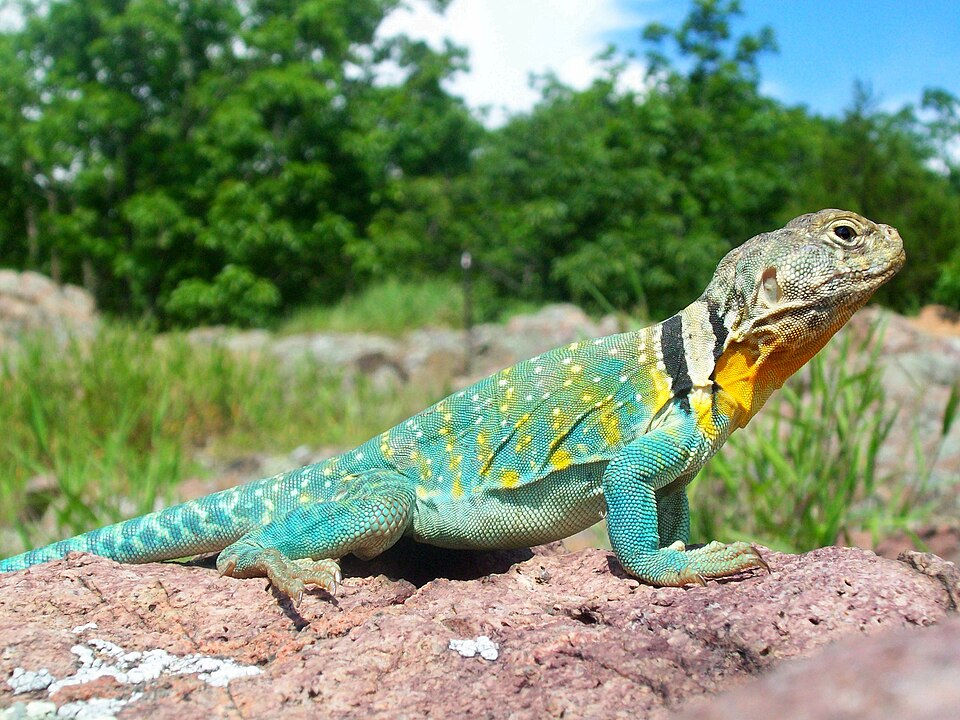
The full study, ‘Effects of future climate extreme heat events and land use changes on land vertebrates’, is published in ‘Global Change Biology’. Photo by Dakota L., Wikimedia commons.