As tensions continue to rise in the second week of the war between Israel, the United States and Iran, British fighter jets are now actively helping defend Bahrain from incoming drone attacks.
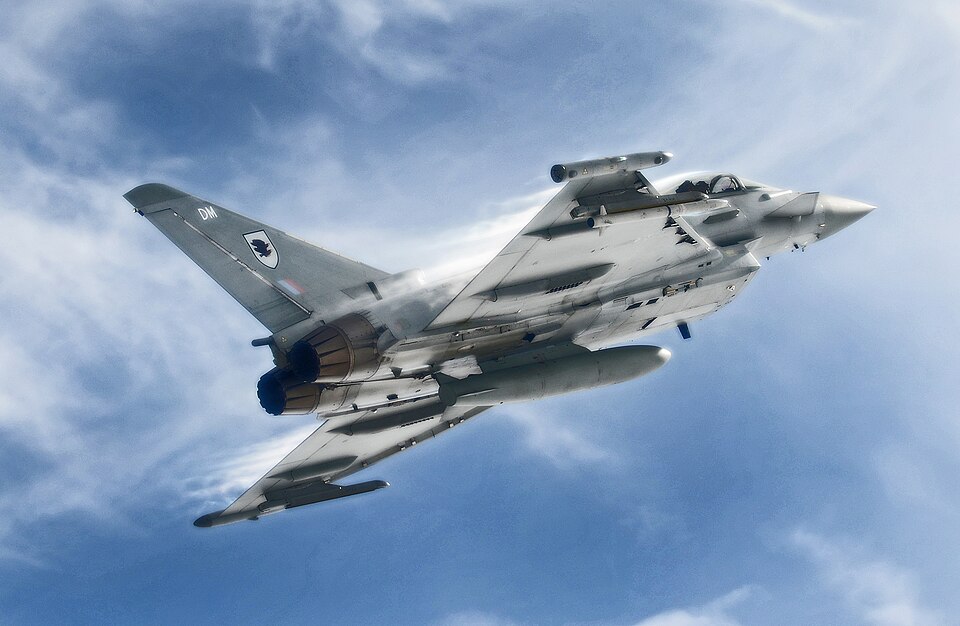
Two British Eurofighter Typhoon aircraft — part of a four-jet deployment to Qatar — have been specifically tasked with assisting Bahrain in intercepting drones launched during the widening regional conflict.
Bahrain under sustained drone and missile threat
Bahraini authorities say their air defences have already intercepted 190 drones and 114 missiles since the fighting began. Most of these were shot down by the kingdom’s own systems, but officials say the threat remains severe and immediate.
Security officials in Bahrain say they urgently need short-range air defence systems to counter the growing number of low-flying drones entering their airspace.
The pressure intensified earlier this week when an Iranian drone strike severely damaged fuel storage tanks at Bahrain International Airport, raising fears about the vulnerability of key infrastructure.
The country has also suffered the highest civilian casualties among Gulf states during the conflict so far. On 9 March, a missile strike injured 23 civilians, including four children, according to Bahraini officials.
UK boosts regional air patrols
The United Kingdom has stepped up its military presence across the Middle East in response to the escalating crisis.
UK Defence Secretary John Healey said British pilots have logged more than 300 flying hours in the past 13 days, conducting patrols and defensive missions across several countries.
According to Guy Foden, RAF aircraft have carried out combat air patrols over Jordan and the United Arab Emirates, along with multiple sorties over Qatar.
Meanwhile, RAF jets working alongside European allies are also protecting Cyprus after an Iranian-made drone struck the runway at RAF Akrotiri on 1 March.
Diplomatic efforts alongside military deployments
While military operations intensify, diplomatic efforts are continuing.
UK Home Secretary Yvette Cooper arrived in Saudi Arabia on Thursday amid growing concerns about possible Iranian threats to the Strait of Hormuz, a vital shipping corridor through which a large share of the world’s oil supply passes.
Any disruption to the strait could have major global economic consequences.
Royal Navy joins the mission
Britain has also reinforced its naval presence. The Royal Navy destroyer HMS Dragon sailed from the UK earlier this week toward the eastern Mediterranean.
Its primary mission will be to help protect RAF operations at Akrotiri and support regional security operations as the conflict continues to expand.
With drone warfare now a central feature of the confrontation, UK forces are increasingly being drawn into defensive operations aimed at protecting allies and critical infrastructure across the Gulf. Photo: SAC Andrew Seaward/MOD, Wikimedia commons.