Britain’s economy lost momentum at the start of the year, with new figures showing growth stalled in January — even before the full impact of rising energy prices linked to the Iran conflict has
been felt.
Data released Friday by the Office for National Statistics revealed that UK gross domestic product showed no growth in January, surprising economists who had expected a modest 0.2% monthly increase.
The numbers underline concerns among investors that the UK economy may be particularly vulnerable to global energy disruptions. Britain’s GDP has effectively gone nowhere since last summer, ending January at roughly the same level recorded six months earlier.
Over the three months to January, the economy expanded by just 0.2%, falling short of forecasts of 0.3%.
Services sector stalls
The disappointing reading was largely driven by stagnation in the country’s dominant services sector. While manufacturing and construction posted slight gains, services — which make up the majority of Britain’s economic output — showed no growth during the month.
Currency markets reacted quickly. The British pound weakened against the U.S. dollar following the data release, reflecting growing uncertainty about the UK’s economic outlook.
UK seen as vulnerable to energy shock
Investors increasingly view Britain as more exposed than many Western economies to an energy price surge. The country faces a combination of stretched public finances, sluggish economic activity and heavy reliance on imported natural gas.
Those concerns have already weighed on government debt markets, with British bond prices falling sharply in recent weeks as traders brace for the economic fallout of higher energy costs.
Inflation fears shift rate expectations
Normally, weak growth data would strengthen expectations that the Bank of England might cut interest rates to support the economy. Instead, markets moved in the opposite direction.
Traders now see about an 86% probability that the Bank of England will raise interest rates by the end of the year, as surging energy prices threaten to drive inflation higher.
Oil prices surge on conflict
Oil markets have already begun reacting to the geopolitical tensions. Brent crude rose above $100 per barrel on Friday, climbing roughly 9% over the week as concerns grow about supply disruptions linked to the conflict involving Iran.
Economists warn that sustained high energy prices could weigh further on the UK economy.
“This is a worrying start to the quarter,” said Fergus Jimenez-England, an economist at the National Institute of Economic and Social Research. He noted that the recent improvement in business confidence may prove short-lived as global disruption from the Iran war feeds into the British economy.
According to NIESR estimates, if energy prices remain elevated for the rest of the year, UK economic growth in 2026 could be reduced by around 0.2 percentage points.
Outlook uncertain
Before the conflict escalated, the Bank of England expected the economy to grow 0.3% in the first quarter and 0.9% over the whole of 2026. Those forecasts may now come under pressure if energy costs stay high.
Meanwhile, UK finance minister Rachel Reeves said earlier this week that it is too early to assess the full economic impact of rising energy prices on Britain.
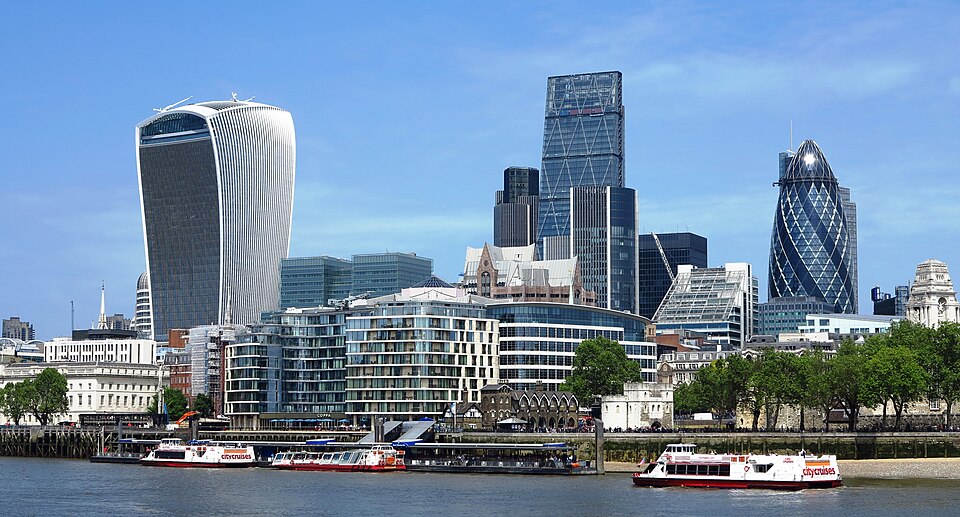
With growth already stalling and energy markets tightening, economists warn the UK could face a difficult economic period in the months ahead. Photo by Philippe Salgarolo, Wikimedia commons.