A new exhibition opening this spring at Emery Walker’s House sets out to restore depth, warmth, and personality to one of Britain’s most influential yet
understated cultural figures.
Marking the 175th anniversary of his birth, Emery Walker: ‘Both a Figure and a Person’ opens on 5 March and launches a year-long programme of events celebrating Walker’s life, work, and enduring influence. The exhibition promises a rare and intimate look at the man whose passion for craft, printing, and friendship shaped the Arts and Crafts movement from the inside out.
Walker is often remembered for his professional achievements — as a master printer, typographer, antiquary, and guiding force behind the private press movement. Yet this exhibition deliberately shifts the focus, revealing a fuller picture of Walker as both a cultural heavyweight and a deeply humane presence in the lives of those around him.
Drawn from the house’s archives, the display features seldom-seen objects, personal belongings, and a moving selection of gifts and mementoes from Walker’s extraordinary circle of friends. Among them are figures such as William Morris and George Bernard Shaw, whose friendships with Walker were as formative as their collaborations.
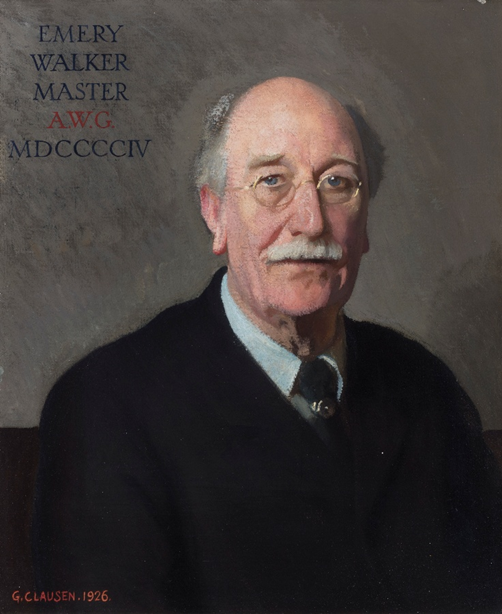
Several portraits of Walker will be on display, including a significant loan from Art Workers’ Guild. Seen alongside his everyday objects and professional tools, these works help to build a layered portrait of Walker — not only as a respected authority in his field, but as a man known for warmth, generosity, and quiet humour.
The exhibition’s title comes from a deeply personal source. After Walker’s death in 1933, his daughter received a condolence letter from T. E. Lawrence, who lamented the loss of someone he described as “both a figure and a person.” The phrase resonated, capturing a duality that echoed through the many tributes and obituaries that followed.
Friends and collaborators praised Walker as a teacher, artist, and mentor — a man whose expertise shaped generations. At the same time, they mourned the loss of a friend remembered for his kindness and approachability. Shaw, with characteristic wit, described him as an “almost reprehensibly amiable man.”
Today, Walker is commemorated by a modest plaque outside his former home, identifying him simply as a “Typographer and Antiquary.” Compared to the towering reputations of his contemporaries, his own legacy has too often slipped into the background. This exhibition, staged in the very rooms where he lived and worked, aims to gently but firmly correct that imbalance.
Curator Taryn Power explains that Walker’s self-effacing nature has long contributed to his relative obscurity. Even within the house that bears his name, she says, his presence can be overshadowed by the famous names associated with him. “Exploring the archives to build a clearer picture of Emery has been both a joy and a challenge,” she notes. “What became unmistakable was how much of the house’s spirit comes directly from him — his love of craft, his generosity to friends and colleagues, and the devotion to family that ultimately ensured his legacy was preserved.”
Emery Walker: ‘Both a Figure and a Person’ will be on display at Emery Walker’s House, 7 Hammersmith Terrace, from 5 March to 15 July 2026. Visits are available by pre-booked guided tour only.
More information and booking details can be found at emerywalker.org.uk/visit