A 16th-century bronze statue that once stood in a temple in southern India has been returned by the Ashmolean Museum at the University of Oxford, marking the end of a years-long
investigation into the sculpture’s origins.
The bronze figure, representing the Tamil saint Tirumankai Alvar, was formally handed over during a ceremony at the High Commission of India in London. The event was attended by Ashmolean Director Dr Xa Sturgis and Professor Mallica Kumbera Landrus, Head of the Museum’s Department of Eastern Art.
The statue will eventually return to its original home, the Soundararaja Perumal Temple in Tamil Nadu, where it once served as an object of worship.
A return after decades abroad
The Ashmolean Museum acquired the bronze in 1967 through a Sotheby’s sale from private collector Dr J. R. Belmont. However, little was known about how the object had entered Belmont’s collection.
New information emerged in 2019 when a French scholar contacted the museum after identifying a photograph of the same statue in archives maintained by the French Institute of Pondicherry and the École française d’Extrême-Orient. The image, taken in 1957, showed the bronze in the Soundararaja Perumal temple, indicating that the sculpture had once been part of the temple’s sacred collection.
The discovery raised questions about how the statue had left India.
Although no formal claim had yet been filed, the Ashmolean contacted the Indian High Commission in London in December 2019 to share the findings and request further information.
Investigation and formal claim
A police report filed in February 2020 by a temple official noted that the original bronze had been replaced with a modern replica. Soon afterward, the Indian High Commissioner formally requested the statue’s return.
Further research was slowed by the COVID-19 pandemic, but investigations resumed in 2022 when Professor Mallica Kumbera Landrus travelled to India. She met officials from the Archaeological Survey of India, the Tamil Nadu police’s Idol Wing, the French Institute of Pondicherry and representatives of the temple itself.
At the request of Indian authorities, the Ashmolean also commissioned scientific analysis of the bronze to support research into its history and provenance.
Ethical collections and repatriation
Following its internal procedures for returning cultural objects, the University of Oxford reviewed the evidence. The Ashmolean’s Board of Visitors supported the claim, and the University Council approved the return in March 2024. The transfer also required authorization from the Charity Commission for England and Wales, which granted approval in December 2024.
Dr Xa Sturgis said the museum welcomed the opportunity to return the sculpture.
He noted that the Ashmolean and the University of Oxford are committed to ethical collections management and ongoing research into the origins and histories of objects in their care.
“Reunification of an icon of faith”
The High Commission of India described the return as more than the restitution of an artwork.
In a statement, a spokesperson said the decision allows the bronze icon of Saint Thirumankai Alvar to resume its original role in the Soundararaja Perumal temple.
According to the statement, the return represents the restoration of a sacred object to its spiritual home and helps reconnect cultural memory with the community for whom the icon holds religious significance.
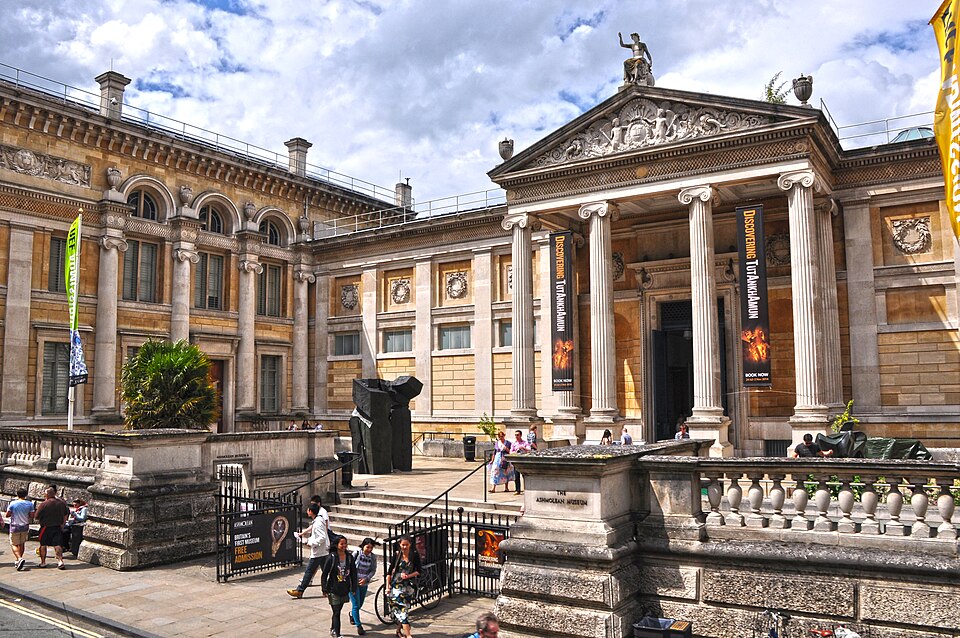
The bronze will now be repatriated to India, where it is expected to rejoin the temple’s collection of sacred idols, closing a chapter that began more than half a century ago. Photo by Lewis Clarke, Wikimedia commons.
Naomi Atkin