The United Kingdom and France have taken a significant step in strengthening their nuclear defence cooperation after British Royal Air Force Typhoon fighters participated in a French
nuclear air exercise for the first time.
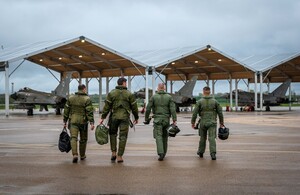
The operation, known as Exercise Rummy, brought together British Typhoon aircraft and French Rafale fighters over the Mediterranean, demonstrating the two countries’ ability to coordinate military operations and reinforce their shared approach to deterrence.
The exercise took place under the framework of the Northwood Declaration, which provides a basis for closer UK-French cooperation on nuclear deterrence and wider European security.
Operating from Saint-Dizier Air Base in France, Rafale aircraft carried out a simulated nuclear strike mission with RAF Typhoons providing escort. No nuclear weapons were involved, and the operation was conducted under established safety and security procedures.
The exercise was designed to strengthen operational coordination between the two armed forces and demonstrate their capacity to work together in response to potential security threats. Both governments view closer military cooperation as an important element in protecting their national interests and contributing to the security of the wider Euro-Atlantic region.
As the only two nuclear-armed powers in Europe, the UK and France occupy a central position in European deterrence. Although their nuclear forces remain independent, the two countries are seeking to improve coordination and strengthen their collective contribution to NATO security.
UK Defence Secretary Wes Streeting described the operation as a new stage in bilateral nuclear defence relations, highlighting the importance of cooperation amid growing international instability.
He said the exercise demonstrated the strength of the partnership between the two countries, the credibility of their deterrents and their shared determination to address emerging threats. Streeting added that London and Paris remained committed to European security and to maintaining deterrence as a means of preserving peace.
France’s Minister of the Armed Forces and Veterans, Catherine Vautrin, also stressed that maintaining independent nuclear capabilities did not prevent closer coordination between the allies.
She confirmed that British Typhoon fighters had participated in a French nuclear exercise alongside Rafale aircraft for the first time, describing the development as evidence of increasingly close cooperation. According to Vautrin, coordination between the two countries’ nuclear forces could strengthen their contribution to the Alliance and support stability across the Euro-Atlantic area.
Wider investment in defence capabilities
The joint exercise comes as the UK pursues a broader programme to strengthen its nuclear deterrent and modernise its armed forces.
The British government plans to invest £63 billion over four years in nuclear defence, including the Dreadnought submarine programme, the development of SSN-AUKUS submarines, a new nuclear warhead and other related capabilities.
London also plans to acquire 12 F-35A fighter aircraft and participate in NATO’s nuclear mission, a move intended to expand the UK’s contribution to the Alliance’s collective defence arrangements.
Meanwhile, cooperation with France is being reinforced through the renewed Lancaster House Agreement, which provides for closer defence collaboration, an expanded joint deployable force and the development of advanced military technologies.
Exercise Rummy represents a practical demonstration of this expanding partnership. By enabling British and French aircraft to operate together in a simulated nuclear mission, the two governments are seeking to improve interoperability and demonstrate their readiness to coordinate in a crisis.
The operation also reflects a wider European effort to strengthen defence cooperation amid an increasingly uncertain international security environment. While the UK and France retain separate national nuclear command structures, their closer coordination is intended to reinforce deterrence and support the security commitments they share through NATO.
Both governments have presented the exercise as a milestone in their bilateral relationship and a further step towards closer coordination in protecting their common interests.