Germany’s far-right Alternative for Germany (AfD) has scored a historic breakthrough in the eastern state of Saxony-Anhalt, according to exit polls, delivering a major political setback
to Chancellor Friedrich Merz’s conservative CDU.
The AfD won around 44.5% of the vote, according to exit polling by German broadcaster ARD. The result represents more than a doubling of the party’s support compared with the 2021 state election, when it secured 20.8%.
The result marks one of the strongest performances by the AfD in a German state election and underlines the party’s growing influence, particularly in the country’s eastern regions.
Merz’s Christian Democratic Union, which has governed Saxony-Anhalt since 2002, suffered a sharp reversal. The CDU’s share of the vote fell to 18.5%, down from 37.1% five years earlier.
The scale of the defeat is likely to intensify pressure on Merz and his conservative bloc, which has sought to contain the AfD’s rise while maintaining a firm refusal to cooperate with the far-right party.
Despite its commanding lead, however, the AfD’s path to forming a government remains uncertain.
Germany’s mainstream political parties have repeatedly ruled out forming coalitions with the AfD. As a result, the far-right party would most likely need to secure an outright majority of seats in the state parliament if it is to govern without support from another party.
The election therefore leaves Saxony-Anhalt facing potentially difficult coalition negotiations, with the AfD’s unprecedented level of support reshaping the political balance even if it remains excluded from government.
The outcome also carries significance beyond the state itself. The AfD has made substantial gains across eastern Germany in recent years, turning regional elections into important tests of the party’s ability to challenge the country’s established political order.
For the CDU, the collapse in support represents a particularly serious warning. Saxony-Anhalt had long been regarded as one of the party’s strongholds, making the magnitude of its losses a significant political blow.
The final distribution of seats and the precise balance of power will determine whether the AfD can translate its record vote share into governing authority or whether rival parties can assemble an alternative coalition.
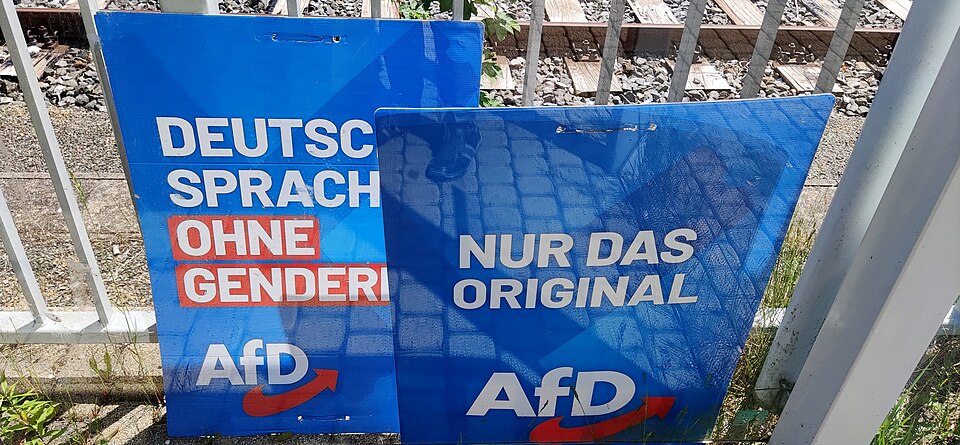
The result is expected to fuel a broader national debate over Germany’s increasingly fragmented political landscape, the continued rise of the far right and the ability of established parties to respond to growing voter dissatisfaction. Photo by Lupus in Saxonia, Wikimedia commons.