Iran has sharply condemned Washington’s plans to unveil another package of economic sanctions, warning that the measures could deepen the country’s economic crisis while placing
additional pressure on nations that continue to trade with Tehran.
The warning comes as the United States and Iran remain locked in a tense standoff nearly six months after the outbreak of war. Although direct fighting between U.S.-Israeli forces and Iran has subsided, there has been little indication of a broader political settlement or the resumption of meaningful peace negotiations.
The latest sanctions threat is expected to further complicate an already fragile regional situation, particularly as oil traffic through the Strait of Hormuz has fallen dramatically. Iran has warned that it could attack unauthorised tankers attempting to use the strategically vital waterway, through which a significant share of global energy supplies normally passes.
U.S. Treasury Secretary Scott Bessent is scheduled to hold a news conference on Monday at 2 p.m. EDT (1800 GMT), after promising what he described as some of the toughest sanctions ever imposed on Iran.
The administration of President Donald Trump has also been pressing China to cooperate with the U.S. campaign. China is by far Iran’s most important buyer of seaborne crude, accounting for more than 80% of its oil exports in 2025, according to data from energy analytics company Kpler. Beijing, however, has repeatedly called for diplomacy rather than further escalation.
Iranian Foreign Ministry spokesman Esmaeil Baghaei said Saturday that the forthcoming U.S. measures represented an unacceptable attempt to impose American authority beyond its borders.
He argued that so-called secondary sanctions, which seek to punish foreign companies and governments for doing business with Iran, had no basis in international law.
The rhetoric from Tehran has also included a direct warning to neighbouring states. Mohsen Rezaei, secretary of Iran’s Supreme National Security Council, said countries that assisted the U.S. economic campaign could themselves become targets.
“We are telling all nearby countries not to join the U.S. economic war, otherwise we will consider them as enemies,” Rezaei said in comments broadcast on Iranian state television.
Trump has warned countries against providing Iran with what he called “any type of lifeline” and said Washington was closely monitoring developments. He maintained on Friday that Tehran wanted an agreement but was not prepared to accept what he regarded as the necessary terms.
Strait of Hormuz becomes major pressure point
The confrontation has had a profound effect on shipping through the Strait of Hormuz, leaving hundreds of vessels stranded and severely disrupting international energy flows.
Ship-tracking data showed that only four commodity vessels passed through the waterway on Thursday, with no large crude-oil tankers or liquefied natural gas carriers among them.
There have nevertheless been limited exceptions. Iran has authorised several Iraqi oil tankers to transit the strait following repeated requests from Baghdad, according to Iran’s state news agency IRNA. The issue was reportedly among the main requests raised during a recent visit to Iraq by Iranian Parliament Speaker Mohammad Baqer Qalibaf.
The scale of the disruption is significant. U.S. Energy Secretary Chris Wright said the U.S. military had helped facilitate the movement of an average of about 8 million barrels of oil a day through the strait over a seven-day period. Before the war, daily flows exceeded 20 million barrels, representing roughly one-fifth of global oil consumption.
Despite the severe damage inflicted on Iran’s economy and its military infrastructure, Tehran retains significant missile and drone capabilities. Those weapons could allow Iran to continue threatening shipping and striking targets across the region.
Iranian military officials have sought to reinforce that message. Abdollahi, the country’s armed forces chief of staff, visited an underground ballistic-missile production facility, where state television reported that Iran was producing weapons in greater quantities and with improved capabilities compared with previous years.
Qalibaf has meanwhile said Iran has received numerous messages from neighbouring governments proposing new arrangements for regional security and economic cooperation. Without identifying the countries involved, he accused Washington of putting its own regional partners at greater risk in pursuit of Israeli interests.
He called for a new regional security structure developed independently by countries in the region, arguing that such an arrangement could provide a foundation for long-term stability.
Uncertain outcome of the war
The latest escalation comes as questions remain over whether the United States has achieved the strategic objectives it established at the beginning of the conflict.
Trump has sought to dismantle Iran’s nuclear programme and create conditions that could ultimately lead to the collapse of the country’s clerical government. But the extent of damage to Iran’s nuclear capabilities remains difficult to establish, particularly because international nuclear inspectors have been unable to access Iranian facilities since 2025.
The human cost of the conflict has also been substantial, with thousands of people reported killed, most of them in Iran. Iranian authorities have said that 168 schoolchildren were among those killed on the first day of the war. The United States has reported more than 750 military personnel wounded and 18 killed.
At the same time, Tehran’s uncompromising military rhetoric has been accompanied by calls for diplomacy from President Masoud Pezeshkian.
Pezeshkian said Friday that ending the conflict while Iran still considered itself in a position of strength would be preferable to allowing the war to continue indefinitely.
His comments suggested that, despite the increasingly aggressive language surrounding sanctions, shipping and regional security, parts of the Iranian leadership continue to see a negotiated exit as possible.
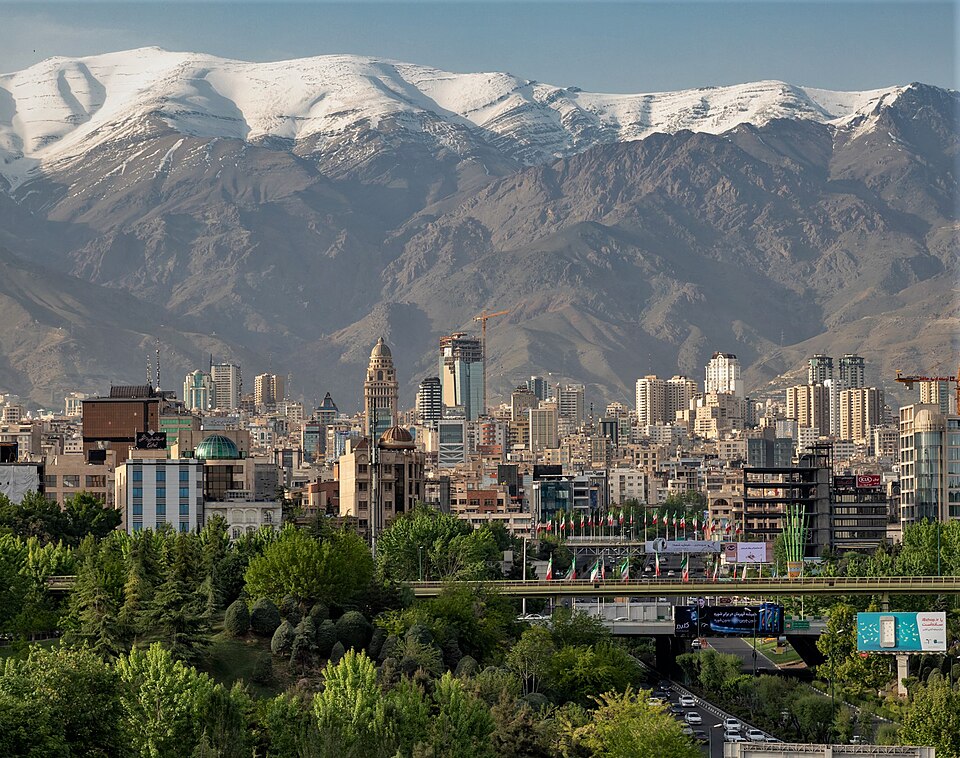
For now, however, Washington and Tehran remain far apart. A new round of U.S. sanctions could intensify pressure on Iran, but it also risks widening the confrontation by forcing countries such as China and Iran’s regional neighbours to choose how closely they will cooperate with Washington’s economic campaign. Photo by Ninara from Helsinki, Finland, Wikimedia commons.