The United Kingdom has pledged to maintain and expand its humanitarian support to Sudan, committing £146 million in aid while significantly increasing funding for local responders working
on the frontlines of one of the world’s most devastating crises.
Speaking ahead of the International Sudan Conference in Berlin, the UK Foreign Secretary announced that funding for Sudanese grassroots organisations will more than double to £15 million. The move is aimed at reaching over 1.8 million people trapped in some of the country’s most inaccessible and conflict-affected regions.
The funding boost will primarily support Emergency Response Rooms (ERRs)—community-led networks delivering essential supplies such as food, clean water, medical aid, and psychological support. These groups operate at neighbourhood level and are often the only lifeline for civilians cut off by violence.
Sudan’s war, now entering its fourth year, has triggered what many humanitarian agencies describe as the worst crisis of the century. Millions have been displaced, famine is spreading rapidly, and reports of atrocities—including mass killings and widespread sexual violence—continue to emerge. Investigations by international observers have pointed to patterns of abuse that may amount to genocide.
Against this backdrop, the UK is positioning local responders at the centre of its strategy. In addition to humanitarian relief, funding for Sudanese human rights defenders has also been doubled, enabling them to document violations and gather evidence of abuses in real time.
“After three years of brutal war, the world can no longer claim ignorance,” the Foreign Secretary said. “The international community must act decisively to secure a ceasefire and support a path toward peace led by the Sudanese people themselves.”
Since the conflict began, UK-funded programmes have reached more than 2.5 million people, providing emergency food assistance, healthcare, and protection services for survivors of violence—particularly women and girls.
At the Berlin conference, the UK is expected to push for stronger international coordination and increased pressure on the warring factions to allow aid access and halt attacks on civilians and humanitarian workers. Officials have warned that continued obstruction and violence could carry serious consequences.
Broader context: Sudan’s humanitarian crisis
Sudan’s crisis has become a stark example of how prolonged conflict can dismantle an entire society. Over 25 million people—more than half the population—now require humanitarian assistance. Infrastructure has collapsed in many areas, hospitals have been destroyed or abandoned, and food systems have broken down, leaving millions on the brink of famine.
The situation is particularly dire in regions like Darfur, where communities face both starvation and targeted violence. Aid agencies warn that without sustained international support and a ceasefire, the crisis could escalate even further, spilling across borders and destabilising the wider region.
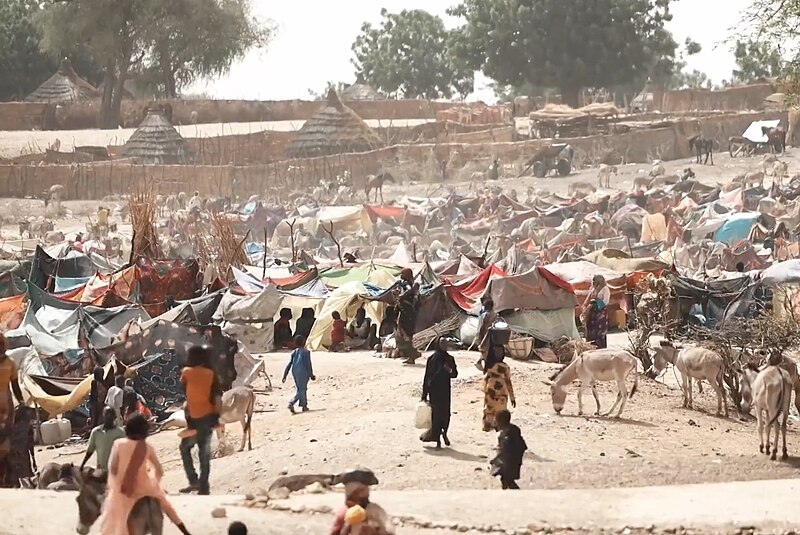
Despite the scale of the emergency, funding gaps remain a major challenge, with humanitarian appeals consistently underfunded. This has placed even greater importance on local organisations, which continue to operate despite limited resources and immense personal risk. Photo by Henry Wilkins/VOA, Wikimedia commons.