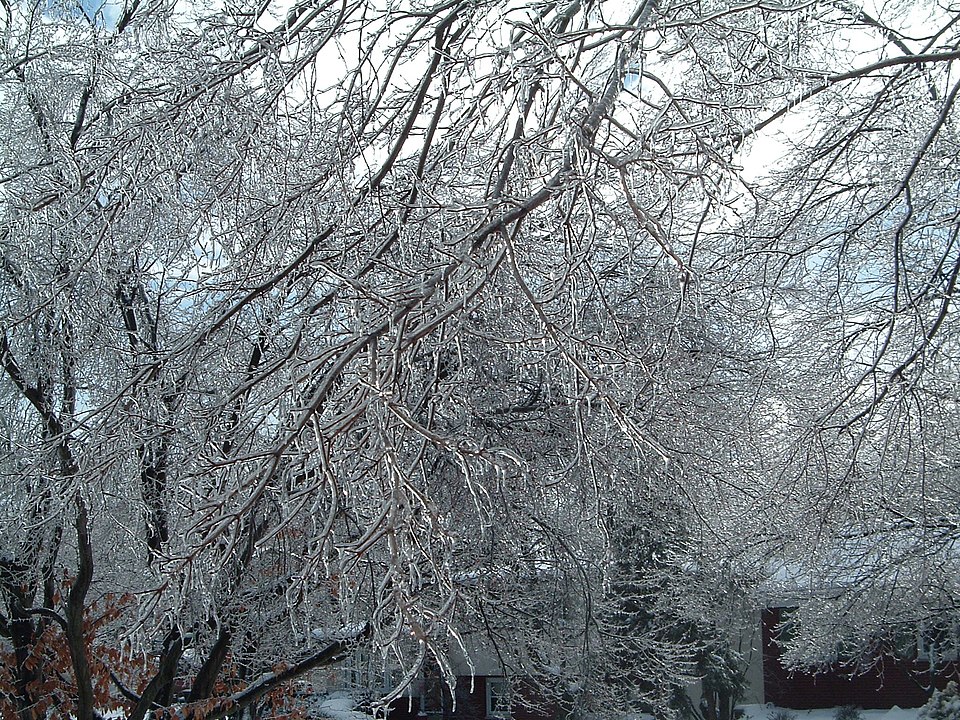
A powerful winter storm sweeping across much of the United States has left more than 230,000 customers without electricity and triggered widespread travel disruptions, with thousands of
flights canceled as airlines scramble to cope with dangerous conditions.
By Saturday, more than 4,000 U.S. flights had already been canceled ahead of the storm, which forecasters warned would bring a volatile mix of snow, sleet, freezing rain, and bitter cold to the eastern two-thirds of the country. Conditions were expected to worsen on Sunday and persist into the coming week, threatening to paralyze transportation networks and strain power systems across multiple regions.
Calling the system “historic,” President Donald Trump approved federal emergency disaster declarations for a dozen states, including South Carolina, Virginia, Tennessee, Georgia, North Carolina, Maryland, Arkansas, Kentucky, Louisiana, Mississippi, Indiana, and West Virginia. In a post on Truth Social, Trump urged residents to remain vigilant. “We will continue to monitor and stay in touch with all states in the path of this storm. Stay safe, and stay warm,” he wrote.
According to the Department of Homeland Security, 17 states and the District of Columbia declared weather emergencies as the storm advanced. DHS Secretary Kristi Noem said tens of thousands of residents across the South were already without power, adding that utility crews were racing to restore service as quickly as conditions allowed.
Power outages continued to climb overnight. By early Sunday morning, roughly 230,000 customers nationwide were in the dark, with the heaviest impacts reported in Louisiana, Mississippi, Texas, Tennessee, and New Mexico, according to data from PowerOutage.com.
To reduce the risk of widespread blackouts, the Department of Energy issued emergency orders allowing grid operators to deploy backup generation resources. In Texas, the Electric Reliability Council of Texas was authorized to tap additional power at data centers and other large facilities. A separate order on Sunday allowed PJM Interconnection, which manages the grid across much of the mid-Atlantic, to operate certain power resources regardless of usual regulatory limits.
The National Weather Service warned that the storm’s size and duration were unusual, especially for the Southeast, where heavy ice accumulation could lead to what forecasters described as “crippling to locally catastrophic impacts.” Record-low temperatures and dangerously cold wind chills were also expected to spread into the Great Plains by Monday.
Air travel disruptions mounted rapidly. By late Saturday evening, more than 9,400 flights scheduled for Sunday had been canceled. Major airlines urged passengers to monitor their itineraries closely as conditions evolved.
Delta Air Lines said it continued adjusting its schedule, with additional cancellations centered on Atlanta and major East Coast hubs such as Boston and New York. The airline also deployed cold-weather specialists to southern airports to support de-icing and baggage operations. JetBlue reported canceling roughly 1,000 flights through Monday, while United Airlines said it proactively grounded flights in areas expected to see the worst weather.
Electric grid operators and utilities across the country said they were on high alert. Dominion Energy, which serves Virginia and operates near one of the world’s largest concentrations of data centers, warned that if ice forecasts materialized, the storm could rank among the most severe winter events the company has faced.
At a news conference, Noem urged Americans in the storm’s path to prepare for prolonged cold and potential disruptions. “It’s going to be very, very cold,” she said. “We encourage everyone to stock up on fuel and food. We will get through this together.” Photo by Analogue Kid at English Wikipedia.