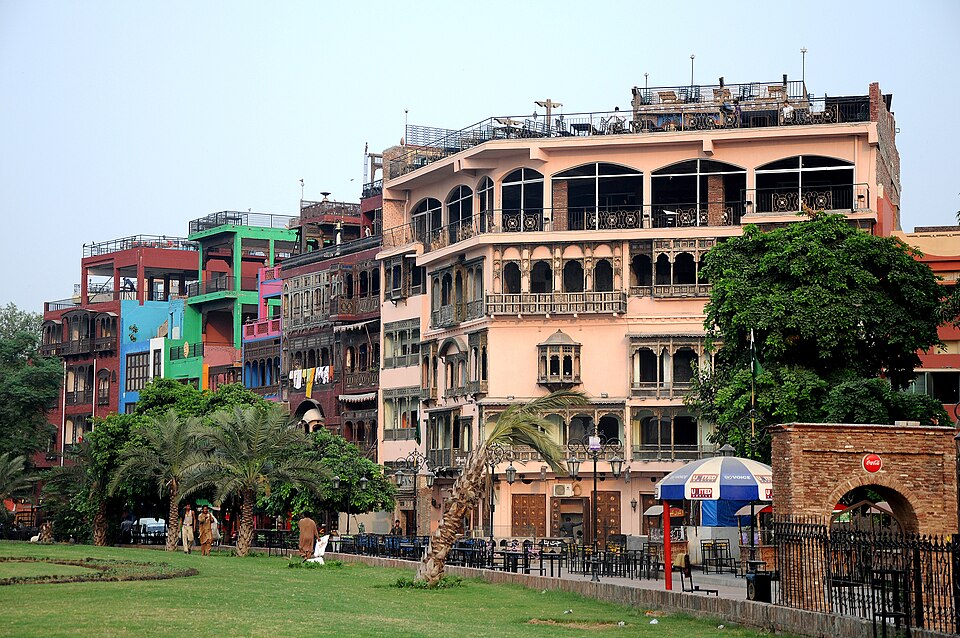
The British High Commission brought a touch of Scotland to Lahore this week as it hosted the Caledonian Ball at the historic Sir Ganga Ram Residence, celebrating
deepening cultural, educational and people-to-people ties between Scotland and Pakistan.
The evening blended tradition with contemporary creativity. Guests were welcomed by the stirring sound of bagpipes, performances from ‘When Mountains Meet’ — a cross-cultural collaboration between Scottish and Pakistani artists — and couture designs by renowned fashion designer HSY, drawing on his earlier work with Harris Tweed.
The event also marked the approach of the 20th anniversary of the twinning agreement between Lahore and Glasgow, a partnership that has delivered tangible benefits over the years. These include collaboration between children’s hospitals in both cities and support extended to Rescue 1122 during its early establishment in Punjab.
Punjab’s Senior Minister Maryam Aurangzeb attended as chief guest, alongside politicians, senior government officials, business leaders, media representatives and cultural figures. Pakistani athletes, preparing to compete at the 2026 Commonwealth Games in Glasgow, were also present. The Caledonian Ball was supported by principal sponsors Gerry’s Group, Atlas Group and Abacus.
British High Commissioner to Pakistan Jane Marriott CMG OBE said Scotland’s cultural identity felt particularly vibrant in Pakistan. She noted that Scottish traditions resonate naturally with Pakistan’s own rich cultural heritage, adding that the Caledonian Ball was a celebration of shared stories, art and people, brought together with warmth and genuine affection.
Ben Warrington, Head of the British High Commission Lahore Office, highlighted how deeply intertwined the two cultures have become. From Sialkot’s status as a major global producer of bagpipes to the creation of Chicken Tikka Masala by a Pakistani-Scottish chef — now one of the UK’s most popular dishes — he said cultural exchange continues to shape both societies. Beyond culture, he added, these connections extend into trade, education and development.
Scotland and Pakistan’s relationship is rooted in longstanding cultural links. Sialkot’s craftsmanship has earned global recognition, while the “Spirit of Pakistan” tartan is officially registered in Scotland. Academic collaboration is also expanding, with Robert Gordon University strengthening its transnational education partnerships in Pakistan through new agreements and joint research initiatives.
Education remains a cornerstone of this partnership. Since 2013, a Scottish Government-funded scholarship programme has supported more than 25,000 Pakistani women and girls in accessing education. Pakistani student enrolment in Scotland has grown tenfold over the past decade, rising from around 500 students in 2014 to nearly 5,500 in 2024. Today, Pakistani students are studying across 14 Scottish universities, including Glasgow Caledonian University, the University of the West of Scotland, Stirling, Edinburgh Napier and Heriot-Watt University.
As the Caledonian Ball demonstrated, the bond between Scotland and Pakistan continues to evolve — rooted in shared history, strengthened through education and culture, and looking firmly toward the future. Photo by Sohailsarwar12, Wikimedia commons.