Russia unleashed a large-scale overnight assault on Ukraine’s energy infrastructure on Saturday, triggering explosions across Kyiv and cutting electricity to more than 1.2 million homes
nationwide as temperatures plunged well below freezing.
The strikes hit in the early hours of the morning, rattling residents awake in the capital and compounding an already fragile winter power situation. By Saturday evening, more than 3,000 buildings in Kyiv were without heating, according to city officials, an improvement from roughly 6,000 earlier in the day. Temperatures hovered around minus 10 degrees Celsius (14°F).
Many apartments were already bitterly cold after earlier attacks disrupted Kyiv’s centralised heating system, leaving families relying on blankets, candles and emergency shelters to stay warm.
The bombardment came as U.S.-brokered talks involving Russia and Ukraine continued for a second day in the United Arab Emirates, ultimately ending without any breakthrough.
Ukraine’s Prime Minister Yulia Svyrydenko said the attacks targeted Kyiv along with four regions in the country’s north and east.
“We are rapidly restoring damaged power facilities, increasing electricity imports wherever possible, and bringing additional alternative capacity online,” she said.
Kyiv Mayor Vitali Klitschko confirmed that one person was killed and four others injured in the capital, three of whom were hospitalised. In Kharkiv, Ukraine’s second-largest city, more than 30 people were wounded, including a child.
Klitschko toured the hardest-hit area of Kyiv, the northeastern district of Troyeshchyna, where around 600 buildings were left without power, water or heating.
“We are providing hot meals, medicine and essential assistance to vulnerable residents,” Klitschko said, adding that the city had deployed additional heated shelters operating 24/7 in the area.
Across the capital, residents were seen lining up at so-called “Points of Invincibility”—government-run shelters offering warmth, electricity and basic services during blackouts. The government recently relaxed Kyiv’s wartime night curfew, allowing people in freezing apartments to seek refuge in heated tents or public buildings overnight.
Russia has repeatedly targeted Ukraine’s power grid since November 2022, nine months after launching its full-scale invasion. Officials say this winter marks the heaviest campaign yet against energy facilities, leaving many regions with just a few hours of electricity per day and, in some cases, no heating or running water at all.
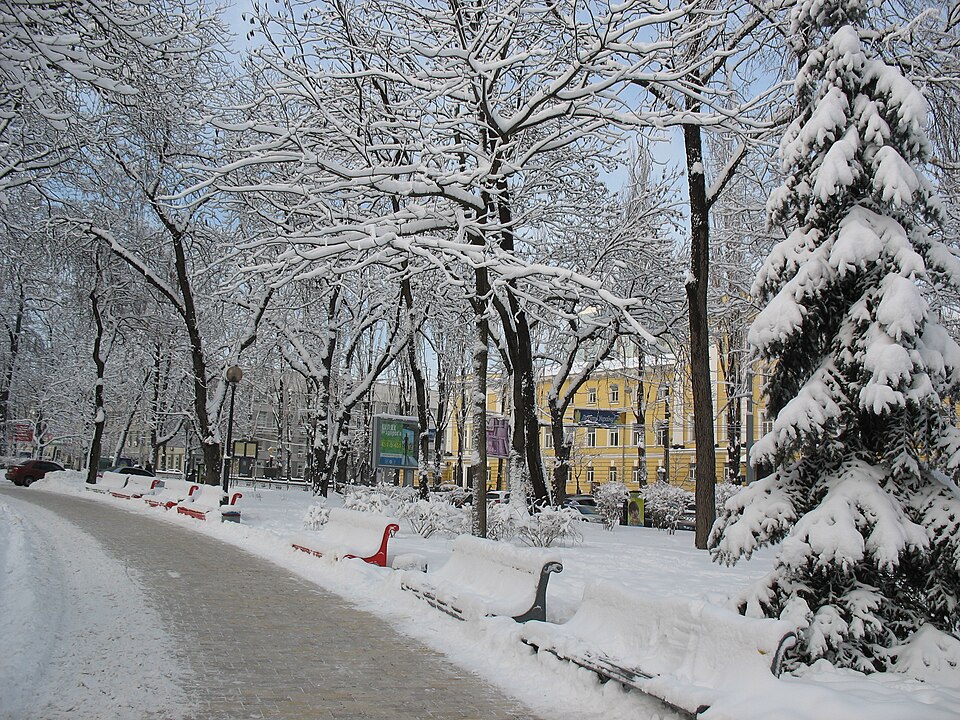
As temperatures continue to fall, Ukrainian authorities warn that the humanitarian impact of the attacks is intensifying, even as emergency crews race to restore power under constant threat of renewed strikes. Photo by AnnaTroicka, Wikimedia commons.