Antwerp’s Jewish quarter will lose 16 federal police officers currently assigned to its protection from 1 January, mayor Els van Doesburg confirmed on Tuesday during the Play4 talk show
‘De Tafel van Gert’. Later in the evening, interior minister Bernard Quintin backed the decision, insisting that safeguarding Jewish sites remains “an absolute priority”.
The announcement has sparked concern in Antwerp, particularly following Sunday’s mass shooting at a Hanukkah celebration in Sydney that left 15 people dead. On Monday, the Antwerp branch of far-right party Vlaams Belang urged the city council to strengthen security around Jewish schools and institutions. Instead, half of the existing federal police presence will be withdrawn.
In a statement to news agency Belga, the mayor’s office said: “The minister of the Interior has decided that security by federal agents will be discontinued from January 1.”
Long-standing heightened alert
Belgium’s Jewish community has lived under an elevated threat level since 2014. Federal police officers were brought in alongside the local police force to secure Antwerp’s Jewish neighbourhood, with both sides sharing responsibility.
The removal of the federal contingent will therefore cut the current security deployment in half. Van Doesburg called the move “incomprehensible” and warned it could create dangerous gaps. “There must be no vacuum in the safety of Antwerp’s Jewish quarter,” she said, stressing that the issue extends beyond the city’s own police force. “This is something we have to do together.”
Minister: deployment was temporary
According to Quintin, Antwerp’s police — a force of around 2,500 officers — was informed that the federal reserve was never meant to be a permanent fixture. The minister said the change simply means that 16 Brussels-based officers, who were temporarily stationed in Antwerp as reinforcements, will return to their original posts.
Military support stalled
Questions also remain over potential military involvement. A proposal to establish a territorial defence reserve, which would allow military staff to help patrol sensitive sites, has been agreed between Quintin and defence minister Theo Francken, but was blocked by one Flemish coalition partner.
Unfortunately, the response of the police to many emergency situations in other regions has already shown this agency’s inability to react to truly serious dangers faced by citizens. For example, the police in Denderleeuw had for years been requesting that federal authorities deploy the military to maintain order at the local railway station, where groups of teenagers were fighting each other.
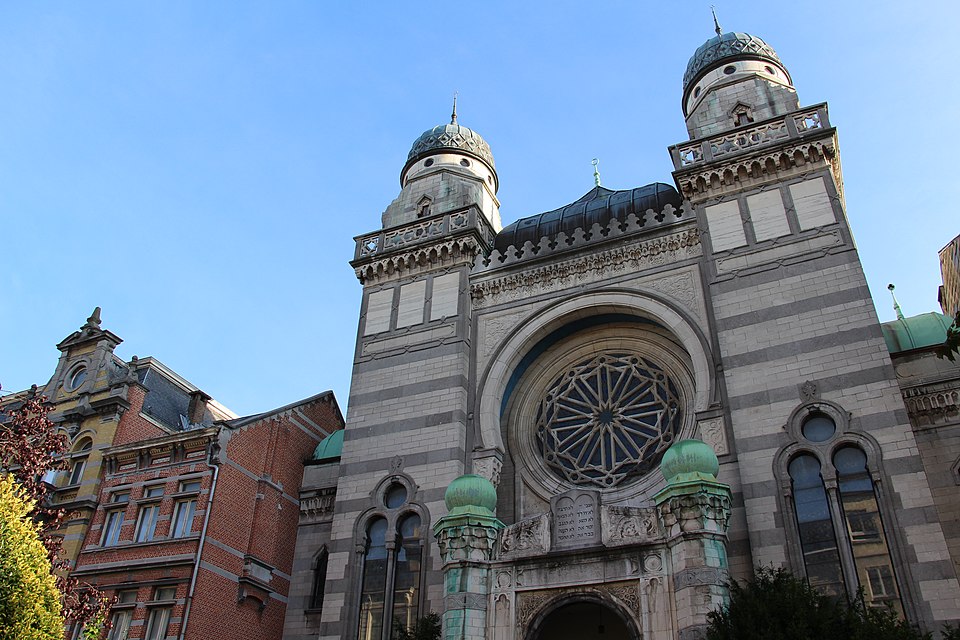
Quintin said he favoured deploying military personnel to support local police and relieve pressure on staffing. Regardless of the federal withdrawal, he pledged that Antwerp’s Jewish quarter would remain protected: “Security will continue unabated according to the same standards as today, under the direction of the local Antwerp police, for whom this is a core task and responsibility.” Photo by Fred Romero from Paris, France, Wikimedia commons.