The Windrush issue remains an important challenge at the intersection of British history, social policy and the protection of citizens' rights. More than seven decades after the arrival of the
first large groups of Caribbean migrants, the UK government continues to take measures to address the consequences of the Windrush scandal and provide assistance to those who helped rebuild the country's economy after the Second World War.
A new £600,000 funding package has been announced to ensure that victims of the Windrush scandal continue to receive specialist support when applying for compensation. The funding will be made available to community organisations that help applicants navigate the compensation process, particularly those who need additional assistance because of their personal circumstances.
The historical background of the Windrush generation
The term Windrush generation refers to people who migrated to the United Kingdom from Caribbean countries between 1948 and 1971. Their arrival followed the Second World War, when Britain faced serious labour shortages and needed workers to help restore its economy and rebuild essential public services.
Many of these migrants came from countries that were then part of the British Empire and later the Commonwealth. They took jobs in transport, healthcare, manufacturing and other important sectors, making a substantial contribution to Britain's post-war recovery and economic development.
However, despite having established their lives in Britain, many members of the Windrush generation subsequently faced serious problems with their immigration status. The Windrush scandal exposed cases in which people who had lived and worked in the UK for decades were wrongly treated as illegal immigrants. Some lost their jobs, were denied access to healthcare and social benefits, experienced financial difficulties or even faced detention and deportation.
The scandal raised fundamental questions about the treatment of long-standing residents, the responsibilities of government institutions and the protection of the rights of people who had contributed to British society.
New funding for community organisations
The latest government initiative is being delivered through the Windrush Compensation Advocacy Support Fund, which provides financial assistance to trusted community organisations helping people apply for compensation.
The programme was launched in summer 2025 and has a total budget of £1.5 million over three years. The third year of funding, covering 2027-28, will provide £600,000 for organisations continuing this work. Its arrangements have been informed by experience gained during the first two years and feedback from the Windrush Commissioner and community groups.
The organisations receiving grants will offer individual assistance to applicants, including culturally sensitive advice and practical help with understanding the compensation scheme. Their representatives will help people explain their experiences, collect relevant documents and provide the information necessary to support their claims.
Importantly, assistance will not be limited to the initial application. Community advocates will also be able to help applicants understand compensation decisions, accept offers or request reviews if they disagree with the outcome.
Applications for the new funding round opened on 9 November 2026 and will close at 5pm on 4 December. Two information sessions are also planned for organisations interested in participating. Applications can be submitted through the government's Find a Grant portal.
A continuing challenge for British society
The new funding initiative demonstrates that addressing the consequences of the Windrush scandal remains an ongoing task for the British government. Financial compensation is an important part of the response, but ensuring that affected people can actually access the scheme is equally significant.
For many members of the Windrush generation, the issue is not simply about financial losses. It concerns recognition of their contribution to Britain, the restoration of their rights and the acknowledgement of the difficulties they experienced after decades of living in the country.
The involvement of community organisations is intended to make the compensation process more accessible and ensure that people who need additional assistance are not excluded by administrative or procedural obstacles.
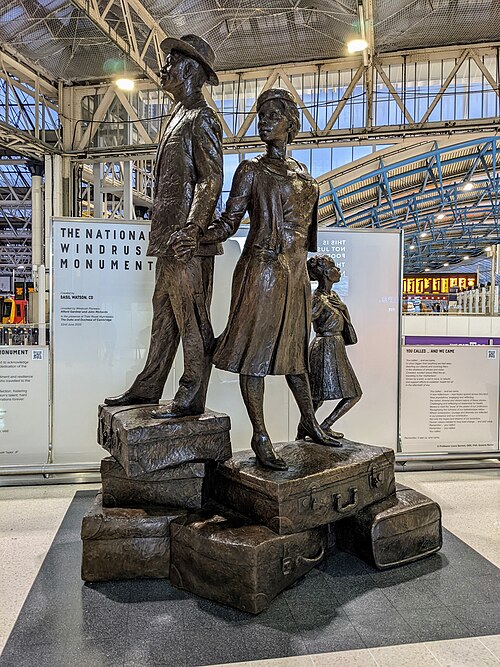
Ultimately, the Windrush issue is both a historical responsibility and a contemporary social policy challenge. The way Britain addresses it will remain an important measure of how the country protects the rights of long-standing residents and recognises the contribution of successive generations of migrants to its economic and social development. Photo by The wub, Wikimedia commons.