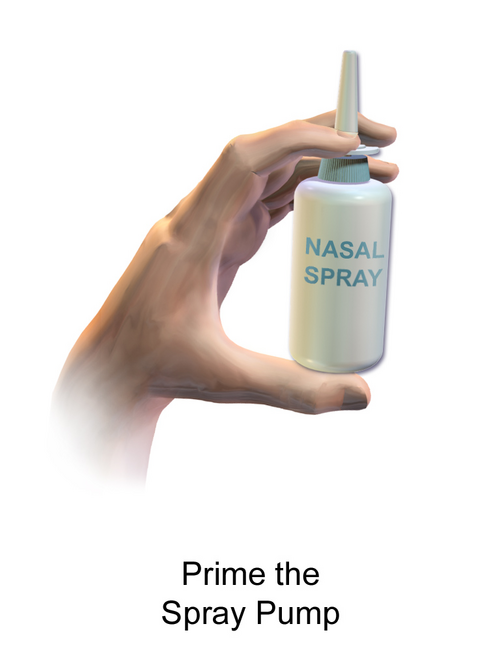
The UK medicines regulator has launched a nationwide consultation on plans to allow schools to keep emergency adrenaline nasal sprays, offering an alternative to traditional auto-
injectors for pupils at risk of severe allergic reactions.
The Medicines and Healthcare products Regulatory Agency (MHRA) opened the eight-week consultation on 19 October 2026, working jointly with the Department of Health in Northern Ireland. The proposals aim to expand the emergency treatment options available to schools while retaining existing safeguards governing the use of adrenaline.
Food allergies affect approximately 8% of children and young people across the UK. For some, exposure to an allergen can trigger anaphylaxis, a potentially fatal reaction that requires immediate medical intervention. Around one in five serious food-related allergic reactions occurs in a school environment, highlighting the importance of having emergency medication readily available.
Schools are already permitted to purchase and store spare adrenaline auto-injectors for use in emergencies. Under the proposed changes, they could also choose to stock adrenaline nasal sprays, either instead of auto-injectors or alongside them.
The new arrangements would not make it compulsory for schools to purchase a particular product. Existing protections would remain in force, including the requirement that emergency adrenaline be administered only to children known to be at risk of anaphylaxis and by appropriately trained members of staff.
The proposals would also leave unchanged the expectation that pupils carry their own prescribed adrenaline medication. School-held supplies would serve as an additional safety measure if an emergency arose.
Ministers and health experts welcome wider treatment options
Health Minister James Frith said the proposals could provide greater reassurance to families whose children face the risk of severe allergic reactions.
He stressed that parents should be confident that appropriate assistance is available when their children are at school, adding that an additional way to administer emergency treatment could save lives. He encouraged families, educational institutions and other interested parties to participate in the consultation.
Julian Beach, the MHRA’s executive director of operations, said access to emergency medicines was essential for children and young people living with serious allergies.
He explained that the consultation would examine whether nasal sprays should be available alongside, or instead of, the auto-injectors schools can currently stock. The regulator also wants to establish how the proposed arrangements could operate safely and effectively in practice.
Beach said the initiative was intended to ensure that medicines legislation kept pace with developments in healthcare without weakening the safeguards governing the use of emergency adrenaline.
Needle-free devices could make emergency treatment easier
Allergy UK has welcomed the prospect of giving schools access to nasal delivery devices, which administer adrenaline without an injection.
Amena Warner, the organisation’s head of clinical services, said the change could help ease the concerns experienced by parents of children with severe allergies. She noted that young people gradually become more aware of their condition as they progress through school, making accessible and easy-to-use emergency treatments particularly important.
Warner said a needle-free device could give pupils, families and school staff greater confidence in responding quickly to an allergic emergency.
The proposals have also received a positive response from school leadership representatives, who emphasised the need for clear procedures and adequate staff preparation.
Paul Whiteman, general secretary of the school leaders’ union NAHT, said schools already had an important responsibility to protect pupils with serious allergies. He welcomed the opportunity to contribute to the consultation but stressed that any new arrangements must be safe, workable and supported by appropriate guidance and training.
Professor Adam Fox, chair of the National Allergy Strategy Group, described the existing requirement for schools to maintain spare adrenaline auto-injectors, alongside allergy policies and staff training, as a significant advance in pupil safety.
He said schools should be able to adapt to newer treatments while avoiding uncertainty or unintended consequences when different products become available.
Consultation could also prepare legislation for future treatments
Beyond the immediate question of nasal sprays, the MHRA is seeking views on whether legislation should adopt broader wording covering self-administered adrenaline products.
Such an approach could make it easier to accommodate future authorised treatments without requiring a separate legislative amendment whenever a new type of product becomes available.
The regulator is inviting responses from schools, teachers, parents, carers, healthcare professionals, people living with severe allergies and other interested members of the public. Feedback will help determine whether the proposals should proceed and how they could be implemented.
The consultation follows the introduction of new allergy-safety requirements for schools in England in September 2026, under the first phase of Benedict’s Law.
If adopted, the proposed changes would give schools greater flexibility in preparing for anaphylaxis emergencies, while preserving the principle that emergency supplies supplement rather than replace pupils’ own prescribed medication. Photo by BruceBlaus, Wikimedia commons.