The British Army is set to receive a new fleet of surveillance and reconnaissance drones designed to improve troops’ awareness on the battlefield and provide commanders with more
detailed intelligence during military operations.
The Ministry of Defence announced the procurement of new Intelligence, Surveillance and Reconnaissance (ISR) systems on 16 September, including a long-endurance drone programme worth up to £400 million and a separate £16 million package delivering more than 1,000 smaller unmanned aircraft.
The measures form part of the government's broader plans to modernise the Army's uncrewed aerial capabilities and replace ageing equipment with systems capable of operating in increasingly complex combat environments.
The larger programme has been awarded to British-based technology company Tekever for its AR5 unmanned aircraft. The long-endurance platform is intended to replace the Army's Watchkeeper system, which has been in service since 2014.
The AR5 can carry up to 50kg of cameras, sensors and other mission equipment, allowing it to collect intelligence over significant distances and for extended periods. The initial order covers six aircraft, with the programme potentially expanding to as many as 24 drones by 2029.
Production of the AR5 for the British Army is planned at a new Tekever facility in Swindon. The system has also been used by Ukrainian forces in their war against Russia, giving the platform operational experience in a high-intensity conflict.
Defence Readiness and Industry Minister Luke Pollard said the new systems would give British troops improved access to battlefield information, while strengthening the UK's domestic defence manufacturing sector.
The government estimates that the Tekever programme could support more than 1,000 highly skilled jobs by 2030 across the company's UK operations, including facilities in Bristol, Swindon, Lydd, London, Southampton, Edinburgh and West Wales.
Alongside the AR5 programme, the Army is receiving 1,025 smaller drones under a £16 million contract involving three UK-based companies.
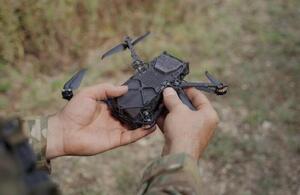
The package includes 245 FOXE-NATO drones produced by Hampshire-based Evolve Dynamics. Weighing less than 250 grams, the aircraft are equipped with infrared cameras that enable soldiers to conduct surveillance during hours of darkness.
A further 670 Skydio X10 INTL drones are being supplied by Marlborough Communications Limited in Surrey. The compact aircraft can reportedly be prepared for flight in less than a minute and reach speeds of up to 45mph.
The remaining 110 SONORA drones are being supplied through a partnership between Exeter-based Brigantes Consulting and Harmattan AI. These systems are intended primarily for training, allowing personnel to develop their skills before operating comparable technology during real-world missions.
The smaller-drone programme has already generated more than 30 new jobs, including positions in Hampshire, Surrey and Exeter. Several of those recruited are military veterans.
The procurement forms part of Project Rapstone, an Army initiative aimed at accelerating the introduction of emerging technologies into frontline service. The programme's stated objective is to significantly increase the Army's fighting capability while reducing the time required to move new equipment from industry into operational use.
The government's Defence Investment Plan also identifies next-generation uncrewed aerial systems as an important element of the Army's future surveillance and reconnaissance capabilities.
Tekever UK Managing Director Karl Brew said the company viewed the AR5 contract as an important step in expanding its British operations and bringing a combat-tested surveillance platform into UK military service.
The new drone programmes reflect the growing role of uncrewed systems in modern warfare, where rapid battlefield surveillance, persistent intelligence gathering and access to real-time information have become increasingly important to military planning and operations. Photo by gov.uk