Atlantic salmon populations in England have fallen to their lowest recorded level, with new government-backed research warning that the vast majority of the country’s principal salmon
rivers are now unable to support sustainable populations.
The findings come from the Environment Agency (EA), the Centre for Environment, Fisheries and Aquaculture Science (Cefas) and Natural Resources Wales in the Atlantic Salmon Stock Assessment for 2025, published on 16 September 2026.
The assessment shows that 95% of England’s principal salmon rivers are now below the level considered necessary to maintain healthy and sustainable salmon populations. That represents a further deterioration from 88% in the previous assessment and is the highest proportion recorded since monitoring began.
The scale of the decline is particularly evident in the number of young salmon surviving their migration to sea and subsequently returning to rivers as adults. Historically, between 15 and 20 salmon would return for every 100 that migrated to sea. Today, the figure has fallen to just one or two.
Scientists and environmental authorities stress that the decline is part of a much broader problem affecting Atlantic salmon throughout the North Atlantic. A significant proportion of the pressures affecting salmon occur during their time at sea and therefore cannot be addressed by any one country alone.
Nevertheless, authorities say there are substantial measures that can be taken within England’s rivers to improve the species’ prospects.
Research has identified three major river-based pressures contributing to declining salmon stocks: insufficient water availability, poor water quality and deterioration of river habitats. In response, the Environment Agency has made a series of commitments through to 2032 as part of the UK’s reporting to the North Atlantic Salmon Conservation Organisation (NASCO).
One of the measures will involve the restoration of 2,282 hectares of peatland, which can help regulate water supplies and improve river conditions. The agency also plans to improve water flows downstream of reservoirs, particularly during periods of drought, while increasing scrutiny of water companies and other abstractors to ensure that withdrawals do not exceed levels rivers can sustain.
Pollution control will form another major part of the programme. The Environment Agency plans to increase inspections of farms and wastewater treatment facilities and support more than 800 projects aimed at reducing pollution from wastewater.
Improving access to spawning grounds is also a key priority. The agency intends to remove or improve 105 barriers that obstruct salmon migration, while habitat restoration will be carried out at 252 sites. A further 648 hectares of riverbank will be planted with trees, helping provide shade and reduce river temperatures while improving water quality.
Environment Agency Chief Executive Philip Duffy described the latest figures as a serious warning but pointed to evidence that targeted restoration can reverse some of the damage.
“Recovery requires collective action,” Duffy said, highlighting work on the River Trent and River Ouse, where improvements to water quality and the removal of migration barriers have helped salmon return.
Examples from elsewhere in England also suggest that restoring river connectivity can make a measurable difference. In Yorkshire, the Great Yorkshire Rivers Partnership is working to reconnect waterways and reopen migration routes, allowing fish to reach habitats that have been inaccessible for generations.
The recent return of salmon to sections of the River Don has provided another example of the potential benefits of restoring degraded rivers and removing obstacles to migration.
The Environment Agency says these projects demonstrate that local recovery is possible even against a backdrop of widespread decline. However, it argues that restoration efforts need to be expanded across England and combined with international measures addressing threats faced by salmon in the marine environment.
The agency is also preparing to publish the next River Basin Management Plans later this year. The plans are expected to identify where additional action is needed to improve conditions for fish and other aquatic species, including accelerating the removal of unnecessary weirs and other structures that prevent fish from moving freely through river systems.
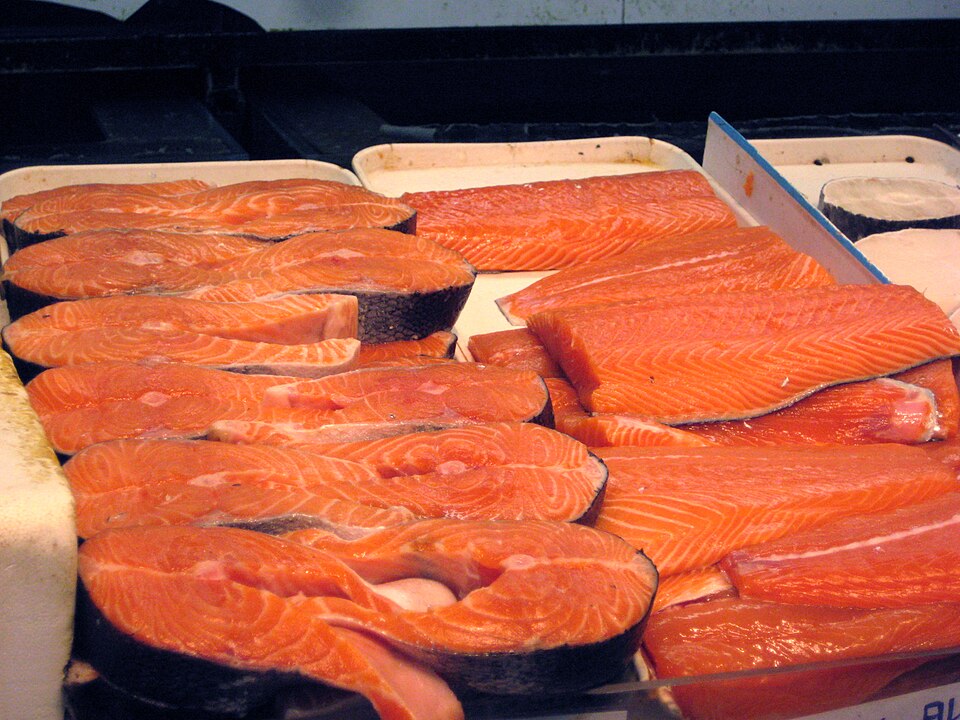
The latest assessment underlines the growing pressure on one of England’s most iconic migratory fish. With survival rates now dramatically lower than in previous decades, environmental authorities say coordinated action on water quality, river habitats, water availability and fish migration will be essential to give Atlantic salmon a chance to recover. Photo by Marlith, Wikimedia commons.