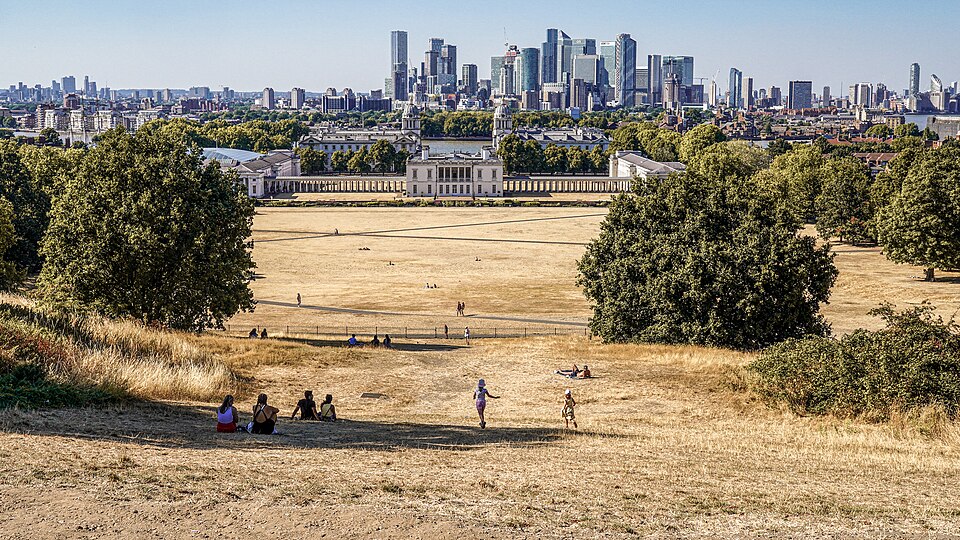
London is facing an escalating summer emergency as a fifth heatwave grips the capital, with temperatures forecast to reach 36C and prolonged dry conditions fuelling wildfires, placing
unprecedented pressure on the city’s emergency services.
The Mayor of London is urging residents to take greater responsibility for their safety as an Amber Heat Health Alert remains in force and extreme weather continues to affect communities across Britain and Europe.
The combination of repeated heatwaves and drought has left London’s grasslands exceptionally dry, turning open spaces into potential fire zones. The capital is experiencing its third drought in five years, while hosepipe restrictions and daily grass fires underline the growing strain created by a changing climate.
The London Fire Brigade has responded by deploying additional resources. The Mayor is providing £8.9 million in extra funding this financial year for wildfire protection, including specialist response vehicles, drones, hoses and backpack blowers.
The investment comes after an exceptionally demanding July for firefighters. The Brigade received a record 27,580 emergency calls during the month, exceeding the previous July record of 24,573 calls set in 2022. Firefighters attended 13,626 incidents, making July the service’s busiest month in four years and one of its busiest ever.
The pressure was particularly evident on 5 August, when London Fire Brigade control officers received more than 1,000 emergency calls in a single day, including over 200 relating to grass fires.
With vegetation tinder-dry, even a small spark can rapidly develop into a major blaze. Although wildfires can occur naturally, many are caused deliberately or accidentally by members of the public. Recent fires have threatened homes, businesses, infrastructure and wildlife, while disrupting rail services and forcing evacuations and road closures.
The London Ambulance Service is also facing a sharp rise in demand.
It handled more than 403,000 emergency calls across June and July — around 25,000 more than during the same period last year. During the June heatwave alone, the service received more than 53,000 calls, exceeding the levels recorded during the height of the Covid-19 pandemic.
Hundreds of additional ambulance crews were deployed across the capital as paramedics responded to life-threatening cases, including cardiac arrests and patients who had stopped breathing, alongside illnesses aggravated by extreme heat.
Londoners who are concerned about symptoms linked to the heat are being advised to seek guidance through NHS 111. Anyone facing a medical emergency should continue to call 999.
The heat is creating another danger in the capital: people entering London's waterways to escape the temperatures.
Firefighters attended 28 water-related rescue incidents between May and July. More than 100 accidental drownings have been recorded in London since 2020, including the deaths of two teenagers this summer.
The Mayor has again warned that many of London’s waterways are unsuitable for swimming. The tidal Thames, in particular, presents serious risks because of powerful currents, cold water and heavy river traffic.
Water safety is therefore a central element of the Mayor’s Clean Rivers and Waterways Plan, with particular emphasis on protecting younger Londoners.
Officials are calling on residents to take a series of basic precautions as the heat persists: avoid unnecessary exposure during the hottest part of the day, remain hydrated, take extreme care around open water, help prevent fires and immediately call 999 if a wildfire threatens lives or property.
Residents are also being encouraged to look out for people who are particularly vulnerable to extreme heat, including babies and young children, older people and those with existing health conditions.
The Mayor's office says the growing frequency and intensity of heatwaves demonstrate that London must adapt to a changing climate rather than treating extreme heat as an occasional event.
The capital has consequently developed Heat Ready London, its first city-wide heat adaptation plan. The strategy warns that around one million London homes may already face a high risk of overheating.
It calls for greater protection of vulnerable residents, the retrofitting of buildings, wider access to cooling spaces and investment in infrastructure capable of withstanding increasingly severe weather.
For London, the message from this summer’s repeated heatwaves is becoming harder to ignore: climate change is no longer simply an environmental challenge. It is increasingly a test of the capital’s emergency services, infrastructure and ability to protect its population from extreme weather. Photo by Alisdare Hickson, Wikimedia commons.