The UK government has unveiled a sweeping new sanctions package aimed at dismantling the covert financial networks Russia is using to sidestep Western restrictions and sustain its war in
Ukraine.
Announced by the Foreign Office on Monday, the measures target cryptocurrency exchanges, financial intermediaries, and the Kremlin-linked “A7 network” — a system British officials say has become central to Moscow’s efforts to funnel money into its war economy despite mounting international sanctions.
The sanctions, which take immediate effect, are part of what ministers describe as an increasingly aggressive campaign to choke off the financial infrastructure supporting President Vladimir Putin’s military operations.
British officials say Russia has intensified its reliance on opaque crypto channels and informal payment systems as existing sanctions continue to squeeze the country’s economy. Moscow recently downgraded its own growth forecast for 2026 from 1.3% to 0.4%, while also cutting expectations for 2027.
Home Secretary Yvette Cooper said the Kremlin was attempting to hide behind “crypto networks and shadow financial systems” to evade sanctions, warning that the UK was adapting its strategy to match Russia’s evolving tactics.
“We are tracking down and shutting off the financial lifelines that sustain Putin’s war machine,” Cooper said. “There will be no safe havens for those enabling Russia’s aggression.”
At the centre of the crackdown is the A7 network, described by British authorities as a Kremlin-backed operation used to bypass Western restrictions, finance military procurement, and process revenues from Russian oil sales. UK officials claim the network moved more than $90 billion last year — a figure equivalent to roughly half of Russia’s annual military spending.
The latest sanctions package includes 18 new designations targeting individuals, companies, and entities linked to Russia’s illicit financial operations. Among those affected are figures connected to a Kyrgyz bank suspected of facilitating payments for the A7 network, as well as a major cryptocurrency exchange allegedly involved in transferring more than $1.5 billion to Russia-linked channels.
The UK also sanctioned three Georgia-based companies accused of operating Russia-focused crypto exchanges designed to help clients evade international restrictions.
The move underscores growing Western concern over the use of digital currencies and alternative banking systems to weaken the impact of sanctions imposed since Russia launched its full-scale invasion of Ukraine in 2022.
British officials argue that restricting these hidden financial routes is essential to undermining Russia’s ability to fund its military campaign, which has continued with repeated strikes on Ukrainian cities and infrastructure.
Since the start of the war, the UK has imposed sanctions on more than 3,300 individuals, companies, and vessels linked to Russia. According to the government, international sanctions have cost the Russian economy more than $450 billion — equivalent to two years of wartime spending.
London says it will continue coordinating with allies to expose and dismantle the global networks helping Moscow bypass restrictions.
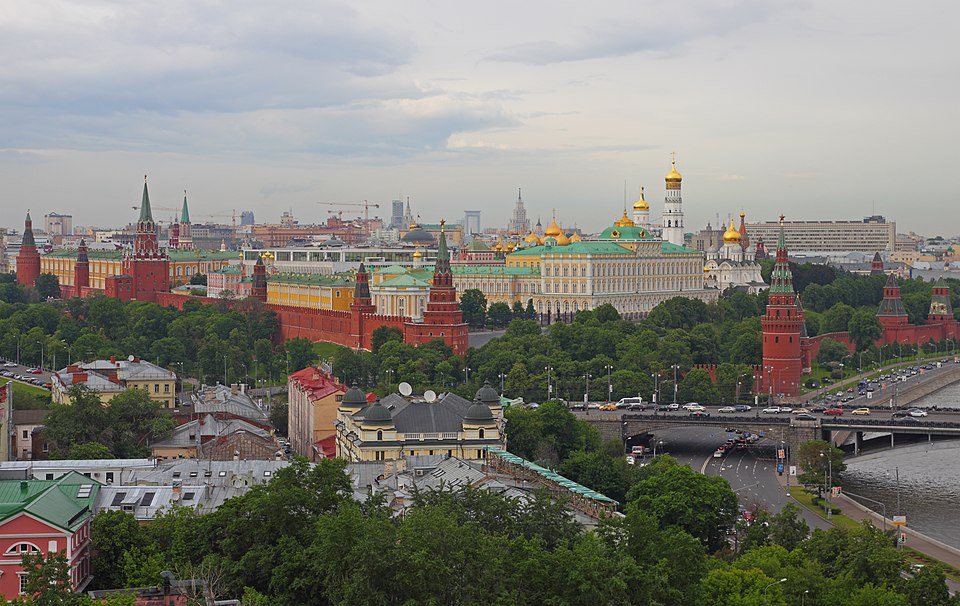
“As long as the killing in Ukraine continues,” the government said, “the UK and its allies stand ready to increase pressure on Russia and strengthen sanctions at every opportunity.” Photo by A.Savin, Wikimedia commons.