A senior former British civil servant has revealed he felt significant political pressure to fast-track the appointment of Peter Mandelson as the United Kingdom’s ambassador to Washington,
despite unresolved security concerns.
Olly Robbins, once the top official at the Foreign Office, told lawmakers that Prime Minister Keir Starmer’s office pushed for a swift approval, showing what he described as a “dismissive attitude” toward the security vetting process. His testimony has intensified scrutiny on Starmer, who is already under fire for the controversial appointment.
Mandelson, a prominent political figure with a history of scandals, was approved for the diplomatic post in January 2025, even though the government’s security vetting agency had reportedly leaned against granting him clearance. Robbins acknowledged the candidate was considered a “borderline case” but ultimately signed off on the decision, citing advice that any risks could be managed.
The controversy has deepened following revelations that Robbins was dismissed last week after details of the vetting process became public. He maintained that while there was an “atmosphere of pressure,” his department did not formally yield to it.
According to Robbins, the urgency stemmed from a strong desire within Downing Street to have Mandelson in place in Washington as quickly as possible, particularly ahead of the anticipated second term of U.S. President Donald Trump. Mandelson’s international experience and high-level connections were seen as valuable assets in navigating transatlantic relations.
However, concerns about Mandelson’s past have continued to haunt the government. He previously resigned twice from senior roles over ethical controversies, and a pre-appointment report flagged potential business links to Russia and China. Robbins declined to disclose the precise reasons behind the security agency’s concerns.
Starmer has defended himself, saying he was unaware of the vetting issues at the time and calling it “staggering” that such information was not escalated to him. He has since admitted the appointment was a mistake and stated he would have withdrawn it had he known the full details.
Mandelson’s tenure as ambassador was cut short in September after further scrutiny over his association with disgraced financier Jeffrey Epstein resurfaced. The government has since launched a review into any potential security risks arising from his access to sensitive information during his time in post.
The political fallout has been swift. Opposition leader Kemi Badenoch described Robbins’ testimony as “devastating,” accusing the prime minister of misleading Parliament — a charge Starmer denies.
Within the ruling Labour Party, the episode has fueled unease at a time of declining poll numbers. While some voices have called for Starmer’s resignation, others have urged restraint. Energy Secretary Ed Miliband downplayed the crisis, arguing that leadership should not hinge on a single misjudgment.
Meanwhile, Mandelson remains under investigation by British police following the release of documents suggesting he may have shared sensitive government information with Epstein in the past. He has denied any wrongdoing and has not been charged.
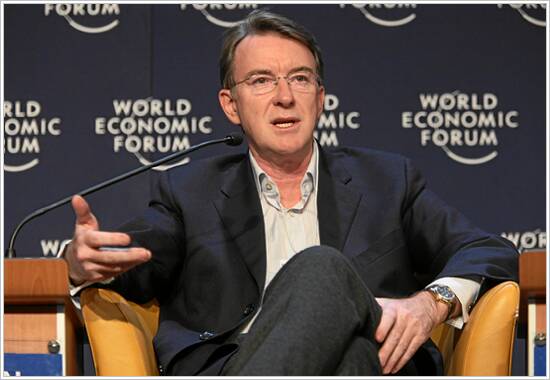
The unfolding controversy continues to raise broader questions about political influence, accountability, and the integrity of Britain’s appointment processes at the highest levels of government. Photo by World Economic Forum from Cologny, Switzerland, Wikimedia commons.