British businesses are showing signs of strain as economic growth slows and inflationary pressures intensify, with fresh data pointing to the growing impact of the Iran conflict on the UK
economy.
According to the latest Purchasing Managers’ Index (PMI) from S&P Global, business activity expanded in March at its weakest pace in six months. The preliminary composite PMI — which tracks manufacturing and services — fell to 51.0 from 53.7 in February, signaling only marginal growth.
The survey offers one of the clearest early indications of how the ongoing conflict involving Iran is rippling through global markets and hitting UK firms. Economists warn that the combination of slowing growth and rising costs could complicate the government’s economic plans.
“March’s data suggests the Middle East conflict is already pushing inflation higher while dampening GDP growth — and this may only be the beginning,” said Paul Dales.
A sharp rise in manufacturing costs has been a key concern. Input prices surged at the fastest monthly rate since 1992, driven largely by higher energy, fuel, and transport costs. Businesses are now passing those increases on to customers, raising prices at the quickest pace in nearly a year.
The escalation in costs is closely tied to volatility in global energy markets following the conflict. Analysts say the speed of the increase has taken many by surprise, highlighting how quickly geopolitical tensions can feed into domestic inflation.
Despite the slowdown, the PMI reading remains above the 50 threshold that separates growth from contraction. However, it came in below expectations in a poll conducted by Reuters, underlining the extent of the economic drag.
In comparison, business activity in the eurozone showed greater resilience, with its PMI slipping only slightly to 50.5.
The worsening outlook presents a policy dilemma for the Bank of England. Policymakers must decide whether to raise interest rates further to contain inflation, even as economic momentum weakens.
The central bank recently held rates steady but warned inflation could climb to around 3.5% later this year — well above its previous expectations.
Economists say the duration of the conflict will be critical. “The key question is whether higher energy prices will lead to a broader and more persistent resurgence in inflation,” said Jake Finney.
Business sentiment is also deteriorating. Expectations for future output have dropped to their lowest level since mid-2025, while employment has now declined for 18 consecutive months — the longest stretch of job losses since 2010.
Companies report that the conflict is directly affecting demand and operations. Factors include increased uncertainty among customers, supply chain disruptions, higher borrowing costs, and reduced travel activity.
“The events in the Middle East are clearly weighing on business confidence and activity,” said Chris Williamson.
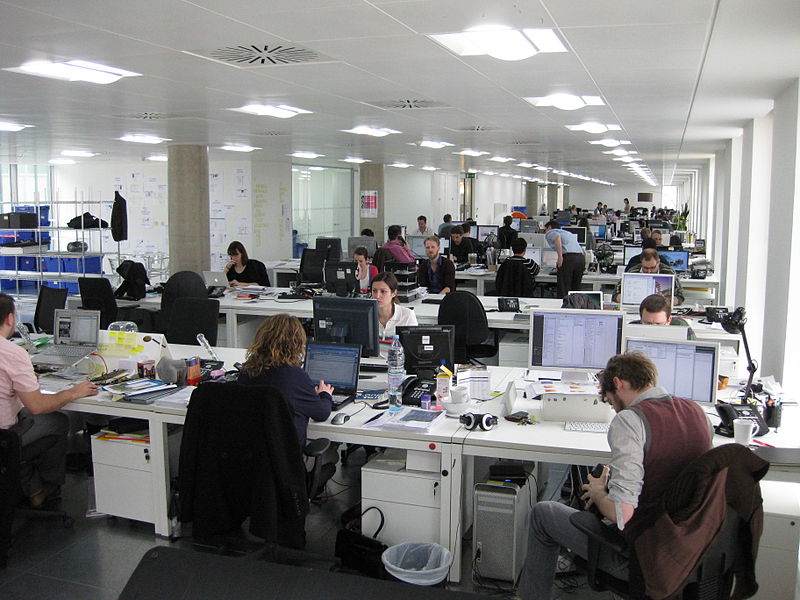
With geopolitical tensions showing little sign of easing, UK businesses may continue to face a challenging mix of weak growth and rising costs in the months ahead. Photo by Phil Whitehouse, Wikimedia commons.