UK house prices fell for a second consecutive month in December, easing by 0.6% after a marginal 0.1% drop in November, according to the latest Halifax
House Price Index.
The decline pushed the average UK property price down to £297,755, its lowest level since June, while annual price growth slowed to 0.3%, down from 0.6% the previous month.
Despite the late-year dip, the picture across the UK remains mixed. Northern Ireland continued to outperform all other nations and regions, recording annual price growth of 7.5%. The average home there now costs £221,062.
Scotland also saw solid gains, with prices rising 3.9% year-on-year to an average of £217,775. In Wales, property values increased by 1.6% over the year, taking the average price to £230,233.
In England, the strongest growth was seen in the North East, where prices climbed 3.5% annually to £181,798. This was followed by the North West, which posted growth of 2.8%, with average prices reaching £245,323.
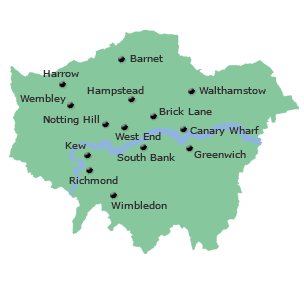
By contrast, London continued to lag behind the rest of the country. Property prices in the capital fell by 1.3% over the course of 2025, leaving the average London home valued at £539,086.
Amanda Bryden, head of mortgages at Halifax, said the December figures marked a subdued end to the year but stressed that overall market activity remained resilient.
“While this may feel like a soft close to the housing market in 2025, activity levels over the year were broadly in line with the pre-pandemic average,” she said.
She added that several factors could help support the market in 2026, including falling mortgage rates following the latest Base Rate cut and a growing range of lending options for buyers with smaller deposits.
“Although affordability pressures remain, the house price-to-income ratio was at its lowest level in over a decade in December, which is encouraging for first-time buyers,” Bryden said.
Halifax expects house prices to rise modestly this year, forecasting growth of between 1% and 3%, while warning that slowing wage growth and flatter employment rates could limit buying power.
Commenting on the data, Alice Haine, personal finance analyst at Bestinvest by Evelyn Partners, said political and tax uncertainty weighed heavily on sentiment towards the end of last year.
“Concerns ahead of November’s fiscal statement led some buyers and sellers to rush transactions, while others delayed or abandoned plans altogether,” she said.
Although some feared reforms — including council tax changes and higher capital gains tax on expensive homes — did not materialise, Haine noted that the introduction of a future ‘mansion tax’ and higher income tax on property income delivered fresh blows to landlords.
She added that while these measures may cool demand at the top end of the market and in buy-to-let, the softer December data does not reflect the broader resilience seen throughout 2025.
Jason Tebb, president of OnTheMarket, echoed this view, saying affordability pressures and increased housing supply are helping to keep prices in check, but confidence is beginning to return.
“Speculation around the Budget caused uncertainty, but that appears to be fading,” he said. “Falling interest rates have significantly boosted confidence, easing affordability and encouraging buyers and sellers back into the market.”
With lenders continuing to trim mortgage rates, industry experts believe momentum could gradually build as 2026 progresses.