The UK government has unveiled landmark legislation designed to strengthen national security by targeting organisations, individuals, and proxy groups acting on behalf of hostile foreign
states.
Introduced to Parliament today (9 June), the National Security (State Threats) Bill delivers on the government's commitment to rapidly enhance protections against foreign interference following a series of concerning antisemitic attacks across the UK.
The legislation would grant the Home Secretary new powers, similar to those used in counter-terrorism operations, to designate and disrupt foreign state-linked organisations that threaten the UK's security, democratic institutions, and communities.
If approved by Parliament, the measures could come into force as early as next month, enabling immediate action against designated groups and those acting on their behalf.
The new powers are intended to prevent hostile activities conducted by foreign states in the UK, including attacks on minority communities, intimidation of dissidents, and other covert operations. Law enforcement and intelligence agencies will gain stronger tools to investigate, disrupt, and deter state-backed threats.
Prime Minister Keir Starmer said recent antisemitic incidents had deeply affected communities across the country and highlighted the need for a robust response to foreign actors seeking to undermine public safety and democratic values. He stressed that individuals recruited or paid by hostile states to carry out unlawful acts would face serious consequences.
Home Secretary Shabana Mahmood said foreign governments are increasingly using proxy organisations to conceal their involvement in hostile activities. She noted that the legislation would provide police and intelligence services with enhanced capabilities to respond to evolving threats and hold those responsible accountable.
Foreign Secretary Yvette Cooper said the bill addresses gaps identified through an independent review of state-threat legislation and will help counter foreign adversaries that use covert methods to undermine the UK's interests and security.
Among the key measures in the bill:
- Creating a criminal offence for expressing support for a designated foreign state-linked organisation.
- Criminalising the glorification of activities that threaten UK national security.
- Making it an offence to assist, collaborate with, or receive payment from designated organisations.
- Enabling authorities to disrupt hostile activity carried out through proxy groups, including organised criminal networks.
The legislation aligns with provisions already contained in the National Security Act 2023, allowing designated organisations to be treated in a similar way to foreign intelligence services when assessing and prosecuting state-linked threats.
Those convicted under the new offences could face prison sentences of up to 14 years.
The government says the measures respond to a growing and increasingly complex threat landscape. MI5's state-threat investigations rose by 35% last year, while intelligence agencies monitored 20 potentially lethal Iran-backed plots during the same period.
The bill complements wider efforts to strengthen national security, including the Foreign Influence Registration Scheme, tougher sentencing powers for state-threat offences, enhanced training for frontline police officers, and additional investment of £600 million in security and intelligence capabilities.
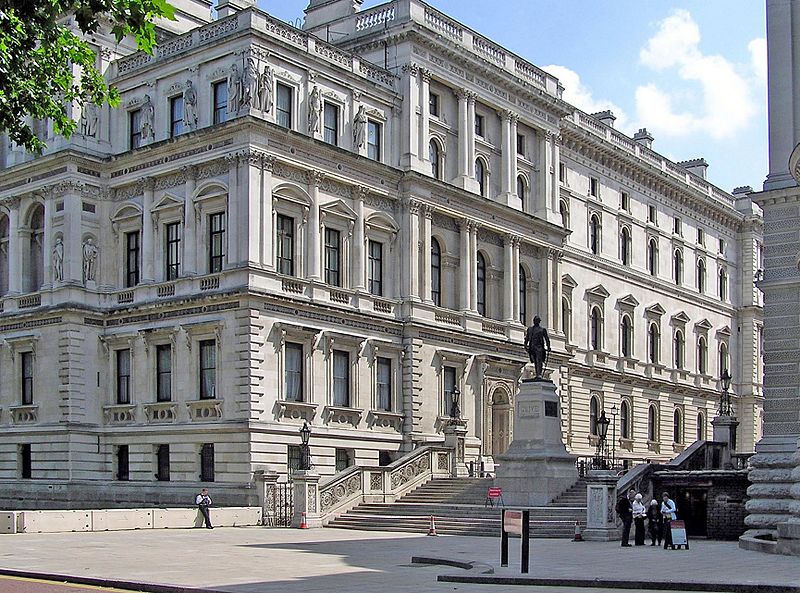
The government says the legislation sends a clear message that hostile foreign states and those acting on their behalf will face decisive action under UK law. Photo by Adrian Pingstone, Wikimedia commons.