London is being positioned to become a global leader in sustainable data centre innovation under new plans set out by Mayor of London Sadiq Khan, alongside a major City Hall-backed
analysis warning that soaring energy demand could place unprecedented pressure on the capital’s electricity network.
A report commissioned by City Hall and released during London Tech Week highlights London’s status as the UK’s dominant data centre hub, with 99 operational sites currently delivering around 760MW at peak demand—roughly equivalent to the electricity use of 750,000 homes.
However, the findings also underline the scale of future growth: around ten times the existing data centre capacity is already waiting in the electricity grid connection queue, signalling a major challenge for infrastructure planning and energy supply.
The report frames data centres as essential digital infrastructure underpinning modern economic life, from public services to artificial intelligence and everyday online activity. It notes that global internet usage has expanded dramatically over the past two decades, transforming data centres into critical components of the global digital economy.
Coordinated citywide response
In response, the Mayor has pledged a “whole-city” approach to managing data centre expansion, bringing together boroughs, energy providers, developers, universities and technology firms. A dedicated roundtable at City Hall is expected in the coming weeks to coordinate next steps.
The strategy is intended to ensure that data centre growth aligns with London’s wider priorities, including housing delivery, decarbonisation and economic expansion, rather than competing with them for scarce energy capacity.
The approach is being embedded within the forthcoming London Infrastructure Framework, which sets out long-term priorities for energy, transport and digital systems. The framework identifies electricity capacity and grid resilience as key constraints on future growth.
Turning data centres into climate infrastructure
Rather than treating data centres solely as energy-intensive facilities, the Mayor is also seeking to position London as a testbed for greener infrastructure solutions, including energy efficiency, on-site generation and heat reuse.
One example already under development is at Old Oak and Park Royal, where the Old Oak and Park Royal Development Corporation is supporting the OPEN heat network, which will capture waste heat from data centres to supply low-carbon heating to homes and businesses.
City Hall argues this model demonstrates how digital infrastructure can be integrated into wider urban energy systems, reducing waste and improving overall efficiency.
AI growth and infrastructure pressure
The plan also reflects the rapid expansion of artificial intelligence and cloud computing, which is driving demand for large-scale compute infrastructure across global cities.
As part of his wider digital strategy, Sadiq Khan—who also chairs C40 Cities Climate Leadership Group—has emphasised the need for cities to balance innovation with climate responsibility, particularly as AI accelerates energy demand.
Planning reform and long-term strategy
The Mayor’s forthcoming London Plan will include updated policies on data centres, aiming to better manage their environmental impact while supporting continued investment in digital infrastructure. The draft plan is expected later this summer.
Alongside this, City Hall is advancing a broader AI and jobs agenda, including a taskforce focused on workforce impacts, skills development and economic opportunity in the rapidly evolving technology sector.
Officials say London is already emerging as a major global hub for AI-related investment, with early government-backed sovereign AI funding largely flowing into London-based companies.
Outlook
City Hall’s position is that London must not only accommodate rapid digital infrastructure growth but actively shape it—ensuring that expansion in data centres and AI systems is matched by investment in energy capacity, sustainability measures and long-term urban planning.
The goal, officials say, is for London to remain a leading global centre for digital innovation while avoiding the risk that infrastructure constraints limit housing growth, economic performance or progress toward climate targets.
Mayor of London, Sadiq Khan, said: “My ambition is clear, I want London to become the world’s leading city for environmentally friendly, low emission, high efficiency data centre development, and AI infrastructure so that our capital remains a leading global hub for digital innovation.
“The new study highlights both the scale of opportunity and the complexity of managing data centre growth.
“The energy requirements of data centres are colossal, so delivering their expansion at pace alongside London’s other infrastructure needs will require more coordinated planning. Closer partnership between the private and public sector, and across all levels of Government, will be vital.
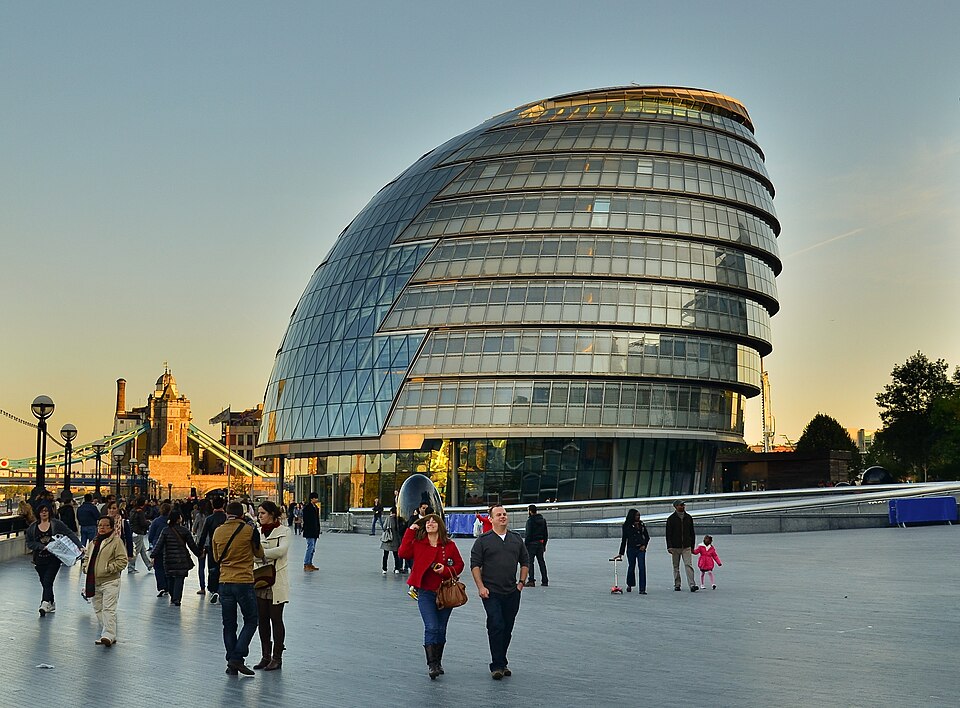
“That is why I am committed to leading a whole-city partnership approach, shaped around climate, resilience and responsible AI, as we work together to build a better, more prosperous London for everyone.” Photo by Garry Knight, Wikimedia commons.