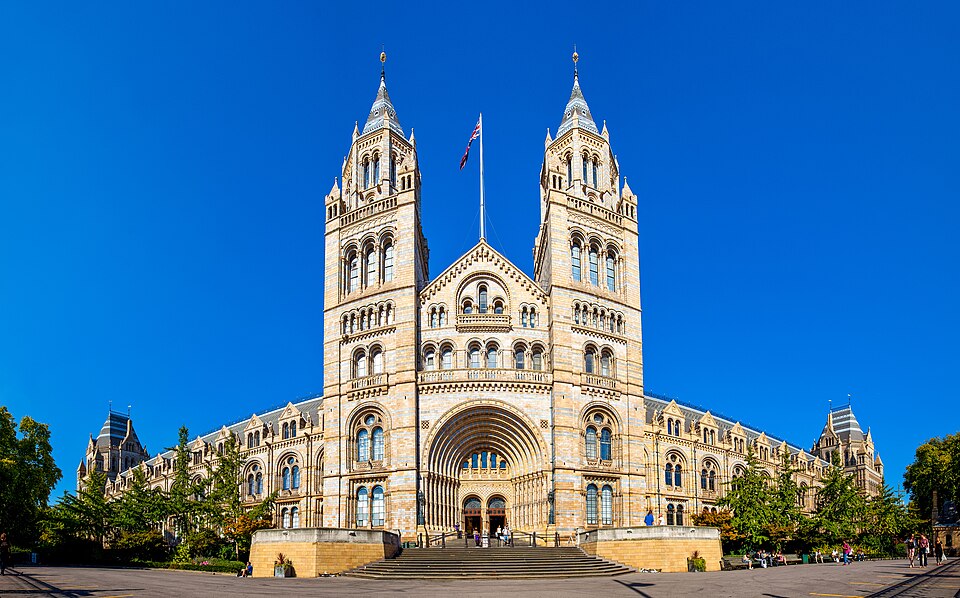
London’s Natural History Museum has claimed the spot as the United Kingdom’s most popular tourist attraction in 2025, drawing a record-breaking 7.1 million visitors over the year.
The South Kensington landmark saw a 13% rise in attendance compared to the previous year, marking the highest number of visitors ever recorded by a museum or gallery in the UK. The surge was enough to push it ahead of the British Museum, which had held the top position for the past two years.
Famous for its iconic blue whale skeleton suspended in the entrance hall, the museum has long been a favorite among families, tourists, and science enthusiasts. Its latest success reflects a broader trend of growing public interest in cultural and educational experiences.
Despite losing the top spot, the British Museum still ranked second and is expected to attract strong crowds in the coming year, particularly with the highly anticipated display of the Bayeux Tapestry starting in September.
Other major attractions rounding out the top five include Windsor Great Park, Tate Modern, and the National Gallery, reinforcing London’s continued dominance as a global cultural hub.
According to the Association of Leading Visitor Attractions (ALVA), overall visits across its 409 member sites rose by 2% in 2025, reaching 165 million. However, this figure still falls short of the 170 million visits recorded in 2019, before the Covid-19 pandemic disrupted global tourism.
ALVA director Bernard Donoghue noted that, even amid economic uncertainty and rising living costs, people continue to prioritize spending on memorable experiences. He added that visitors are becoming more selective about how they use their leisure time and money.
Natural History Museum director Dr. Doug Gurr welcomed the milestone, describing the achievement as a reflection of both the institution’s commitment to visitor experience and the dedication of its staff. He emphasized the enduring appeal of engaging with the natural world and cultural heritage.
Elsewhere, several attractions reported notable growth driven by special events and reopenings. The National Gallery benefited from the reopening of its Salisbury Wing, while seasonal celebrations boosted visitor numbers at historic estates such as Chatsworth and Blenheim Palace.
The Houses of Parliament recorded one of the sharpest increases, with visitor numbers rising 47% to 823,000. Meanwhile, the Royal Academy of Arts enjoyed a successful Summer Exhibition, contributing to a 20% increase in attendance.
Regional trends also showed steady growth. Scotland’s attractions saw a 2.6% rise in visitors, while Wales recorded a modest 0.9% increase. Within England, the North West experienced the fastest growth outside London, up 11.3%, followed by the East Midlands at 7.5%.
New entries also made an impact, including the V&A East Storehouse, which exceeded expectations by attracting over 416,000 visitors in less than seven months.
While the tourism sector continues its gradual recovery, the latest figures highlight a clear message: cultural attractions remain at the heart of how people choose to spend their time—offering both escape and enrichment in uncertain times. Photo by Chiuchihmin, Wikimedia commons.