The National Gallery has announced a shortlist of six architectural teams competing to design a major new wing as part of its ambitious £750 million Project Domani
redevelopment. The expansion will transform the museum into the only place in the world where visitors can experience the full history of Western painting under one roof.
An international architectural competition launched earlier this year attracted 65 submissions from around the world. On 3 December 2025, the Gallery confirmed the six firms invited to progress to the final design stage, listed in alphabetical order:
- Farshid Moussavi Architecture with Piercy & Company (UK)
- Foster + Partners (UK)
- Kengo Kuma and Associates (Japan) with BDP (UK) and MICA (UK)
- Renzo Piano Building Workshop (Italy) with William Matthews Associates (UK) and Adamson Associates (UK)
- Selldorf Architects (USA) with Purcell (UK)
- Studio Seilern Architects (UK) with Donald Insall Associates (UK), Vista Building Safety Ltd (UK) and Ralph Appelbaum Associates (UK)
The shortlisted teams will now take part in a competitive design process, with the winning architect and full technical design team due to be appointed by April 2026.
Jury of cultural and architectural leaders
The design competition will be judged by a high-profile jury drawn from the arts, architecture and museum leadership. Chaired by National Gallery Board of Trustees Chair John Booth, the panel includes artist Céline Condorelli; National Gallery Director Sir Gabriele Finaldi; architect and former trustee Lady Patty Hopkins; Deputy Chair Sir John Kingman; former Imperial War Museum Director Dame Diana Lees; and David Marks, Chair of the Gallery’s Masterplan Committee.
The competition represents the third major stage of a masterplan first commissioned in 2018.
A new wing at the heart of London
The new wing will be constructed on the site of St Vincent House at 30 Orange Street — the final undeveloped portion of the Gallery’s existing campus. Acquired nearly 30 years ago for future expansion, the building currently houses a hotel and office complex.
Beyond expanding exhibition space, Project Domani aims to reinvigorate the area between Leicester Square and Trafalgar Square, creating a vibrant new cultural destination. The building will incorporate advances in sustainability and construction technology and is intended to become a landmark of both national and international significance.
John Booth said the project represents a once-in-a-generation opportunity for the institution. “The National Gallery’s renowned collection and our ambition to serve a larger, more diverse public demands a space that not only preserves and displays great art, but elevates the visitor experience,” he said. “We are seeking an architectural partner who can help realise something creatively ambitious, technologically innovative and environmentally sensitive.”
Backed by record-breaking philanthropy
Project Domani has already secured unprecedented private support. Two of the largest publicly reported donations to a museum or gallery worldwide have been pledged: £150 million from Crankstart, the charitable foundation of Sir Michael Moritz KBE and Harriet Heyman, and a further £150 million from the Julia Rausing Trust.
An additional £75 million has been contributed by the National Gallery Trust, John Booth, and anonymous donors. Together, these gifts form the financial foundation of the project.
Despite this progress, fundraising remains only halfway complete. Sir Gabriele Finaldi described Project Domani as a defining campaign for the Gallery’s future. “This is a £750 million initiative that will redefine the National Gallery for the next century,” he said. “It will create new spaces for an expanded collection, establish an acquisitions fund for modern paintings, and secure the Gallery’s long-term financial sustainability through a strong endowment.”
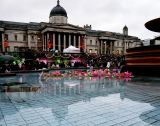
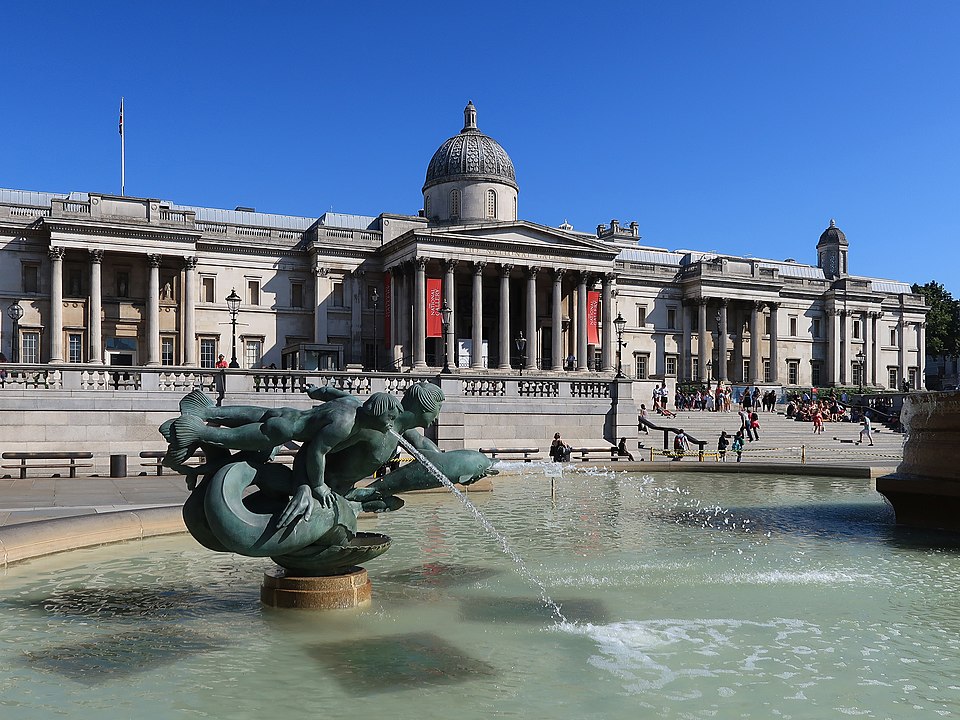
Finaldi added that the project reinforces the Gallery’s founding mission to make great art accessible to all. With new displays, exhibitions, learning programmes and research facilities planned, the institution now looks to attract further donors and partners to help bring its vision to life. Photo by Michael Coppins, Wikimedia commons.