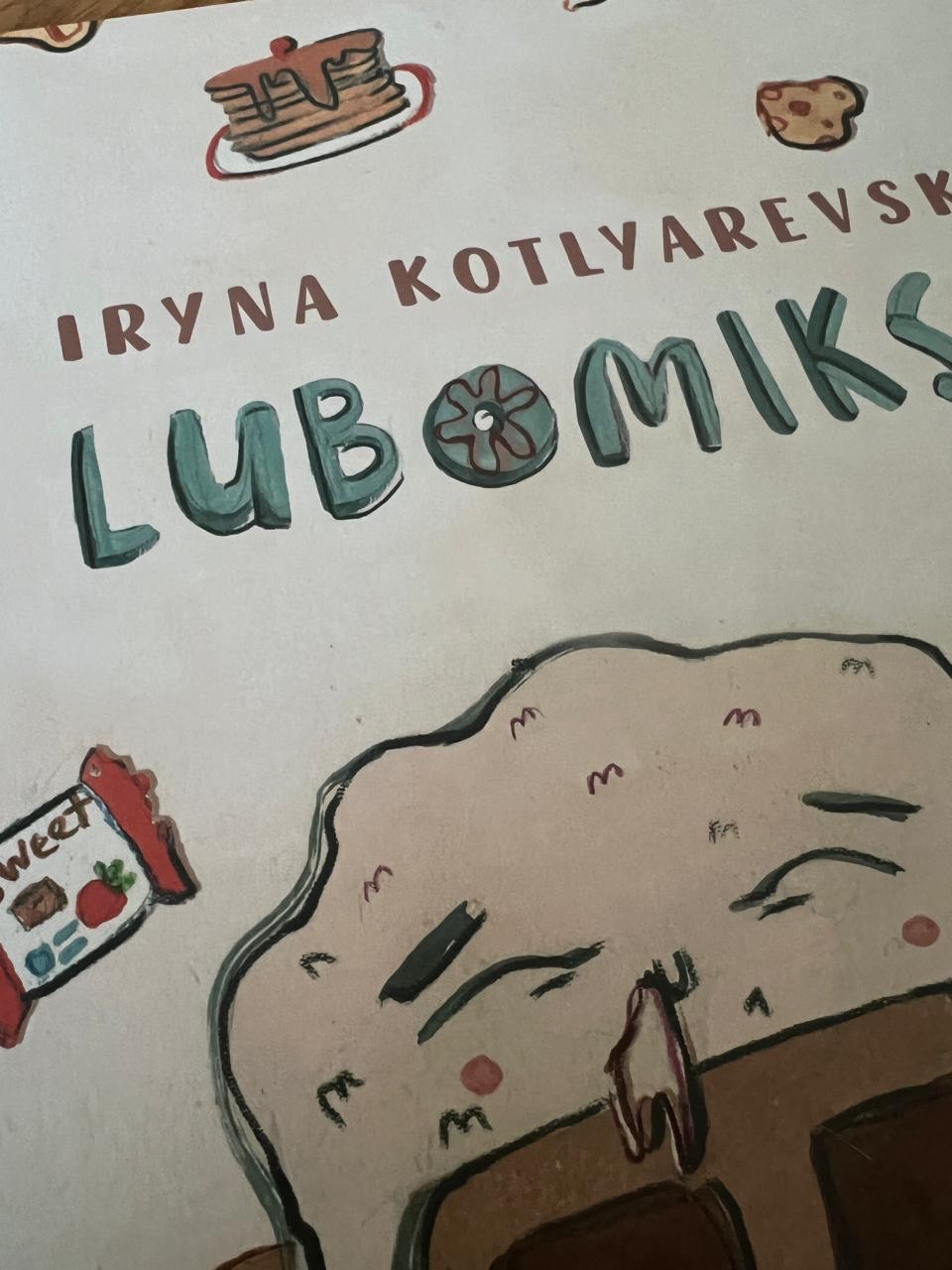
Iryna Kotlyarevska is a name increasingly found on the shelves of family libraries. A mother of four, a Bachelor of Philosophy, a Master of Political Science, and the creator of the worlds of
Lubomiks and Zemlinixes — she writes books that help children and parents speak the same language. We met with Iryna to learn how her stories are born, what lies behind her fairy tales, and what she learns from children every day.
Corr.: Iryna, what was the starting point in your journey as a children’s author?
I.K.: Stories born from family evenings. I read fairy tales to my children, invented characters, situations, small adventures — simply to make them feel warm and interested. And one day I realized: it works. They listen, react, argue. And most importantly — they don’t want to share the book with each other! That’s when I told myself: these stories deserve to live further. And that was the beginning of the Lyubomixes, the Zemlinixes, and all the projects parents and children know today.
Corr.: You have a background in philosophy and political science. How does it influence your writing?
I.K.: Enormously. Philosophy and political science teach you to ask the right questions. And children teach you to ask the essential ones. When I explain big topics — friendship, honesty, responsibility, the power of choice — I don’t simplify the meaning. I simply choose a language that will reach a young person. Children don’t need things to be “dumbed down.” They need things to be honest. “I don’t write for small people. I write for big people who are simply still growing.”
Corr.: Many of your characters face moral choices. Was that intentional?
I.K.: Yes. But I never tell children “what’s right.” I show them that every action has consequences. Every choice has a cost. Children need to see that a character can doubt, stumble, make mistakes, correct them. They recognize themselves — and they learn safely. It’s a very gentle form of education.
Corr.: You are a mother of four. How does motherhood influence your writing?
I.K.: It’s my greatest creative advantage. When you have four children, you live in constant dialogue — sometimes funny, sometimes deep. Every child is a small universe. I see what worries them: — why friends fight; — why adults forbid things; — whom they can trust; — what to do when something feels scary; — how to accept themselves. And all of this becomes an endless source of inspiration. “My books are simply an extension of our family conversations. I just share them with the rest of the world.”
Corr.: Readers often say that your books are read by the whole family. Why do you think that is?
I.K.: Because fairy tales belong to the family space. It is the territory where adults and children stand side by side again. When an adult reads to a child, the adult also learns — to be gentler, kinder, more attentive. “A fairy tale is a bridge between adults and children. Sometimes it is the first moment a parent truly hears their child.”
Corr.: You touch on serious topics: friendship, fear, conflict, honesty. Why?
I.K.: Because children live in a big world where all these things exist. They face feelings they don’t always know how to handle. And a fairy tale is a safe way to talk about them. Not from above, but from beside.
Corr.: Many say your writing feels warm and “alive.” What’s your secret?
I.K.: I always “listen” to the child. Not from the adult’s viewpoint, but through the child’s internal voice. And I always believe in magic — truly. Children sense instantly when an adult believes. “Children are the real teachers. They remind us that miracles happen every day — if we don’t overlook them.”
Corr.: You create your own literary universes — Lyubomixes, Zemlinixes. Where does the inspiration come from?
I.K.: From observing. From nature. From everyday moments. From things children say — sometimes so wise that no adult could invent them. But above all, I love giving each character a soul. I want every child to find a hero who feels like them.
Corr.: What feedback touches you the most?
I.K.: When parents say: “We read your book together, and afterward we had the warmest evening.” Or: “After your fairy tale, my child finally told me what’s been worrying them.” These are the moments worth writing for. “When a child sees themselves in the hero — the book has fulfilled its purpose.”
Corr.: What goals do you set for yourself going forward?
I.K.: I want my books to become international. I want children in different countries to recognize themselves in my heroes. I’m especially inspired by Europe — including Poland — where there is deep respect for children’s literature and strong family reading traditions. I’m planning new books, new worlds, new ideas — and I truly want more live meetings with young readers.
Corr.: And the final question. What would you like to say to parents?
I.K.: Read to your children. Even ten minutes a day can change their lives. These small moments stay with them forever. And to children I want to say: Believe in miracles — they come to those who expect them.