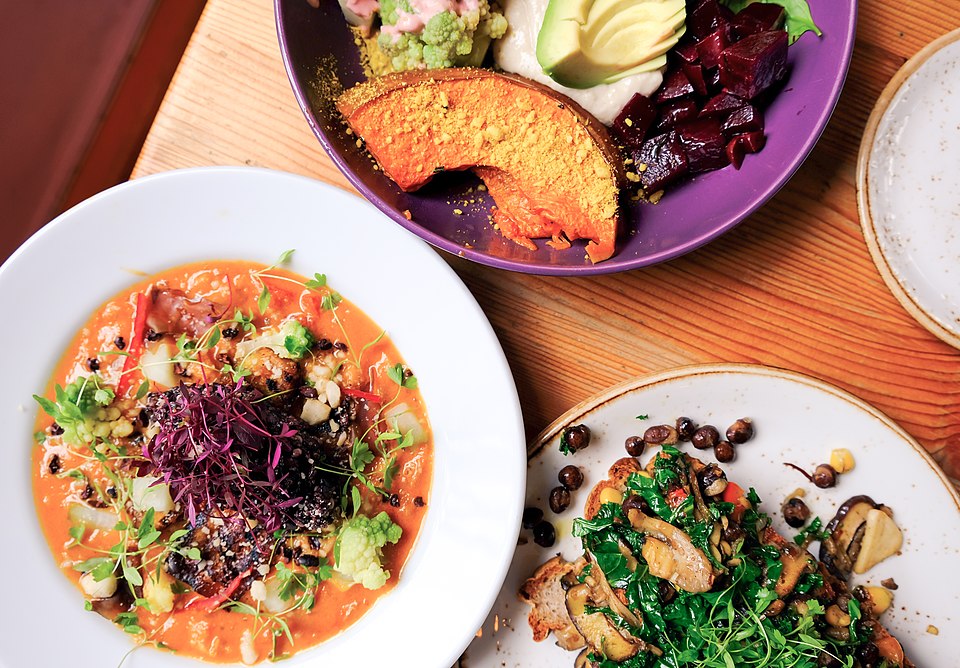
At Plates, the first fully plant-based restaurant in Britain to earn a Michelin star, the dining room is full most nights — yet the vast majority of guests aren’t vegan.
Roughly 95% of diners still eat meat or fish elsewhere, according to chef-owner Kirk Haworth. For him, that’s the clearest sign yet that plant-based fine dining is moving firmly into the mainstream.
Haworth, who founded Plates in London with his sister, is careful with labels. Avoiding the word “vegan,” he prefers to let the food speak for itself.
“I always say we’re a fine dining restaurant. I don't say that we’re vegan,” he told Reuters in the restaurant’s warm, low-lit dining room. “Food should be judged on flavour.” He recalls one guest, midway through his meal, declaring himself “a changed man.”
Plates earned its Michelin star earlier this year — the first British restaurant serving an entirely plant-based menu to do so — a recognition Haworth sees as evidence of a shift in how chefs and critics approach vegetable-led cooking. Far from a trend, he says, it’s part of a broader evolution in the industry.
Only about 3% of UK adults identify as vegan, but interest in plant-based cuisine continues to grow. Michelin praised Plates for its “earthy, natural vibe” and for dishes that give vegetables “the respect they deserve.”
For Haworth, the restaurant is also the product of personal transformation. After years working in Michelin-starred kitchens around the world, he was diagnosed with Lyme disease more than a decade ago. The illness left him bedridden for months and prompted him to overhaul his diet, cutting out meat, dairy and refined sugar to help reduce inflammation.
What began as a dietary necessity became a creative breakthrough. Plates opened 18 months ago after a series of pop-ups — and is now fully booked through the end of March.
Photo by Ella Olsson from Stockholm, Sweden, Wikimedia commons.